Collaboration with NGOs on Climate Adaptation
LAU collaborates with non-governmental organizations and civil-society partners to connect education, research and community engagement with climate adaptation and environmental resilience. These partnerships address drought, water scarcity, agricultural resilience and inclusive local development.
Activities undertaken during 2025 build on earlier environmental education and community-engagement initiatives. Together, they demonstrate how LAU connects academic expertise with civil-society knowledge, practical learning and community needs.
Regional NGO Collaboration on Climate Adaptation
NUSTALGIC: Water Harvesting and Climate-Resilient Agriculture
June 2025–May 2028
LAU participates in NUSTALGIC—Neglected and Underutilized Species for Water Harvesting and Building Climate Change Resilience—a PRIMA-funded Mediterranean project supporting adaptation to drought, water scarcity and land degradation.
Implemented at LAU through the Office for Sustainability, the project combines scientific research with traditional knowledge to strengthen agricultural resilience. Its consortium includes universities, public research institutions and NGOs, including Oxfam and Methods for Irrigation and Agriculture (MIRRA), a non-profit association based in Jordan.
The project framework assigns MIRRA a co-leading role in water-harvesting technologies, including stakeholder assessment, co-design with farmers, demonstration and performance evaluation. Oxfam leads gender-responsive stakeholder engagement and dissemination and co-leads work on inclusive value chains.
 Through this shared framework, LAU contributes to adaptation approaches that connect technical solutions with community knowledge, stakeholder participation and rural livelihoods.
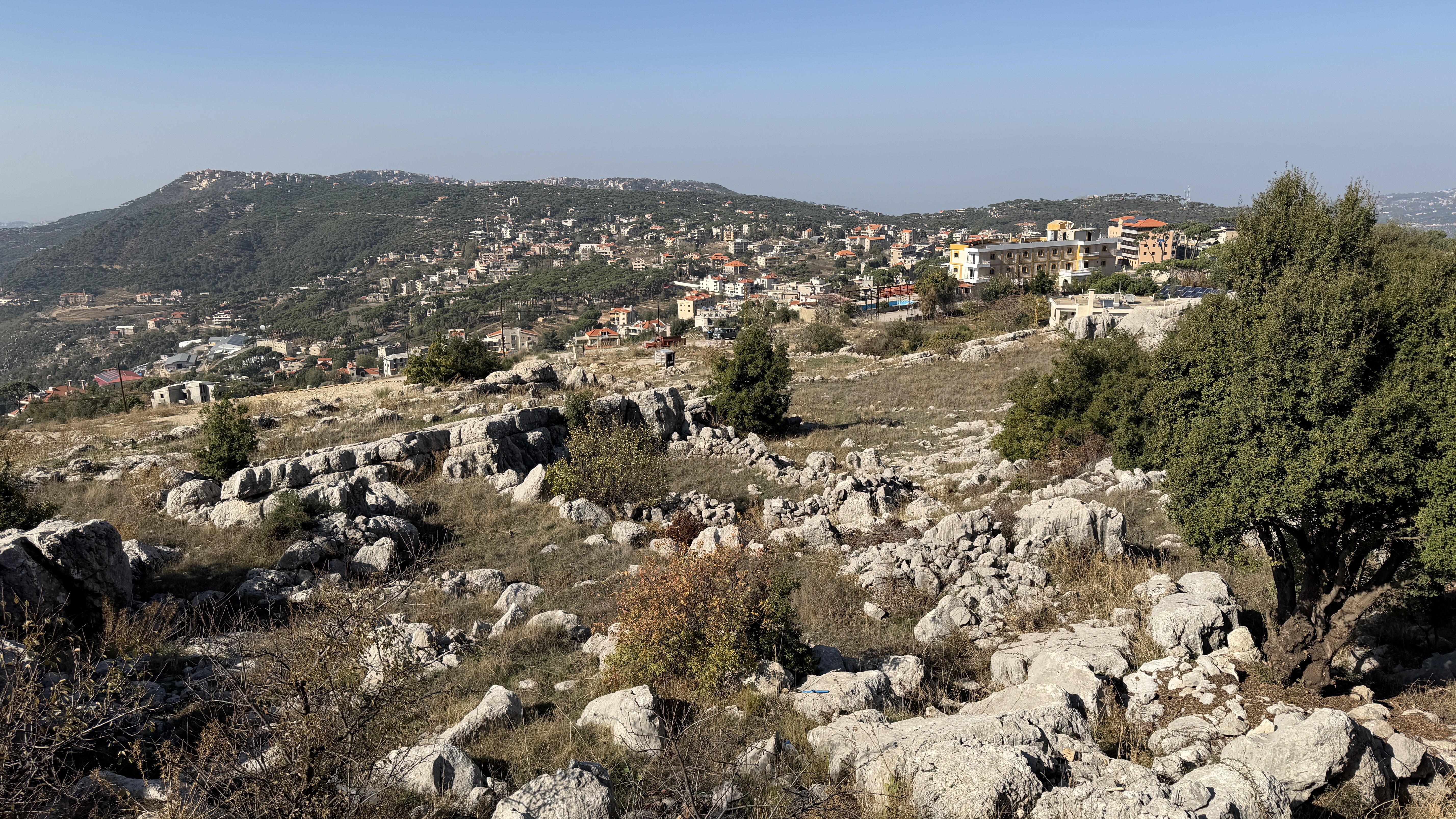
On November 28, 2025, the LAU team visited five households in Mrouj to assess potential beneficiaries for rooftop rainwater-harvesting systems. The proposed systems would collect seasonal rainfall for use during dry months, supporting household gardens and small-scale agriculture. These assessments connect local implementation planning with the consortium’s wider climate-adaptation objectives.
NUSTALGIC: Project Activities and Participating Organizations
LAU Field Visit to Mrouj — November 2025
Community Partnerships for Adaptation and Water Resilience
LAU and the Michel Issa Foundation Partner to Drive Community-Based Development
November 27, 2025
LAU and the Michel Issa Foundation signed a three-year cooperation agreement linking research, education and community engagement with local development priorities, explicitly including climate adaptation.
The partnership creates opportunities for students and faculty to contribute through internships, fieldwork, applied research and community projects. Its priorities include rural livelihoods, sustainable tourism, climate adaptation, energy transition, public health and cultural heritage.
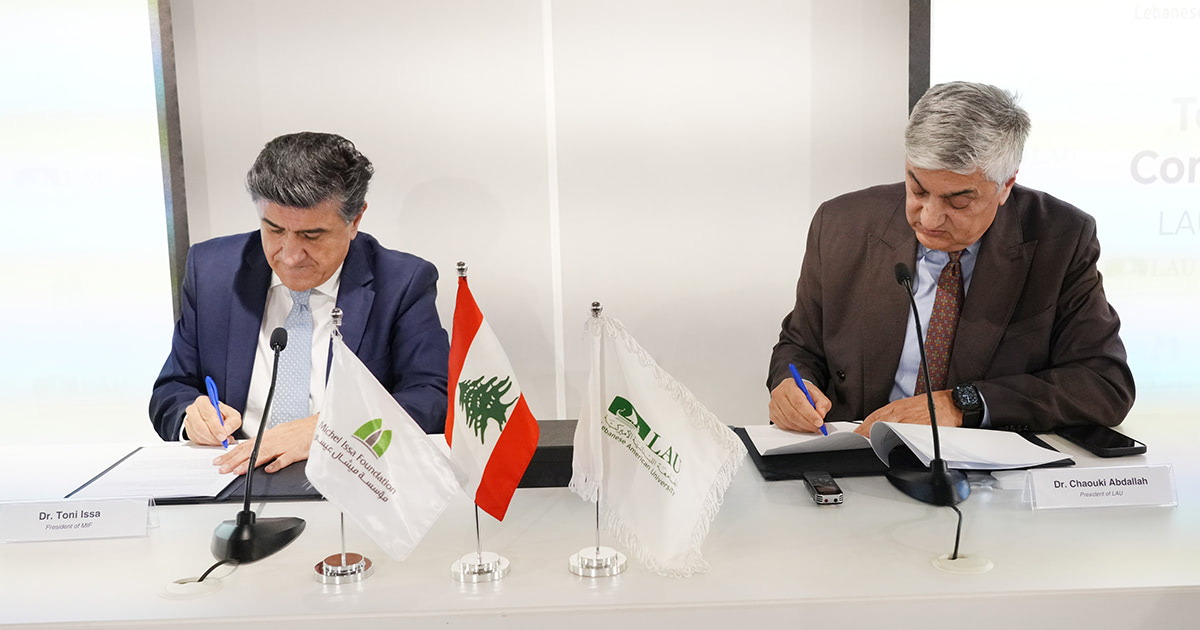 With a particular emphasis on the Jbeil District, the collaboration connects LAU’s academic expertise with the foundation’s field presence and relationships with local stakeholders. The agreement provides for joint training workshops, pilot initiatives and innovation programmes through which students, researchers and community members can develop and test responses to local challenges.
Planned knowledge-sharing activities include policy briefs, public reports, awareness campaigns and jointly produced events, providing a foundation for community learning and practical adaptation initiatives.
LAU News: LAU and the Michel Issa Foundation Partner to Drive Community-Based Development
From Crisis to Action: LAU and PAX Lead National Water Reform Effort
June 28, 2025
LAU partnered with PAX Foundation to convene municipal leaders, legal and technical experts, and academics for a workshop examining locally driven solutions to Lebanon’s water challenges.
Held at the Beirut campus, the workshop reviewed proposals submitted by local authorities to improve access to safe drinking and domestic water in underserved communities. Participants assessed technical feasibility, administrative requirements and the potential for replication.
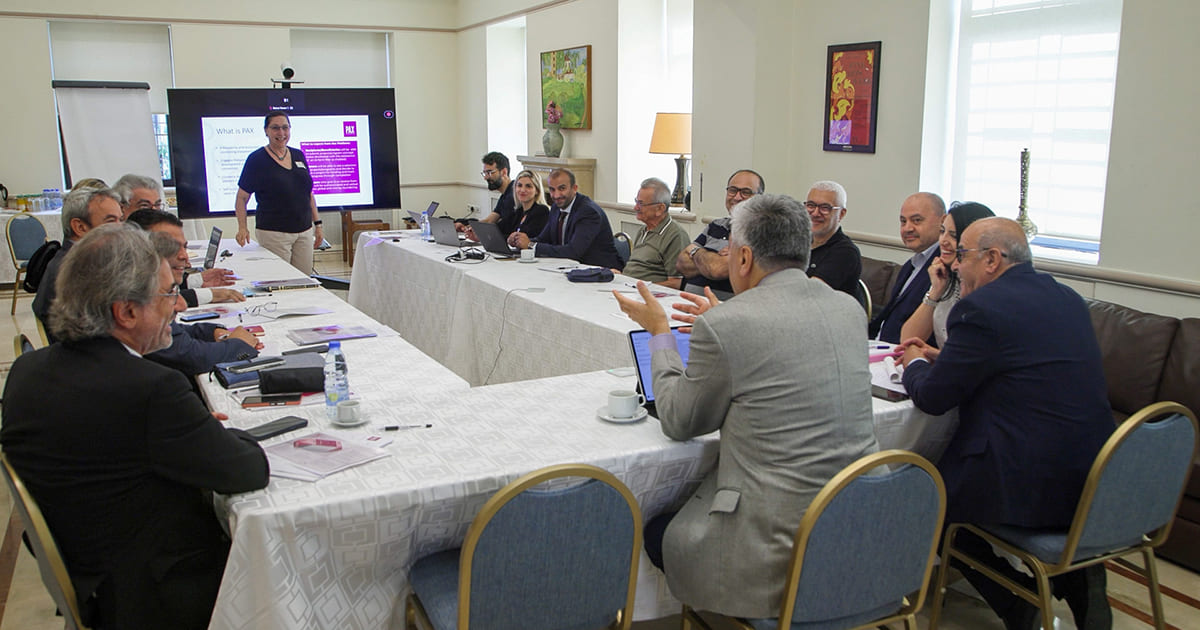 LAU specialists contributed expertise on groundwater, wastewater treatment, pollution, energy requirements and water governance. Proposed projects included solar-powered wells and pumping systems in Sarba, Bishmizzine and Kfar Sir.
The workshop concluded with recommendations emphasizing legal clarity, technical validation and sustainable maintenance. This collaboration supports community water resilience by connecting academic knowledge, civil-society engagement and local authorities around practical resource-management challenges.
LAU News: From Crisis to Action — LAU and PAX Lead National Water Reform Effort
Historical NGO Engagement in Environmental Education
Gender and the Environment — Nidaa’ El Ard Association and Recycle Lebanon
February 13, 2023
LAU’s Arab Institute for Women, together with the MEPI–Tomorrow’s Leaders Gender Scholars Program, hosted a Food4Thought webinar connecting environmental challenges with gender inequality and grassroots action.
The session brought students and scholars into dialogue with representatives of Nidaa’ El Ard Association and Recycle Lebanon. Discussions addressed community environmental initiatives, waste management, recycling and the importance of women’s participation in environmental action.
The exchange broadened environmental learning beyond the classroom by introducing participants to civil-society perspectives and community practices. It provides historical evidence of LAU’s engagement with environmental NGOs and its attention to the social and gender dimensions of environmental resilience.
Arab Institute for Women: Gender and the Environment
Complementary Partnerships for Climate Awareness and Community Learning
Michael Haddad Walks Again for Climate Change and Food Security
June 12, 2025
LAU supported climate awareness and inclusion through its continuing partnership with endurance athlete and UNDP Regional Goodwill Ambassador Michael Haddad.
Accompanied by an LAU delegation, Haddad completed an advocacy walk in Brussels highlighting climate change, food security and the vulnerability of persons with disabilities. The programme included discussions on resilient food systems and sustainable development with international partners.
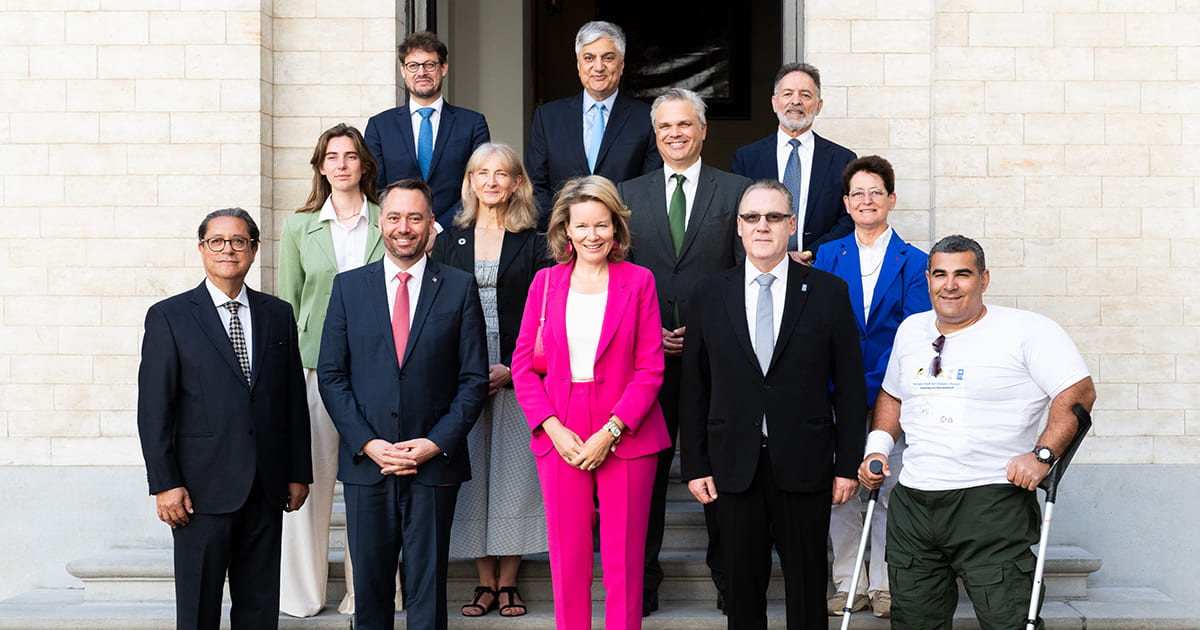 LAU’s engineering expertise contributed to the exoskeleton supporting Haddad’s mobility. The collaboration connects technological innovation with public advocacy and draws attention to the unequal effects of climate pressures.
This initiative complements LAU’s NGO partnerships through wider climate engagement with an individual advocate and UNDP, a United Nations organization.
LAU News: Michael Haddad Walks Again for Climate Change and Food Security
Global Affairs Service Center Hosts UNDP’s Agents of Change
September 16–17, 2023
LAU’s Global Affairs Service Center hosted the ninth cohort of the UNDP Youth Leadership Programme, bringing more than 350 young people to the Byblos campus for training and the development of sustainable community projects.
The two-day boot camp enabled participants from diverse backgrounds to exchange ideas, develop proposals and strengthen their understanding of the Sustainable Development Goals, including climate change.
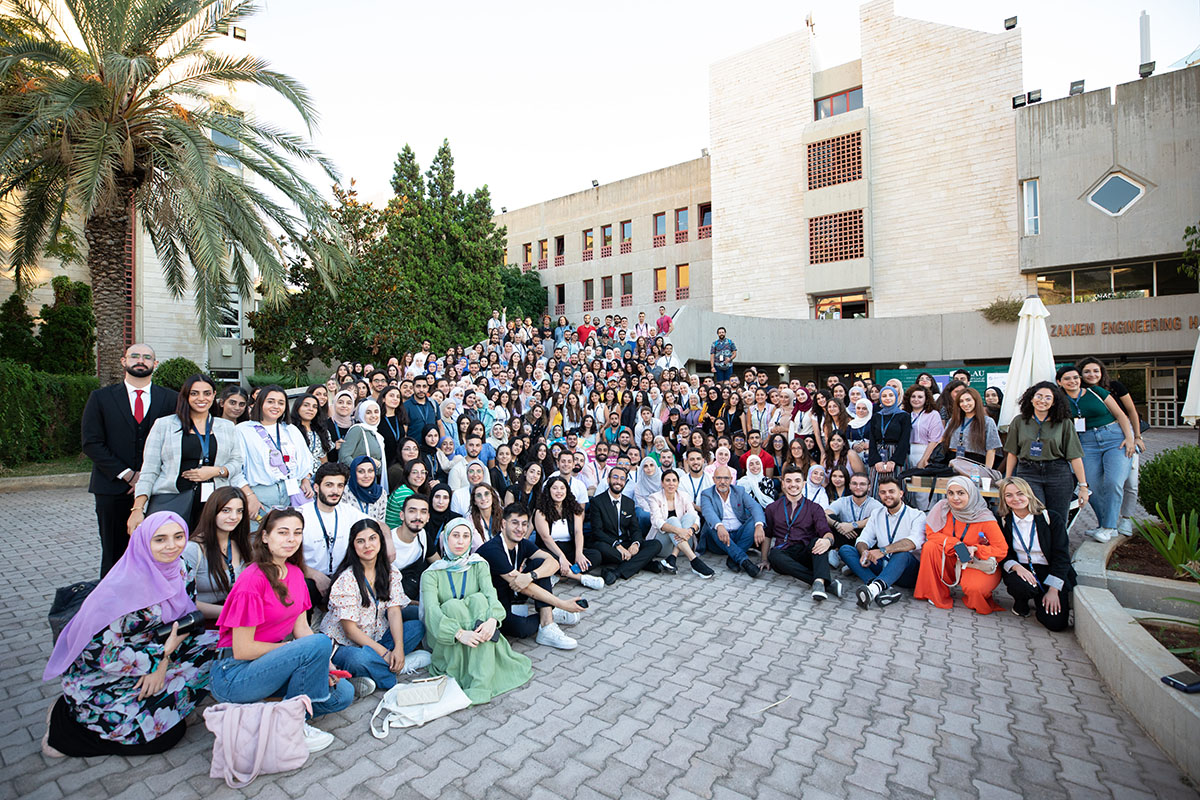 This historical initiative complements LAU’s environmental education by supporting youth leadership, practical learning and community-oriented solutions. It represents cooperation with the United Nations development system, distinct from NGO collaboration.
LAU News: Global Affairs Service Center Hosts UNDP’s Agents of Change
Institutional Support for Civil-Society Engagement
Tomorrow’s Leaders NGO Database and Civic Engagement
LAU’s MEPI–Tomorrow’s Leaders programme connects students with a database of more than 100 NGOs to support volunteering and civic engagement.
The programme provides opportunities and guidance for students to translate academic learning into community service. Access to environmental organizations creates pathways for students to engage with sustainability issues and learn from civil-society practitioners.
This network provides supporting infrastructure for collaboration; specific climate-adaptation contributions are demonstrated through the named partnerships and activities described above.
Institute for Environmental Studies and Research
The Institute for Environmental Studies and Research provides an academic foundation for environmental assessment, planning and dialogue with external practitioners.
Its expertise complements LAU’s NGO partnerships by connecting environmental research with practical questions concerning land use, development and long-term sustainability.