Educational Outreach Activities
LAU actively engages in a variety of educational outreach activities beyond its campus. These initiatives include:
Community Outreach Programs: LAU faculty and students collaborate with local schools and organizations to conduct workshops, seminars, and lectures on a range of topics, such as STEM education, environmental sustainability, and public health.
Volunteer Initiatives: Student-led volunteer groups organize community service projects, including tutoring, mentoring, and environmental clean-up activities.
Research Partnerships: LAU faculty members collaborate with local and international organizations to conduct research that addresses pressing societal challenges and contributes to community development.
Capacity Building: LAU offers training programs and workshops to professionals in various fields, including healthcare, education, and business.
These initiatives demonstrate LAU’s commitment to making a positive impact on the community and promoting lifelong learning opportunities for all.
The below are examples of some of the educational outreach activities beyond campus, in the community, including voluntary student-run schemes:
PIRF grant to implement the standardized COPE (creating opportunity for personal empowerment) using CBT-based skills with 120 vulnerable adolescents in Baalbek, Kaa and neighboring villages .
Faculty run regular workshops in schools, supporting teachers and parents in navigating difficult conversations and emotional difficulties.
Grand Challenges Canada- GCC/NIHR: grant to implement emotional intelligence training with 800 adolescents aged 15-19 in public schools in coordination with MEHE.
Speaking Health to the Community
Nursing, pharmacy, nutrition and medical students join hands to promote health and spread disease prevention awareness at the nursing school annual health fair.
By Sara Makarem December 11, 2024
An effective healthcare system thrives on collaboration, with professionals breaking silos to deliver optimal patient care. Reflecting this ethos, senior nursing students at the Alice Ramez Chagoury School of Nursing led the annual health fair, joined this year by pharmacy, nutrition and medical students.
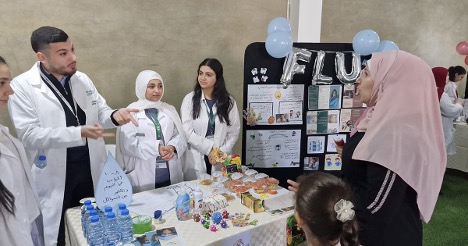
At the event, held on December 6 at Byblos National School, students from all four schools set up educational booths, shared their expertise and provided practical tips on health topics such as the flu, non-communicable diseases, vaccination and balanced nutrition to community visitors.
“This interdisciplinary approach is not new to the school,” said Dr. Rita Doumit, associate professor of nursing. “From their first year, we prepare our students for interprofessional education (IPE) through dedicated courses.” She explained that these efforts foster a culture of teamwork, placing the patient at the heart of care.
“The students get to apply their acquired knowledge through this annual fair, building on previous interdisciplinary initiatives they’ve participated in and community needs assessments conducted beforehand,” Doumit added.
Armed with leaflets, an illustrated chart and wearing makeup resembling small red spots, senior nursing student Yosra Abd Al Khalek aimed to raise awareness about chickenpox and the importance of vaccination.
“We still see people in the community who don’t vaccinate their children or lack the knowledge to differentiate between shingles and chickenpox, leading them to use incorrect home remedies,” she explained.
For third-year medical student Adam El Fouani, offering counseling at the child obesity booth alongside nursing and nutrition students who measured BMI and glucose levels of children brought by their parents, was a rewarding experience. “I enjoyed working with my peers from other schools—the different perspectives they brought,” he said.
Dr. Aline Bou Maroun, clinical assistant professor of pharmacy, who was present at the fair emphasized the importance of pharmacy student participation in such initiatives. She explained that it not only enhances their hands-on experience but also helps them develop effective communication skills to address the varying health literacy levels within the community.
“Our take home message to the community is that you can still make changes to your lifestyle to enhance your life at an early stage before getting the disease or ill,” said Dr. Mahmoud Salam, assistant professor of nursing.
Reflecting on this year’s interdisciplinary edition of the fair, Dr. Bahia Abdallah, assistant professor and nursing program director at the school of nursing, said that in practice, nurses play a crucial role in patient referral, pharmacists focus on pharmacovigilance, nutritionists encourage healthy lifestyles and medical students enhance diagnostics and treatment planning, making their teamwork indispensable for delivering comprehensive care that no single discipline can achieve alone.
Education Day: Giving Back to The Community
LAU graduate students and alumni share their research and knowledge with teachers from across the country on the annual Education Day.
By Sara MakaremApril 30, 2024
To continue inspiring the ever-evolving generations of students, from kindergarten to high school, teachers must commit to lifelong learning and keep up with the latest pedagogies, technological advancements and children’s interests.
Building upon this commitment, the education program in the LAU Department of Social and Education Sciences, in collaboration with Librairie Antoine, organized its annual Education Day on April 20, 2024 at the Beirut campus.
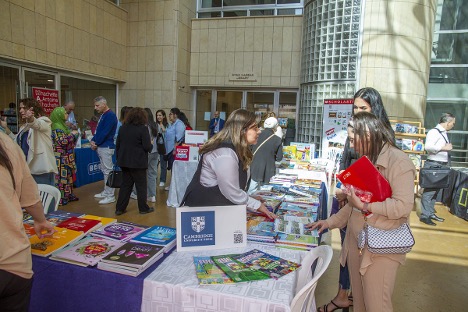
Publishers, professors, heads of schools, trainers, among other professionals in education, and more than 1,000 teachers from across the country engaged in multidisciplinary workshops on Science, Technology, Engineering, and Math (STEM) education, social-emotional learning, the integration of virtual reality and artificial intelligence in classrooms, and innovative teaching.
The workshops were conducted by professionals from leading international publishers such as McGraw-Hill, Cambridge University Press, National Geographic, Hachette Français Langue Étrangère and Hachette Antoine. Current students, graduates, and alumni from the education program at LAU also presented their research and shared successful practices with the attendees.
“This is our way of giving back to the community,” said Dr. Rayya Younes, assistant professor of mathematics education in the Department of Social and Education Sciences. “It is also a great way for our graduate students to present what they have learned and to expose participating teachers to the different programs we have at the school,” she added.
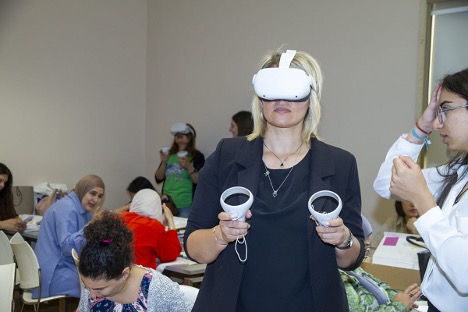
According to Nivine Aziz, an LAU graduate student in the STEM track and teacher in information and communications technology who led a workshop on Lebanese teachers’ readiness to use Virtual Reality, the faculty’s encouragement to present her research to fellow teachers helped her step out of her comfort zone and boost her capabilities.
That the department recently obtained approval from the Ministry of Education and Higher Education to update its bachelor’s degree program from arts to science, said Dr. Mona Majdalani, professor and program director of education at the School of Arts and Sciences, “reflects the latest incorporation and integration of cutting-edge STEM topics, science and research courses into the undergraduate curriculum.”
To put project-based learning into practice, a new Education STEM lab will be inaugurated on the Beirut campus thanks to a grant from the United States Agency for International Development’s (USAID) American Schools and Hospitals Abroad (ASHA). USAID administers the US foreign assistance program providing economic and humanitarian assistance in more than 80 countries worldwide.
The center will feature a range of teaching resources to enable education students to fully engage in a STEM-friendly classroom environment where they can practice effective lesson planning.
In addition to a bachelor’s degree, the education program also offers a teaching diploma in several majors, a master’s degree and a Diploma in Learning Disability and Giftedness.
Arts Competition: 2024 Winners
January 9, 2025
Annually, The AiW participates in the 16 Days of Activism Against Gender-Based Violence (GBV) international campaign that kicks off on November 25, the International Day for the Elimination of Violence Against Women, and runs until December 10, Human Rights Day. As part of the campaign, The AiW and the United Nations Population Fund (UNFPA), this year, are engaging LAU students in an arts competition under the theme of “#Uprooted – Resilience in Crisis.” The goal of the competition is focused on harnessing the power of storytelling and art to raise awareness, inspire action, and promote healing by sharing the stories and creations of women and girls who have survived and thrived amidst the war. At the end of the campaign, the winning art pieces are promoted on The AiW’s social media platforms and featured in an issue of Al-Raida.
On November 26, 2024, The AiW, in collaboration with the UNFPA, held an awareness session for LAU students on the 16 Days of Activism campaign and competition, providing necessary details and requirements for participation. In her opening words, Executive Director of The AiW, Ms. Myriam Sfeir, welcomed the Gender and GBV Expert at UNFPA, Ms. Nicia El Dannawi, and the Communication and Media Officer at UNFPA, Ms. Anastasia Hajj. Ms. El Dannawi and Ms. Hajj briefly discussed the partnership between The AiW and UNFPA and introduced the focus of this competition. Through artworks, the goal of this competition, they stated, is to encourage LAU students to creatively reimagine the ongoing crisis in Lebanon from a gender perspective. In light of all the struggles and first-hand experiences which many have been passing through, Ms. Sfeir, Ms. El Dannawi, and Ms. Hajj urged all students to participate in the competition.
Following the end of the campaign, The AiW and UNFPA announced the winners via social media platforms, specifically Facebook, Instagram, and X. This year, the competition attracted around 57 entries and included a wide variety of artistic pieces, such as posters, poems, short stories, and videos.
- The winner of the 1st place was Pia Kmeid for her poem titled “Four, Three, Two, One.”
- The winner of the 2nd place was Judy Abdallah for her poster titled “Uprooted but Unbroken.”
- The winner of the 3rd place was Theo Sakr for his poster titled “Consent cannot be Bought.”
As for special mentions, the three recipients were Carly Ajamian for her poster titled “Abuse Knows no Age, Protect Women at Every Age,” Nour Moukheiber for her poster titled “Voice – Veto – Violence,” and Karen El Murr for her poster titled “Twice the struggle, Twice the Power to Overcome.”
Finally, on December 6, 2024, The AiW, also in collaboration with UNFPA, held a concluding webinar on “GBV in Times of Conflict.” The opening remarks were delivered by LAU President, Dr. Chaouki Abdallah and Ms. Sfeir. First, Dr. Abdallah highlighted the long-standing role which LAU has played in combatting GBV both within its campuses and in Lebanon, and Ms. Sfeir followed by describing the drastic impact of the recent war in Lebanon on women, especially the most vulnerable like the pregnant and displaced. Headlining the webinar, Member of the United Nations Committee on the Elimination of Discrimination against Women (CEDAW) and Commissioner at the International Court of Justice, Ms. Nahla Haidar, served as keynote speaker. She discussed the consistent violations of international law in times of war, focusing on Lebanon as a case study. In this vein, she presented several recommendations, inspired from real life experiences, to limit the devastating impact of armed conflicts on vulnerable groups like women and girls. Finally, UNFPA Representative in Lebanon, Ms. Pamela Di Camillo, reflected on the cases of violence in displacement shelters during the war. She mainly focused on the mitigation mechanisms implemented by civil society organizations to provide psychological and physical support for those who were most in need. The session concluded with a Q&A session.
Social Media Campaign – #NoExcuse
For the ninth consecutive year, the UN Economic and Social Commission for Western Asia (UN ESCWA) and The AiW have joined forces, launching a far-reaching social media awareness campaign over 16 days. In collaboration with the United Nations Development Program (UNDP) Regional Bureau for Arab States (RBAS) and several civil society organizations from the Arab region, the campaign, comprising of 16 powerful key messages, highlighted the profound effects of occupation, war, and conflict on women in Palestine, Lebanon, Libya, Syria, Sudan, and Yemen. These messages were shared on the social media platforms of The AiW and partner organizations, underscoring the urgent need for solidarity and action during tumultuous times.
The Arab Institute for Women
Providing Life-Skills Support
Since AiW was established, it has aimed to improve and enhance the lives of women in the Arab region. Over the years and under the leadership of noteworthy activists and life-long supporters of women’s rights, AiW’s portfolio has been developed to include several key achievements, one of which is Qudwa: the Basic Living Skills Program.
Qudwa, “role model” in Arabic, was developed in 1985. It is a non-formal integrated educational kit in Arabic, geared towards illiterate and semi-literate women in the Arab region. It has also expanded its target audience by creating new facilitator’s guides on working with different groups (adolescent girls, men and boys, LGBTQ community, and refugees).
Related Projects
Related Research
- برنامج المهارات الحياتية الأساسية
- Empowering Arab Women Through Literacy Program (Arabic)
- المرأة العربية في العلم والعمل
- مشكلات المرأة العربية في التعليم والعمل
- Arab Women and Education
Project: Violence Counts! Strengthening Arab Regional Capacity to Collect Data on Violence against Women
The AiW, in partnership with the Global Women’s Institute (GWI) at the George Washington University, received a grant in December 2020 funded by UN Women and the World Health Organization for the purpose of building the capacity of Arab experts to collect data on violence against women (VAW). Though quality, reliable data on VAW is essential for developing policies and interventions to achieve gender equality, a substantial gap remains in the collection of prevalence data on VAW in regions across the world, particularly in the Arab States. This gap is due to stigma regarding VAW, underreporting, lack of reporting mechanisms, difficulty accessing justice for survivors, lack of services and support, and other factors. This gap is also due in part to the technical capacity required to collect these prevalence data in accordance with global, methodological, ethical, and safety standards.
The AiW and GWI developed a training curriculum and implemented a pilot training within the context of this grant for the purpose of building the technical capacity of a selected number of Arab experts to collect these prevalence data on VAW. A secondary goal of this program was to widen the currently limited pool of researchers who can collect these data in a high-quality and ethical way. This ensured that there was a wider base of Arab experts who were able to undertake data collection on VAW. Data is critical in strengthening prevention and response, and so The AiW aims to integrate this training curriculum within its sustainable development projects.
The AiW staff are engaged in several speaking events outisde the university.
Below are some of the speaking events that The AiW staff were engaged with in 2023:
- Conference: “Advancing innovation and achieving gender equality for a more inclusive society”
- Regional conference: “Launching the Alliance of Women Leaders for Anticorruption and Integrity in Arab Countries”
- Women Deliver 2023 Conference held in Rwanda
- “Regional Convening in Support of Parents in the Eastern Mediterranean, Middle East, and North Africa Region”
- World Lebanese Cultural Union (WLCUY) World Congress
- Regional online consultation workshop: “Confronting Violence against Women and Girls in Arab Higher Education Institutions”
- World Academic Summit
- Roundtable discussion on the specific challenges in exercising the rights to freedom of peaceful assembly & association in Lebanon, ongoing & emerging restrictions, protection, & successful practices on these rights, accountability gaps for serious violations of these rights.
- Workshop on fighting gender-based violence in universities and higher education institutions.
The Food for Thought series at LAU’s Arab Institute for Women (AIW) is a monthly event designed to spark critical thinking and dialogue on various topics related to gender, women’s rights, and social justice. These sessions typically feature guest speakers, panel discussions, and open forums, providing a platform for diverse perspectives and engaging conversations.
The topics covered in the Food for Thought series are wide-ranging and often address pressing social issues. Some past topics have included:
- Webinar: “Gender and the Environment” (24/02/2023)
- Webinar: “Call to Action: Women’s Leadership in Lebanon’s Crisis and Recovery” (07/12/2022)
- Webinar: Personal Status Laws: Amending the Codes (05/07/2022)
- Webinar: Stand Up Against Street Harassment (05/07/2022)
- Why Gender Justice Matters (09/11/2021)
- Sexuality Matters (09/06/2021)
- Work That Breaks Gender Barriers (29/04/2021)
- Gender Discrimination: Legal, Political and Economic Implications (05/01/2021)
- The Pandemic, The Blast and Their Effects on Gender Rights (02/12/2020)
- Women in Decision Making (01/10/2019)
- Taking Up Space! (01/05/2019)
- Women’s Empowerment Challenges (14/02/2019)
- Safety is Bold, Guard Yourself! (04/02/2019)
- Fighting Stigma and Discrimination (30/11/2018)
- From Spring to Autumn (01/10/2018)
The Arab Institute for Women (AIW) at the Lebanese American University (LAU) is dedicated to advancing gender equality and empowering women in the Arab world. To achieve this mission, AIW focuses on several key thematic areas:
Advocating for Equality in Legislation
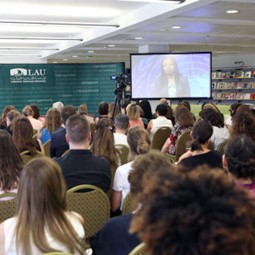
Engaging Women in Peace & Security
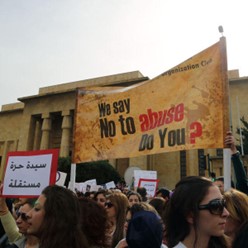
Preventing Gender-Based Violence
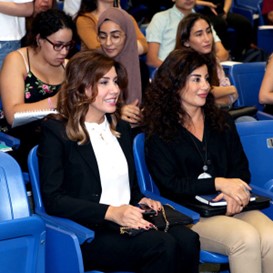
Promoting Women’s Political Participation
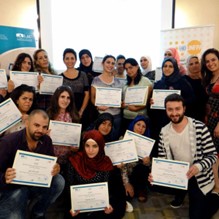
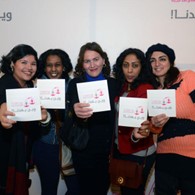
As part of The AiW’s continuing dedication to promoting rigorous intellectual and academic work on the issues of gender equality and women’s rights, the Institute organizes its annual Dr. Suad Joseph Distinguished Lecture Series. The aim of the series is twofold; first, to bring speakers who highlight important topics or themes in the field of gender and women’s studies globally, with the aim to contextualize this to the Arab region and second, to provide graduate students from across the university and specifically, from the MA in Interdisciplinary Gender Studies the opportunity to liaise directly with such high-level academics and researchers. https://aiw.lau.edu.lb/news-events/suad-joseph-lectures/
* The AiW organizes an informal speaking series entitled Food 4 Thought (F4T), a discussion space focused on students but open to the entire LAU community to address current topics related to gender. These discussions are facilitated by different speakers for each session and have included grassroots activists, visiting scholars, media professionals, and others. https://aiw.lau.edu.lb/news-events/food4thought/
2024 events included:
- Women Deliver Panels
- Panel Discussion: “Women in Diplomacy”
- Signing Ceremony: Intisar Foundation’s Gift to AiW
- Honoring event: Saloua Raouda Choucair
- Honoring Ceremony: “Dr. Samira Aghacy”
- International Women’s Day: “Accelerating Gender Equality Through Economic Empowerment of all Women and Girls”
2023 events included:
- Panel Discussion: “Frontiers of Gender Equality in the Arab Region”
- Launch Ceremony: “Women in Leadership” Project
- International Conference: “Anti-Feminist Backlash in the Global South: Cross-Regional Discussions, Strategies, and Innovative Practices”
- Book Launching: “Gendering Civil War: Francophone Women’s Writing in Lebanon”
- Book Launching: “Routledge Handbook on Women in the Middle East”.
- Paper Launching: “Media Hostility: Case Studies on Backlash in the Lebanese Media”
- Paper Launching: “Lebanon: Understanding Anti-Feminist Backlash”
- Play: “Let us Play House (Beit Byout)”
- Athena40-5th Global Conversation: “Innovation, Change, & Education for Women in the Digital Age”
- International Women’s Day: “Gender Equality and Technology: Women’s Inclusion in the Digital World”
- Regional Workshop: “Women’s Political Participation in the Arab Region”
- Panel on: “Mapping the Production of Knowledge on Women and Gender in the Arab Region”
- Film Screening: “Octopus”
- Panel discussion “Sextarianism” book https://aiw.lau.edu.lb/news-events/activities/panel-discussion-sextarianism.php
- Regional workshop: “Women’s Political Participation in the Arab Region” https://aiw.lau.edu.lb/news-events/activities/regional-workshop-womens-politic.php
- Panel discussion: “Gender Equality and Technology: Women’s Inclusion in the Digital World” https://aiw.lau.edu.lb/news-events/activities/international-womens-day-gender-.php
- Panel discussion: “Innovation, Change, and Education for Women in the Digital Age” https://aiw.lau.edu.lb/news-events/activities/athena40-5th-global-conversation.php
- Panel discussion: “Lebanon: Understanding Anti-Feminist Backlash” https://aiw.lau.edu.lb/news-events/activities/paper-launching-lebanon-understa.php
- Launching event and panel discussion: “Routledge Handbook on Women in the Middle East” https://aiw.lau.edu.lb/news-events/activities/book-launching-routledge-handboo.php
- Launching event and panel discussion: “Gendering Civil War: Francophone Women’s Writing in Lebanon” https://aiw.lau.edu.lb/news-events/activities/book-launching-gendering-civil-w.php
- Launching event and panel discussion: “Frontiers of Gender Equality: Transnational Legal Perspectives” https://aiw.lau.edu.lb/news-events/activities/panel-discussion-frontiers-of-ge.php
- Panel discussion: “International Humanitarian Law and the Gendered Implications of Conflict”
Focus and Scope: Al-Raida Journal
Al-Raida, The Pioneer, is a bi-annual interdisciplinary semi peer-reviewed journal published by the Arab Institute for Women (AiW) at the Lebanese American University (LAU) in Beirut, Lebanon. Access to these educational papers published is open to the general public.
The Institute strengthens research on and by women in the Arab region at national, regional, and international levels and provides much-needed perspectives to global discourses on women and gender equality in the Arab region. Al-Raida is the Institute’s signature journal, and has been in publication since May 1976.
Aqlam Publications
The Arab Institute for Women regularly publishes scholarly papers and action research on topics across a wide range of disciplines pertaining to women’s empowerment and gender equality in the Arab region. Within this framework, AiW aims to widen the scope of research on women and gender issues, both in the Arab region and in the Arab diaspora. Access to these educational papers published is open to the general public.
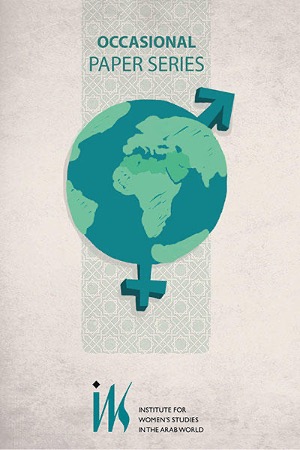 For Aqlam: Occasional Paper Series, AiW welcomes submissions from academics, researchers, activists, and practitioners on current issues related to women’s rights and gender equality wthin the Arab world.
The AiW Aqlam Submission Guidelines can be requested from aiw@lau.edu.lb.
- Aqlam Publications in 2016
- Aqlam Publications in 2017
- Aqlam Publications in 2018
- Aqlam Publications in 2019
- Aqlam Publications in 2020
- Aqlam Publications in 2022
- Aqlam Publications in 2023
The Readers’ Club Engages Youth in Local Communities
October 9, 2023
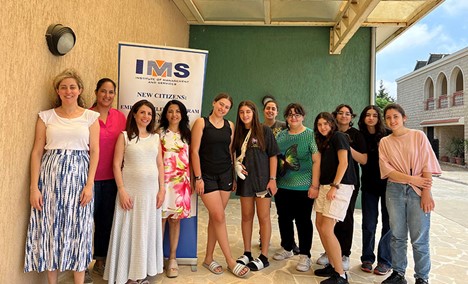
In pursuit of its mission to grow its national outreach and empower readers, the LAU Libraries Readers’ Club partnered with the Institute of Management and Services to host a roundtable book discussion for young girls in Maad village, Byblos. In line with the LAU Libraries’ strategic goal to promote social responsibility, the club anticipates sparking further intellectual dialogues and building connections within rural communities around the country.
LAU Simulation Models
LAU Simulation Models are entirely student-led and organized. The training content is prepared, delivered and managed by LAU students – themselves a large, diverse group of motivated youth who are majoring in different disciplines but united in their vision and mission to promote youth leadership. They meticulously manage school relations, prepare the training content that they deliver, provide technical support, organize special events within the programs, and ensure that the work runs seamlessly. These programs target more than 3,000 school students from all over Lebanon on a yearly basis.
The physics program organizes summer camps for high school students (Grade 11), offering them a unique opportunity to explore captivating subjects such as electromagnetism, Einstein’s theory of relativity, and quantum physics. Moreover, the camp delves into a wide range of energy resources and technologies, encompassing fossil fuels, nuclear power, hydropower, geothermal energy, wind power, and solar energy. The camp is designed to provide an immersive learning experience through interactive lectures, experiments, and documentaries. In addition, students conduct a residential energy audit, uncovering best practices for reducing their carbon footprint
Youth Leadership Simulation Programs
As a middle-school or high-school student, you will find in these programs a launchpad to build leadership, research, debate, public speaking, problem-solving, and writing skills — all essential tools to help them succeed academically and professionally. Through these programs, and since 2005, the university has helped empower a generation of youth leaders.
The Impact Since 2004
300 Participating high schools
15,765 LAU student leaders
62,905 High school student leaders
By Students, for Students
All five LAU Simulation Models are entirely student-led and organized. The training content is prepared, delivered and managed by LAU students – themselves a large, diverse group of motivated youth who are majoring in different disciplines but united in their vision and mission to promote youth leadership. They meticulously manage school relations, prepare the training content that they deliver, provide technical support, organize special events within the programs, and ensure that the work runs seamlessly.
Many LAU student leaders are selected to participate in the annual Global Classrooms International Model United Nations Program in New York City, which brings together middle school and high school students from all over the world to role-play and train as ambassadors.
Through the Simulation Programs, You…
Step into the shoes of ambassadors
You learn how international diplomacy works.
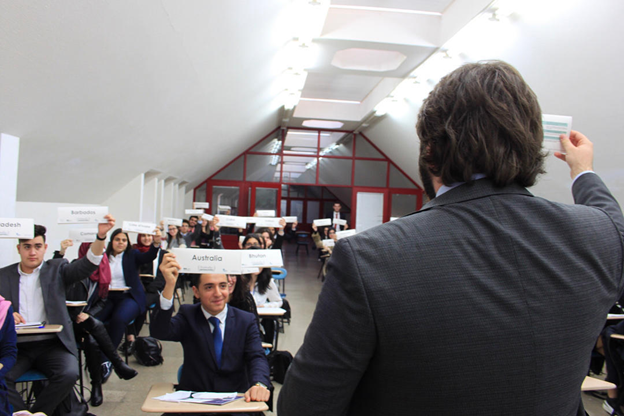
Get hands-on training
For a few months, you come to LAU to get training in research and interpretation, rules of procedure, writing position papers, public speaking, role playing, conflict resolution, negotiations, caucusing, and more.
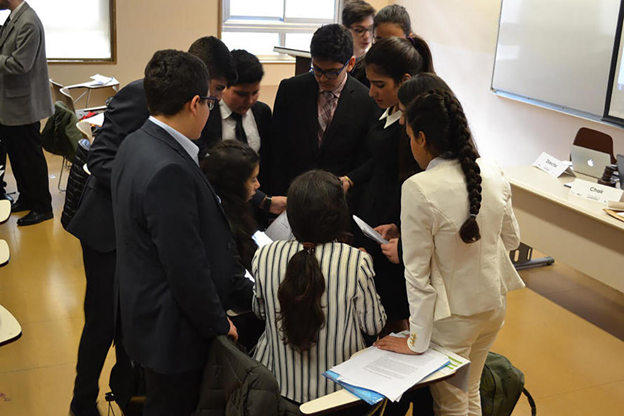
Learn technical skills
You’ll have fun and learn about procedures, institutions, functions, human rights, and inter-cultural dialogues.
Turn theory into practice
It ends with a big conference where you take the role of an ambassador from a country and get involved in a current issue or situation.
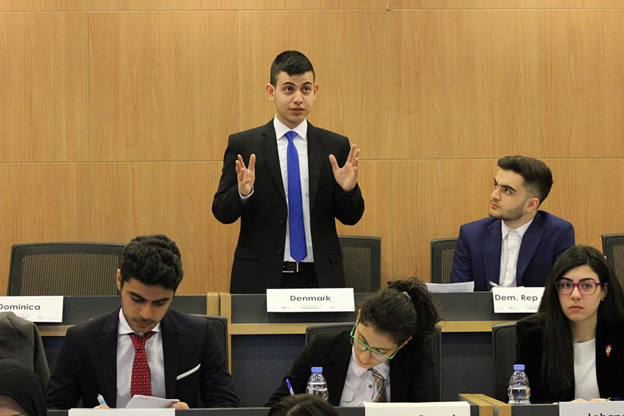
Two-minute tour of LAU simulation programs
A preview of the middle and high schoolers’ experiences across the LAU Youth Leadership Simulation Programs.
Why Take Part in LAU’s Simulation Programs?
You will immerse yourself in the culture of the United Nations, Arab League, European Union, African Union and Good Governance. You will come out of the programs stronger at:
Art of Public Speaking
Dynamics of Debate
Tactics of Role-Play
Process of Conflict Resolution
Essence of Research
Your doorway to a scholarship
In line with its vision to seek and reward talented students, LAU allocates 50 and 25 percent scholarships every year to middle and high schoolers who show exceptional skills in the simulation programs.
Our Flagship Programs
Ever year thousands of middle and high schoolers flock to both LAU campuses to take part in the simulation programs. Find out more and choose the program that is right for you:

Global Classroom International Model United Nations (GCI MUN)
Global Classroom LAU Model United Nations (GC LAU MUN)
LAU Model Arab League (LAU MAL)
LAU Model European Union (LAU MEU)
LAU Model African Union (LAU MAU)- Not offered this year
This program empowers our LAU students by entrusting them to manage, assess, and modify huge educational and leadership events for maximum impact. Our students become administrators, teachers, IT experts, accountants, mentors, public speakers … In brief, they become confident, inspirational leaders. The skills they practice will be with them their entire lives, so it’s no surprise that they land top jobs, get into leading universities and are the recipients of global awards.
Dr. Elise Salem, Vice President for Student Development and Enrollment Management
Contact Us
Academy of Continuing Education
Mission & Vision
The Lebanese American University Academy of Continuing Education (LAU ACE) marshals LAU by encompassing all schools in reaching out to communities for the purpose of adult education, professional enhancement, applied research and impact creativity. Through LAU ACE, LAU as an institution of higher learning is committed to community engagement on the broadest scale, in the interest of sustainable knowledge driven by socio-economic developments.
Vision
LAU ACE aims to improve the quality of professional and personal lives by promoting knowledge, skills, and educational opportunities through the delivery of impactful lifelong learning for individuals, companies, and communities.
Mission
Through building and constantly nourishing links with multiple communities of practice, LAU ACE’s mission complements LAU’s by providing state-of-the-art academic and technical training for lifelong learners in the form of courses, workshops, diplomas, and professional certifications, leading to the betterment of employment opportunities or improvement of job performance, reflected in both personal and professional growth, across Lebanon and the region.
Core Values
Educational Excellence: in tandem with LAU’s vision, we provide a superior educational experience to our learners in terms of faculty selectivity, content quality, and service excellence.
Flexibility and Adaptability: we regularly update our offerings to reflect socio-economical changes in the marketplace. Additionally, we provide flexible solutions, schedules, and locations to cater to our learners’ needs.
Learner Centricity: we put our students first; we provide them with all the support needed, we listen to them and take their feedback seriously with the aim of enhancing the overall learning experience.
Innovation: we encourage innovation and creativity. We anticipate changing demands that might reflect on our courses in order to provide the most innovative learning solutions.
Social Responsibility: we collaborate with different NGO’s and organizations on many levels as part of our contribution to corporate social responsibility initiatives.
Summer and Boot Camps
LAU SoAS Summer and Boot Camps
Exploration, Learning, and Innovation at the LAU School of Arts and Sciences Summer and Boot Camps!
For an unforgettable summer experience that combines learning, creativity and hands-on exploration, The School of Arts and Sciences at LAU invites middle school and high school students every year to dive into an exciting selection of summer and boot camps designed to spark curiosity, enhance skills, and provide real-world experiences in cutting-edge fields.
With expert faculty, state-of-the-art facilities and engaging activities, our summer and boot camps are the perfect opportunity for students to gain valuable knowledge, develop leadership skills, and have fun with like-minded peers. Whether the students are passionate about science, technology, the arts or global diplomacy, there’s a camp for it!
Why Join an LAU Summer/Boot Camp?
- Hands-on Learning – Engage in interactive experiments, workshops and real-world applications.
- Scholarships – Win up to 30% scholarships toward your chosen major at LAU.
- Top-Tier Faculty – Learn from LAU’s distinguished professors and industry professionals.
- Cutting-Edge Facilities – Work in state-of-the-art labs, media studios and research centers.
- University Experience – Get a taste of college life at LAU’s Beirut and Byblos campuses.
- Expand Your Network – Connect with passionate students who share your interests.
- Lifelong Connections - Build friendships and networks with like-minded peers from diverse backgrounds.

Action: TV and Film Summer Camp
Beirut campus

Bioinformatics Boot Camp
Beirut Campus
Byblos Campus

Chemistry Summer Camp
Byblos campus
 Code and Fly: The Drone Programming Experience Boot Camp
Beirut campus
 Drama Queens and Kings: Theater Summer Camp
Beirut campus
 Game and Code: Computer Science Boot Camp
Beirut campus
 Live Broadcasting Summer Camp
Beirut campus
 Math, Music and AI Summer Camp
Beirut campus
 Model United Nations (MUN) Diplomacy Summer Camp
Beirut & Byblos campus
 Nourish and Learn: Nutrition and Food Science Summer Camp
Beirut campus
 Physics Summer Camp
Beirut campus
 Pre-Medical Boot Camp
Beirut & Byblos campus
 Psyched for Success: Psychology and Education Boot Camp
Beirut campus
 Public Speaking Summer Camp
Beirut campus
 Renewable Energy Boot Camp
Beirut campus
 The Write to Heal: Creative Writing Summer Camp
Beirut campus
High Schoolers Dive Into STEM at Engineering Summer Camp
Two hundred high-school students from local and international schools experience LAU’s collegiate life by exploring its engineering disciplines and building connections with peers and faculty.
By Sara MakaremJuly 15, 2024
Preparing leaders for a future of complex challenges begins with inspiring young minds. To that end, the School of Engineering organized its second annual LAU Discover Engineering Summer Camp, where aspiring high-school students spent a week at the Byblos campus, gaining first-hand experience in various engineering disciplines while getting a feel of LAU’s vibrant college life.
From June 23 to July 24, the school dedicated its resources—including the drilling simulation lab, mechatronics lab, experimental fluid dynamics lab, and many more—to 200 high-school students, divided into five cohorts, from Lebanon and abroad.
The initiative aimed to instill in students a lasting interest in STEM (science, technology, engineering and mathematics) by engaging them with real-life applications and ultimately helping them choose their ideal engineering major.
Associate Dean Caesar Abi Shdid, Principal Engineering Lab Supervisor Nicole Jureidini Wehbeh, along with a team of current engineering students and LAU faculty and staff, ensured the seamless execution of lab and entertainment activities and lectures for the participants. These sessions provided theoretical knowledge and technical skills essential for a career in engineering.
Furthermore, working in teams of four, the students participated in an engineering design competition, evaluated by faculty throughout their stay, which aimed to enhance their problem-solving and critical thinking abilities.
“Since I was a kid, I enjoyed building things,” said Kelly Ziadeh, a grade 11 student who also won first place with her three team members. “We worked on many interesting projects, such as concrete buildings, robot grippers and airplane wing designs.”
According to Associate Professor and Associate Dean of the School of Engineering Caesar Abi Shdid, many students go into engineering without knowing what it involves. “Attending lectures by the faculty and getting hands-on experience in labs, such as those offered at the camp, help them make better-informed decisions,” he added.
Dr. Michel Khoury, the school’s dean, encouraged the students to challenge themselves and hoped that the experience they gained at the camp would further inspire their interest and curiosity in the field.
“I hope that what you’ve done at the School of Engineering has really sparked your interest and curiosity,” he said, addressing the participants at the closing ceremonies, “and you are walking out today with new horizons, new aspirations and insights about what each engineering field entails.”
In addition to sports activities, games and field trips, students enjoyed an informal barbeque gathering with faculty and staff, which helped them develop a stronger affinity with both the university and its community.
The Rewarding Experience of Summer Camps
The School of Arts and Sciences’ summer camps aimed to give high-school students a head start in their chosen field of study at LAU.
By Luther J. Kanso July 19, 2024
As the university prepares for a new academic year, the School of Arts and Sciences (SoAS) rolled out a series of interdisciplinary summer camps designed to offer students a university-level experience and prepare them for a potential education toward their chosen major at LAU.
The camps took place over the course of five days, from July 1 to 5, and were dispersed across different buildings on both the Beirut and Byblos campuses.
Attendance this year surpassed last year’s figures, with more than 100 Grades 10 and 11 participants from schools across Lebanon. Upon completion and assessment of the camp content and participation, students could earn scholarships covering up to 30 percent of their tuition.
This year, 21 students were rewarded for their performance and commitment with scholarships that corresponded to the specific camps they participated in.
In line with its commitment to social engagement and outreach, the school reintroduced three popular summer camps this year, mathematics, public speaking and creative writing, in addition to the chemistry and food science and nutrition camps that take place almost annually.
The structure of this year’s camps was put together by faculty members at the school with two goals in mind: to equip students with practical skills and knowledge that are directly relevant to their prospective careers, and to make the experience as profound as possible.
“I would go as far as to say that the summer camps of 2024 have been some of, if not the most organized camps we’ve had to date,” said Assistant Dean and Associate Professor Robin Taleb, who oversaw their planning. “Not only that, but the content they brought in terms of knowledge and learning was truly impressive.”
For instance, the chemistry camp, which took place on both campuses, offered hands-on laboratory experience where students got to work with advanced chemical instrumentation and conduct multiple experiments. This sort of engagement is crucial for careers in scientific research, medicine, pharmaceutical and industrial processes, noted Assistant Professor Elias Akoury.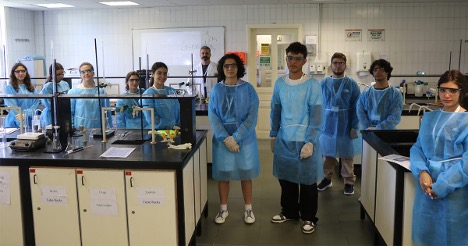 By providing an understanding of the real-world applications of chemistry, students felt more prepared for the challenges of university-level science courses as well as scientific inquiry and industry practices.
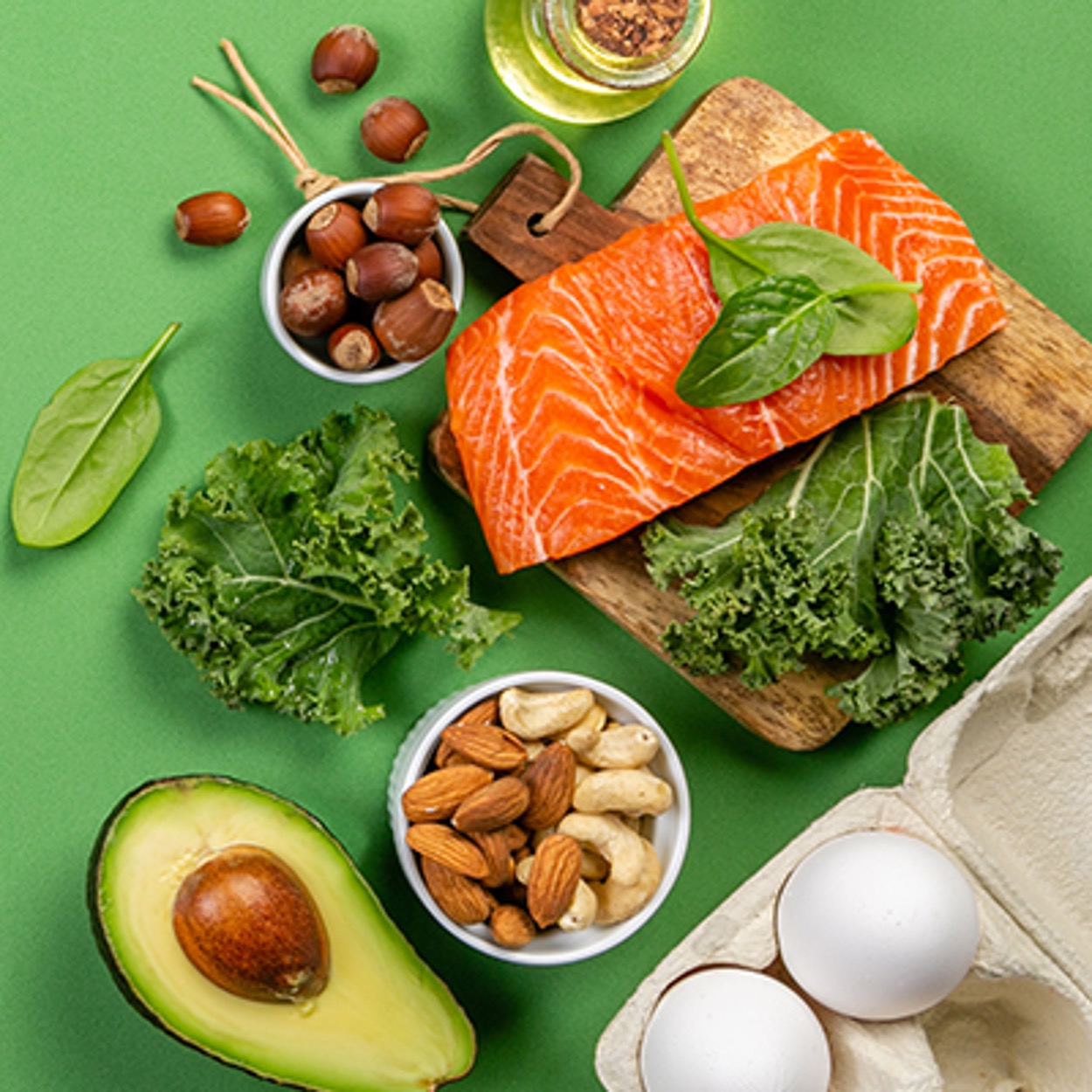
Similarly, the nutrition and food science camp in Beirut included workshops and informative lectures on the roles of nutrients and principles of food processing with emphasis on the UN Sustainable Development Goals (SDGs), thereby offering a comprehensive understanding of the field through evidence-based practices and critical thinking.
“The collaborative environment within the camp really prepared us for success in both academic and professional settings,” said high-school student Leen Moussa, who won a 30-percent scholarship for her active involvement in the camp. ”This knowledge is important for careers in dietetics, nutrition and the food industry.”
In the creative writing camp, students were encouraged to develop their literary skills and storytelling abilities by writing non-fiction and fiction pieces inspired by personal experiences, so that they may appreciate the iterative process of writing and build their confidence in articulating their ideas.
“These competencies are beneficial for both academic success and professional communication, and are crucial for careers in journalism, publishing and any field requiring strong communication abilities,” said Instructor Nayiri Baboudjian. “I was happy to see the students feel a sense of catharsis and safety in expressing themselves at our university and can only hope that they get to experience that daily when they enroll.”
Participants in the public speaking camp which had the highest number of students, were trained in persuasive communication and effective presentation techniques for careers involving public interaction.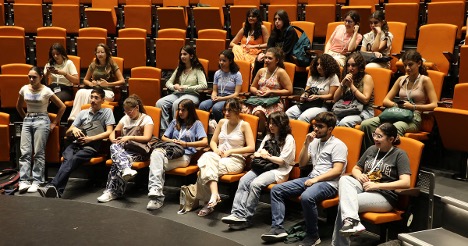
By mastering persuasive speaking and learning to manage stage fright, said senior instructors Hala Daouk and Dana Eido in a joint statement, students became more confident and articulate speakers. “These skills are highly needed in university settings, where presentations and group discussions are frequent, and in professional environments where effective communication is key to leadership and success,” they added.
Student Roy Anthony Mawad, who also won a 30-percent scholarship, particularly enjoyed speaking and connecting with people in an age mostly dominated by artificial intelligence where human interaction is minimal, he said. “Developing my soft skills both practically and theoretically has pushed me to go beyond what I thought I could do,” he added.
Over at the mathematics camp, the instructors introduced students to complex numbers and their applications and guided them through analytical theories and problem-solving skills.
In addition to these foundational skills for careers in engineering, finance, technology and quantitative analysis, “exploring advanced mathematical concepts and their practical applications helped develop the students’ understanding of the subject’s relevance to various fields in the industry,” said mathematics graduate Hedi Jaza (BS ’24), who helped give courses to the students alongside President of the Mathematics Club Mahabba El Sahili.
“We also wanted to make math entertaining,” El Sahili said, “and teach everyone how to approach the subject in ways that they wouldn’t otherwise learn at school.”
In a fitting end to a series of enriching educational experiences, the camps concluded with an awards ceremony at the Adnan Kassar School of Business, attended by the camp participants and faculty members.
Summer Camps: Enhancing High Schoolers’ Learning Experience
The School of Arts and Sciences offers 11th graders university-level online courses and partial scholarships.
LAU’s School of Arts and Sciences (SoAS) held the ninth edition of its summer camps online, attracting enthusiastic students from across Lebanon to learn about their favorite subjects in a stimulating and interactive environment.
The camps are among the school’s social engagement and outreach activities that aim to inform Grade 11 students about education opportunities during a week of university-level courses offered in subjects of their interest.
The free camps spanned translation, English creative and speech writing, computing, nutrition and food science, chemistry and the newly added mathematics.
By the end of the week, up to six students from each camp won partial scholarships to LAU for their final projects.
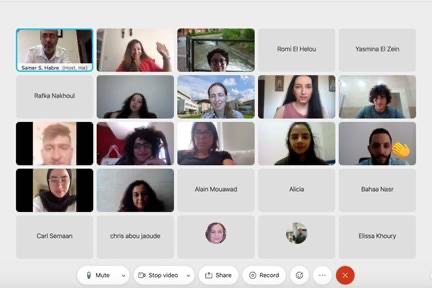
The high schoolers’ attendance, despite the deteriorating situation and constant power cuts, was commended by SoAS Dean Cathia Jenainati.
“There are many reasons why many of you could have dropped out of the camp. There are many reasons why this could not go on,” she said during the online closing ceremony. “But despite all of this, here you were. You enjoyed the camps and our dedicated instructors as usual turned up to run them.”
It is the young people’s “strong spirit,” added Dr. Jenainati, that enriches education. “We are feeding on your spirit, your enthusiasm, your hope and your dedication and all of that energy that you bring to us.”
Thanking them for their participation, Dr. Jenainati pointed out that the camps reflected “one percent of the kind of fun and intellectual engagement you will have at LAU were you to join us in the future.”
Assistant Dean Samer Habre reaffirmed the school’s commitment to the summer camps regardless of the dire conditions in the country, hoping they would be “a learning curve for the students and also a rewarding experience in terms of the knowledge they gain and in terms of the scholarships they win.”
Each camp introduced the participants to principles of the subject they are studying.
In chemistry, campers discovered diverse experimental procedures, virtually isolated natural products and synthesized medicinal active ingredients. In the nutrition and food science camp, modules included macro and micronutrients, energy balance and weight regulation, nutrition-related diseases, physical activity, eating disorders and food safety.
“I was so surprised,” said Emma Sleiman, a chemistry camper. “Who would have thought that during only five days, you, professors [Elie] Akoury and [Brigette] Wex, have succeeded in giving us the vision, and that vision is seeing ourselves as chemists.”
A student in the nutrition and food science camp, Rasha Saad, expressed her gratitude for the opportunity to take part in the course, describing it as organized and informative.
“The information I learned from this was not just applied; it was one that I could talk to other people about, as nutrition is a part of our lives,” she said, adding that the camp was also an opportunity to share a class with students from across the country.
Instructors from the Department of Computer Science and Mathematics introduced students to Python – one of the most commonly used programming languages – and in Logic and Proofs covered the rules of logic in distinguishing between valid and invalid mathematical arguments.
“This experience with LAU was very engaging, intensive and very challenging,” said computing student Ghassan Abboud. “There was some advantage to it being online because we were able to start coding right away and better understand the concepts involved.”
What he liked most about the camp, he added, was the fact that “not only did it teach you how to code in Python, but also how to learn Python on your own, how to figure out the resources.” Experimenting with the actual process of developing an idea, designing the code and fixing any bugs left him with a sense of achievement.
In the newly introduced mathematics camps, Riham Al Bayaa said that despite the poor internet connection, instructors always provided a solution through recorded sessions.
The English speech writing camp trained campers to communicate with better clarity and impact, while the English creative writing sessions were designed to foster an appreciation of literary works and help students refine their creative writing skills.
“I loved the activities, how they challenged you on the spot and how they kept everything on blackboard so that you could always go back to them anytime. Our instructors were more like friends,” said camper Nancy Slim. “I felt I really belonged here, with the groups of amazing students and teachers.”
Last but not least, the translation summer camp familiarized students with a rich array of texts, including journalistic, legal, scientific, technical and business, in addition to some approaches in translation.
“This program introduced us to LAU and the translation camp educated us in different fields and topics, such as coronavirus, fake news and more. It was also a chance to make new friends. It was fun and helpful; I would recommend others to enroll next year,” said camper Roumi El Helou.
The summer camps have proven to be an excellent tool to attract high-achieving students and to provide education opportunities through scholarships.
“Summer camp students who later join LAU, especially the ones who win scholarships, are a sample of the student population we are seeking to expand,” said Dr. Habre.
“Campers have shown since the inception of the camps nine years ago that they rank among the best, earning high GPAs, winning best capstone awards, and being academically engaged in their fields. Many of them have pursued graduate degrees, which attests to their academic excellence,” he added.
LAU Receives Major Grant from GCC-NIHR to Implement Emotional Intelligence Training for Young Lebanese Adolescents
The Grand Challenges Canada and the National Institute for Health Research fund a two-year intervention program, designed by LAU faculty, to be implemented in schools across the country.
Developing emotional intelligence is becoming more timely, especially for young Lebanese, given the ongoing socioeconomic and political crises that have deeply impacted their mental health.
Even before the pandemic, and in the wider global context, “research had shown that this generation is less happy than its predecessors, despite access to leisure, comfort and technology. The accumulating adversities have dramatically increased their psychological distress,” explained assistant professor of psychology Myriam El Khoury-Malhame.
Driven by their worrying findings and worldwide red flags on deteriorating youth mental health, LAU faculty from the School of Arts and Sciences and the Alice Ramez Chagoury School of Nursing designed a youth-led evidence-based intervention program that offers emotional intelligence training for Lebanese adolescents in public schools and addresses the lack of youth-friendly mental health services in the country.
Their efforts culminated in a CAD 248,553 (USD 185,000) grant from Grand Challenges Canada, funded by the National Institute for Health Research (NIHR).
Leading the study at LAU are former Associate Professor of Psychology Maria-Jose Sanchez-Ruiz – the principal investigator of the project, who has recently joined the Universidad de Alcalá de Henares (UAH), Spain – Dr. Myriam El Khoury-Malhame, Associate Professor of Nursing Rita Doumit – a public health nurse and researcher with prior proficiency working with vulnerable adolescents – and Assistant Professor of English Sleiman El Hajj.
Dr. Sanchez-Ruiz’s work over more than a decade has shown that emotional intelligence is a key protective factor against psychopathology and a predictor of positive outcomes in Lebanese youth.
Titled Yes to Emotions in Youth (YEY), the program focuses on empowering young students to better understand, express, regulate and use their emotions; altogether increasing their emotional awareness as a first step to transforming their personal challenges into opportunities for growth.
This training will facilitate the development of the so-called soft skills needed to navigate current and forthcoming challenges such as compassion, positive communication, stress management and cognitive reframing. It teaches mindfully accepting upsetting situations and developing optimal coping strategies to adversities through evidence-based, youth-led training.
The YEY program includes 11 weekly sessions and targets high-school students in different regions in Lebanon, in close collaboration with the Lebanese Ministry of Education and Higher Education. The project has already been piloted and is currently implemented in three schools around Beirut and Keserwan areas. The hope is that YEY would become more sustainable by subsequently scaling it up and integrating it within the Lebanese school curriculum in the future.
A key feature of the YEY Program is having faculty experts prepare young graduate students to deliver the training in colloquial Arabic at the schools. “This dynamic of having Youth train Youth goes a long way in building a connection, speaking the same language, being relatable, and mostly establishing trust to help trainees open up to the trainers, much like the dynamic we see in organizations such as the scouts, for example,” noted Dr. Malhame. The graduate students – dubbed “Youth Leaders” – will be assisted by Youth Facilitators and will take on the implementation of the YEY Program inside the classrooms.
To ensure the program is culturally adapted and age-specific, Dr. Doumit added that focus groups had helped them identify and integrate real-life scenarios of common challenges faced by youth in Lebanon. The program touches upon challenges that were raised by students during the pilot study related to bullying, conflict with parents, exam worries, physical emotional and verbal violence, body image, gender inequalities, academic engagement and goal setting.
YEY will make use of active learning approaches like role plays, class discussions, interactive games, etc. to better involve the students during the sessions and leave them with take-home sheets to reinforce learnings outside class time.
Having worked on similar youth-empowerment community programs in the past, Dr. Doumit affirmed YEY expected benefits. “Based on evidence-based studies and previous experiences, emotional intelligence training contributed to curbing anxiety, depression, and even suicide rates,” she said.
Dr. Malhame further expounded on the mixed methodology, where the program will evaluate both the physiological and psychological wellbeing of the high schoolers before and after the training to monitor its effectiveness, with a follow-up stage as well. Dr. Elma Nassar, an LAU faculty alumna and statistics specialist, will lead the quantitative analyses and models whereas Dr. El Hajj will oversee the qualitative data collected in the form of emotional diaries and weekly take-home sheets.
For Dr. Sanchez-Ruiz, “‘Yes to Emotions in Youth’ is a message for adolescents to get curious about their emotional world, rather than avoid it or identify with it, despite the heavy challenges. YEY is a space for sharing and building emotional self-efficacy and self-control to promote their wellbeing, which can have a positive ripple effect in their friends, families, and communities at large.”
The team is working on designing a website and actively planning to manualize the YEY program in English and Arabic so it can be readily accessible to adolescents and easily implemented by teachers in schools to improve overall outcomes of this sensible age group across the country, providing a cost-efficient alternative to fostering community resilience.
Gaining the Edge in the Global Labor Market
Alumnus Rand Ghayad, head of Economics & Global Labor Markets at LinkedIn, shed light on the future of jobs in a talk hosted by LAU’s Global Affairs Service Center.
The job market has changed dramatically post-COVID. Some industries are holding out on hiring, while others are struggling to find talent. Job requirements themselves have evolved with new work trends, technology and upskilling. Navigating a labor market in flux at the best of times is challenging, even more so when a recession looms.
To shed light on the State of the Global Labor Market and the Future of Jobs, LAU’s Global Affairs Service Center held a talk by Head of Economics & Global Labor Markets at LinkedIn and Adjunct Professor at Harvard University Rand Ghayad (BS ’06) who provided insights collated by LinkedIn. The event on August 2 on the Byblos campus was hosted by the center’s Lead Director Suleiman Barada.
Before joining LinkedIn, Dr. Ghayad worked at the International Monetary Fund, advising governments and sovereign states on macroeconomic and labor market reforms, and served in various capacities at the Federal Reserve Bank, International Labor Organization, and Massachusetts Institute of Technology (MIT), Cambridge, Massachusetts. In 2014, Dr. Ghayad received LAU’s Alumni Achievement Award.
US unemployment and the labor force became his focal interest after he struggled to find a job as an MBA graduate from Boston University in 2007 during a recession. He decided to upskill – advice he could not overstate in his presentation – with a PhD in Applied Economics from Northeastern University, where he wrote his dissertation on Long-term Unemployment in the Great Recession.
Are we heading toward a global recession?
As you might expect, the answer is yes. GDP growth will slow down globally. However, the recession will be mild and short with better expectations of recovery than that experienced during the COVID-19 era. The US economy will be the first to be impacted, followed by countries that peg their currency to the US dollar.
Dr. Ghayad qualified it as a “rolling recession,” which does not hit the job market unilaterally but affects one industry or sector at a time. In the MENA region, for instance, the recession rolled from technology to housing.
As employment will be tight, employers and job seekers will need to revise their strategies. Some cracks are beginning to appear in the labor market, with one job opening for every 37 people on average in the MENA region compared to four to five job openings for the same number of job seekers in 2021.
Following an uptick in hiring in 2021 during the pandemic, there has been a dip globally across all industries. Employers are holding back on jobs until the economic situation crystallizes. The hiring rate in Lebanon, for example, is down by 19 percent year-to-year.
Which industries should one target for employment?
While many industries are still struggling, others are more resilient, said Dr. Ghayad. Recovery from their post-pandemic to their pre-pandemic situation has varied for industries, with job marketing conditions slackening for some and tightening for others. Technology, for instance, has witnessed the largest hiring slowdown, whereas government hiring remains strong.
Jobs that are on the rise for new graduates with a bachelor’s are product management and consulting roles, followed by purchasing, human resources and business development. Industries that are attracting the greater number of new graduates are professional services –which includes software engineers, accountants and legal assistants – healthcare, manufacturing, financial services and technology, information and media in that order.
How can one gain or retain a competitive edge in a changing global market?
“Skills are the currency of the future,” noted Dr. Ghayad. According to LinkedIn data, he stated, members’ skillsets globally have changed by 25 percent since 2015, a number that will likely double by 2027. Even if one remains in the same job, the requirements for that job are changing, which makes upskilling essential for job security and remaining competitive.
Learning new skills will become more essential not only for job seekers but also employers, and industries struggling to find talent would do well to adopt a skills-first approach to hiring, where ability supersedes job history or qualifications. On average, added Dr. Ghayad, a job seeker should acquire three new skills between now and 2025.
To make a degree more valuable, universities should recalibrate their curricula to incorporate foundational or soft skills that graduates will need in the future job market. In that regard, experiential learning is essential in equipping students with skills that are applicable from day one on the job.
Young Scholars Demonstrate that the Robot is their Friend at the World Robot Olympiad
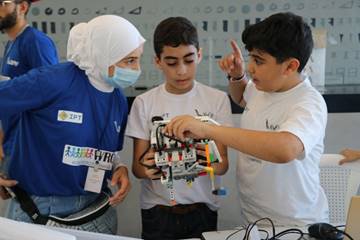
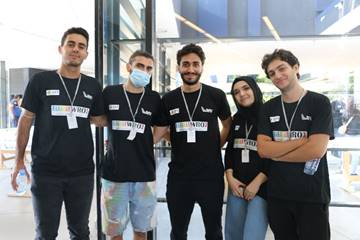
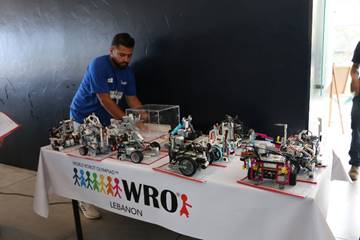
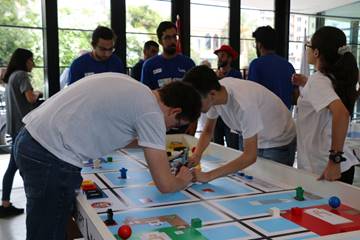
On August 6 and 7, students from schools across Lebanon immersed themselves in the fascinating world of robotics at the World Robot Olympiad national competition (WRO-Lebanon 2022), My Robot My Friend, co-organized by the WRO-Lebanon Section and LAU.
Guided by student volunteers and judged by faculty from the School of Engineering, the young scholars competed in three categories of different age groups for the chance to represent Lebanon in the International WRO competition to be held in Germany this fall.
LAU’s active participation in WRO-Lebanon 2022, the first robotics competition of its kind to be reinitiated since the onset of the economic crisis and the COVID-19 pandemic, proves once again its pioneering role in the development of education in the country.
After a long competitive day, the closing ceremony was held at the Municipality of Byblos, under the patronage and in the presence of the Director-General of the Ministry of Education and Higher Education Imad Al Achkar, the Secretary-General of Catholic Schools Father Youssef Nasr, President of the municipality Wissam Zaarour, Dean of the School of Engineering Lina Karam, WRO Official Representative in Lebanon Jenny Chemaly, Founder and President of Growth Holdings LLC Philip Ziadeh, founder and CEO of the Advanced Computer Technology Center Rabih Baalbaki and supporters of the education and engineering sector.
Welcoming the young students, “Lebanon’s hope and future,” Dr. Karam described robotics as a combination of “several fields, including electrical and mechanical engineering, computer engineering, computer science, artificial intelligence with aspects from psychology, ethics, public policy, and design; it enables various applications from assistive technologies and medicine to transportation, manufacturing, construction, and space exploration.” Robotics, she added, is about dexterity, precision, and improving the quality of life.
Chemali attributed the success of WRO-Lebanon 2022 “to the students who worked hard with their teachers, and to the supporting institutions and people who trusted us.”
As it presents an opportunity for them to develop their creative skills and problem-solving skills in the fields of science, technology, engineering, and mathematics, she said, “this type of competition helps them to hone their learning skills, thought process, sense of commitment, leadership and teamwork skills, and eventually to choose their career path.”
Chemali expressed her gratitude to all those who contributed to this achievement, from Director-General Al Achkar, the Municipality of Byblos, LAU, LIV, IPT, Dr. Noel Maalouf, Rasha Ghabash, Rabih Baalbaki, Mr. Chadi Al Maasarani, Caritas Youth, and all the volunteers and media.
Prizes were then distributed to the winners of each category, marking the end of this year’s competition. The Jamil Rawas Public School for Boys and Champville came first in the Future Innovators Junior (15-13) and Senior (19-16) categories, respectively, with Champville also taking the top prize in Future Engineers. Edutech claimed first place in the Elementary (12-8) and Junior RoboMission categories while Saint Joseph School came first in the Senior category.
 |
 |
 |
 |
MDLAB 2022: Empowering Women and the Youth with Media Literacy
LAU hosts international experts and students for a week-long summer academy on digital media literacy.
For its eighth edition of the Media Digital Literacy Academy of Beirut (MDLAB), LAU’s Institute of Media Research and Training (IMRT) at the School of Arts and Sciences reunited faculty, students, and activists in a week-long session on empowering women and youth through media literacy pedagogies and multimedia skills.
Funded by the Public Affairs Section at the US Embassy in Beirut and the German Academic Exchange Services (DAAD), MDLAB 2022 hosted 75 participants from Egypt, Palestine, Iraq, Jordan, Lebanon, Algeria, Morocco, Tunisia, and Germany to address the representation of women, youth and other marginalized groups in the coverage of protests and civic activism campaigns, and to advance the digital multimedia skills and knowledge of activists, journalists and media educators.
MDLAB has for years been dedicated to expanding media and digital literacy in the region through a number of workshops and trainings, providing the needed curricular material and resources, and empowering faculty, students, journalists, and activists to transfer what they learned to their communities.
Since its launch, MDLAB has succeeded in introducing media and digital literacy to 60 universities and schools in 12 Arab countries by acting as an incubator of innovative ideas and a hub for a network of regional universities and media educators.
In addition to promoting civic engagement and youth-centered discussions, the academy aims to bring together students and scholars from all over the Arab world and Europe for academic and cultural exchange.
“MDLAB is a bigger example of the social change mission at LAU to pull resources together and empower students through education,” says MDLAB Co-director and LAU Assistant Professor of Multimedia Journalism Gretchen King. “The program tries to shine a light on the media and gives people tools to use the media themselves and center other voices which have otherwise been silenced or misrepresented.”
The lectures were given by LAU faculty along with guest speakers and experts from the United States, Canada, Egypt, Iraq, Germany and Denmark. Daily workshops were organized in collaboration with the Issam Fares Institute of Public Policy and International Affairs, Friedrich-Ebert-Stiftung, The Arab Council for Social Sciences, Switch Perspective, NO2TA feminist lab, Iraq Network for Social Media, Digital Lab and Egab media platform, among others.
“We are fortunate to be able to bring together such a vibrant group of scholars, journalists, and activists to discuss pressing current issues of women, youth and media and develop locally rooted media literacy curricula,” says MDLAB Director and LAU Associate Professor of Multimedia Journalism and Media Studies Jad Melki.
In the age of mass information, media literacy forms the core of media activism and education. “It literally saves lives,” says project manager of the Algerian Media Literacy Camp and MDLAB participant, Meriem Saoud. “With this great access to information, comes a bulk of misinformation that you cannot filter out without the needed critical skills.”
Media literacy is also central to differentiating real from fake news nowadays, notes MDLAB participant from Baghdad, Taha Yassine. “There are many factors affecting media representation such as sponsorships, funding, and the political economy that inherently prejudice the news and necessitate greater awareness to be able to accurately digest it,” he says.
In these times of crises in Lebanon and elsewhere, “it is essential to consider the role of the media not only from an academic perspective but also from the perspective of young journalists and media specialists who constitute the main focus of MDLAB curricula,” says Dr. Denijal Jegic, researcher in Multimedia Journalism and Communication at LAU.
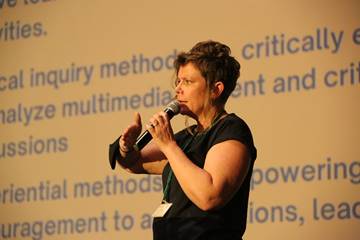 |
“MDLAB is a bigger example of the social change mission at LAU to pull resources together and empower students through education,” says Dr. King. |
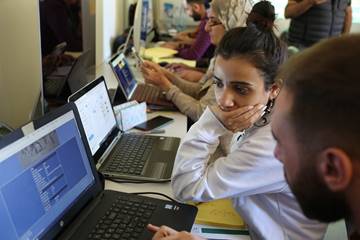 |
The academy aims to bring together students and scholars from all over the Arab world and Europe for academic and cultural exchange. |
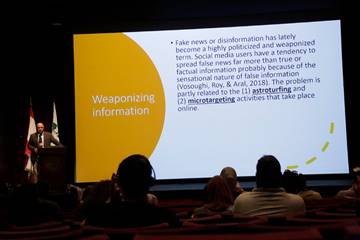 |
In the age of mass information, media literacy forms the core of media activism and education. |
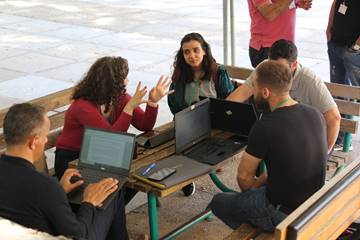 |
MDLAB 2022 reunited faculty, students, and activists in a week-long session on empowering women and youth through media literacy pedagogies and multimedia skills. |
LAU and Boise State University Collaborate on Virtual Exchange Program
Lebanese and US students collaborate on innovative solutions, overcoming communication challenges.
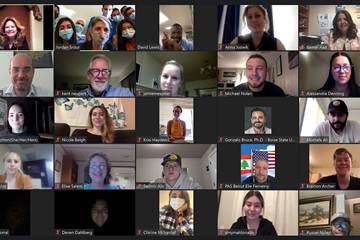
Students from LAU and Boise State University (BSU) embarked on a virtual exchange program funded by the US Embassy in Lebanon, turning difficulties into co-created, innovative solutions.
Through Flipgrid, an educational video app, 71 students worked on three projects aimed to engender cross-cultural dialog. The first of these projects was an ice-breaker activity whereby the students designed a new product/service for a grocery store. In the second, the students had to develop solutions to a problem that they imagined their cross-cultural counterparts were experiencing and then refined those innovative solutions by carefully listening to their counterparts’ comments.
In yet another project they had to work collaboratively to identify the strategic differentiators for a company addressing one of the 17 UN Sustainable Development Goals.
“When the students suddenly understood that a nine-hour difference translates into a 24-hour communication cycle, I got a lot of push-back,” said Dr. Jordan Srour, associate professor of operations management at the Adnan Kassar School of Business, who worked on designing the course. “One student even asked: whose crazy idea was this?”
One interesting solution, explained Dr. Srour, was a set of fire poles with embedded sensor technology and sprinklers that simultaneously alerted to and mitigated the spread of wildfires. “This project stuck in my mind as wildfires became a point around which the team members could really understand each other,” she said.
Another project that stood out was one developed in an individual assignment, allowing BSU students to safely return to in-person learning during the COVID-19 pandemic. LAU students developed an app – using BSU logos – that allows students to select a location on campus and then identify the route that takes them through the least crowded and most recently cleaned areas to ensure their safety.
“I was totally shocked,” said Dr. Srour, “as LAU students independently worked on a problem inspired by their conversations with BSU students. With the many problems happening in Lebanon, these students chose to focus their efforts on a problem related to their BSU counterparts.”
The experience has taught the students what no textbook can: how to listen.
“Of course, the technology has facilitated the communication, but the class’s major strength was the fundamentals of what it is to be a human with a problem that needs solving,” explained Dr. Srour.
“Apart from the nine hours’ time difference and some power cuts faced along the way, I found the program really engaging,” said senior student in information technology management Abdelrahman Ghalayini, “as it gave me a better idea of what it means to work with different cultures and time zones.”
But what he appreciated the most, he noted, was the chance to work with a university abroad and interact with students from different backgrounds. “This helped me expand my knowledge and come up with new ideas that led to completing the project.”
The course also helped improve the students’ critical skills.
“We had to come up with creative, data-driven, and interesting ideas throughout the semester, especially in the collaborative projects with BSU students,” said second-year student Mariam Tahsaldar, who is minoring in data analytics.
“I was happy that they learned more about Lebanon since they did not even know that we spoke English in the first place,” she added. “I also got to learn more about their country and vice versa.”
Moving beyond intellectual capital and pedagogical innovation, the project embraces the ideal of a university without borders.
“The collaboration with Boise aligns with all three pillars of LAU’s strategic plan,” said Dr. Srour. “I love the fact that we partnered with BSU and not a school in a well-known location like New York or California. It is so important for our students to learn that ‘global’ is an all-encompassing word – not just reserved for the world’s major cities.”
Projecting beyond that, she hopes to see LAU engage even more in virtual exchange experiences across the curriculum.
“One potential future for this modality would be in terms of language learning,” she said. “How wonderful would it be for LAU students to support BSU students in learning Arabic virtually?”
Associate Professor and Chairperson of the Information Technology and Operations Management Department Manal Yunis underlined the vital importance of such programs.
“Nowadays, internationalization is key to success,” said Dr. Yunis. “To be and to stay competitive, universities seeking high ranking levels set a variety of plans, one of which is investing in cross-cultural partnerships with other higher education institutions for research and teaching purposes.”
At the teaching level, she added, developing collaborative activities with international higher education institutions can yield transformative results with high impact. “Besides enhancing students’ engagement levels, such partnerships can help students build global perspectives in life and professional decisions, and can also prepare them for careers in a global and diversified economy.”
Furthermore, she noted, course partnerships foster a positive attitude toward the other culture and its people, which can with time help students eliminate wrong preconceptions, develop flexibility and cultural intelligence skills.
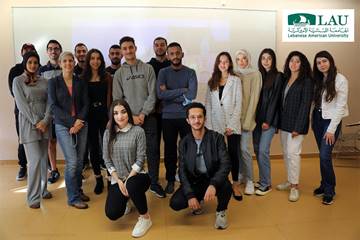
LAU students Abdelrahman Ghalayini and Elie Abou Issa, along with three students from BSU received the top award at BSU’s College School of Business and Economics Challenge (COBE) Innovation Challenge for their idea to convert waste energy from roadways to electricity using vertical turbines.
Other SDG-targeted projects on which LAU students collaborated with their BSU counterparts took the international prizes and were selected as the Dean’s Choice as well as the Judges’ Recognition Award.
 |
 |
Write to Remember Project Commemorates August 4 Explosion
LAU faculty launch creative writing initiative to help students impacted by the blast and document oral history.
The aftershocks of the massive August 4 explosion at the Port of Beirut were of such magnitude that they could not be swept under the rubble. Fear, disbelief and grief are only a few of the tangled emotions that will continue to fester if suppressed.
And what better way to release them than through self-expression? Believers in the cathartic power of words, faculty at LAU’s School of Arts and Sciences (SoAS) took the initiative to help the youth come to terms with the after-effects of the blast through a web-memoir where they could voice and preserve their memories.
The Write to Remember project was launched on the first anniversary of the blast, after Senior Instructor of English Paula Habre and Instructor of English Hala Daouk secured a $10,000 grant from the US Embassy, based on a proposal submitted with Haigazian University colleagues – former LAU faculty and Writing Center tutors – Anita Moutchoyan and Serine Jaafar.
The outreach project targets youth who had been directly or indirectly affected by the blast with the grant specifying an age range between 16-22.
“We felt this would be a good coverage of high school/secondary level and university students who can write about their trauma,” Habre said. “The project creates a safe platform and a safe space for them to share their feelings and deal with it collectively.”
The one-year initiative serves as an archive of stories, reflections, photos, and oral history related to the explosion and its aftermath through six virtual workshops.
The most recent workshop in November was presented by LAU Assistant Professor of Creative and Journalistic Writing Sleiman El Hajj, who had written about the blast in his widely-cited collective memoir “Writing (from) the Rubble: Reflections on the August 4, 2020 Explosion in Beirut, Lebanon.”
Dr. El Hajj focused on having participants in the workshop explore the use of sensory perceptions to navigate through and reimagine/(re)write trauma.
“Food and trauma have become interrelated for many survivors of August 4 since the sights, smells, sounds, texture, even taste of food, and food in preparation, are ones that now trigger PTSD recollections of the calamity,” Dr. El Hajj explained about the use of sensory details as an embodiment of trauma. “They are therefore no longer the comforting or pleasurable activities they once were.”
“If a concrete object can so easily, and so painfully swiftly, become an embodiment of trauma,” he added, “then thinking of ways of revoking – or at least helping to process – this reality is essential, especially in climates of perpetual tension, such as Lebanon.”
The participants shared short pieces they wrote during the workshop and gave each other support and feedback.
“I was impressed by their eagerness to share their lived narratives, however painful, and also by their alacrity in embracing the reimagined narrative approach, which I suggested as a way of reclaiming a semblance of agency over an otherwise slippery slope into inchoate trauma,” said Dr. El Hajj.
“By concentrating their experiences and/or perceptions of trauma into concrete objects, they managed, in part, to rethink and make sense of at least one aspect of all that we lost on that day,” he added.
The first workshop was led by the Regional English Language Officer at the US Embassy Eran Williams, and the second was presented by Zeina Daccache, the founder of Catharsis. Three open mic sessions will be held in venues that were damaged by the blast to allow the participants to share their pieces with a wider audience.
“We have officially completed half the workshops for this project and have three to go,” Habre said. “We look forward to the upcoming open mic event on December 11, which the participants are very excited to attend.”
“The team plans to recruit more local and foreign specialists for future workshops to help the youth come to terms with their trauma through writing,” she added.
Browse the Write to Remember website to learn about upcoming workshops and open mics, participants, oral narratives, and more.
 |
Participants in the workshop explored the use of sensory perceptions to navigate through and reimagine/(re)write trauma. |
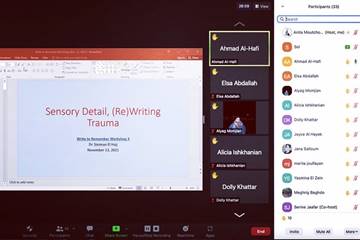 |
The workshop run by Dr. Sleiman El Hajj focused on sensory detail. |