Mentoring Schemes
LAU has women’s mentoring schemes in which at least 10% of women participate through various initiatives, such as the AIW trainings, the LAU mentoring programs, the USAID Higher Education Scholarship Program and the Tomorrow’s Leaders Scholarship Program (MEPI-TLP), all of which promote inclusivity and women’s empowerment. The USAID Higher Education Scholarship Program is a notable example, offering full, merit-based scholarships to academically eligible and financially disadvantaged school graduates across Lebanon. While targeting both genders equally, nearly two-thirds of the recipients are women, reflecting LAU’s strong emphasis on empowering women and enhancing their access to quality education.
Additionally, the university offers leadership-focused programs such as the Tomorrow’s Leaders Scholarship Program (MEPI-TLP), which provides scholarships that promote women’s leadership and representation in academia and professional spheres.
Moreover, LAU has implemented a Gender Equality Plan under the leadership of the Office of Community Standards , which ensures policies and initiatives are in place to support gender equity as well as protection against any kind of harassment and discrimination.
By maintaining these access schemes and initiatives, LAU reaffirms its dedication to providing women with the tools, opportunities, and support they need to succeed and lead in diverse fields.
International Women’s Day: “Accelerating Gender Equality Through Economic Empowerment of all Women and Girls”
March 12, 2024
On March 5, 2024, The AiW, in collaboration with the Armenian General Benevolent Union (AGBU), hosted a multi-paneled hybrid conference on “Accelerating Gender Equality through Economic Empowerment of All Women and Girls.” This conference, which is part of a yearly series of panels between The AiW and AGBU, aimed at highlighting the unfolding economic challenges facing women in the region and providing possible recommendations.
In an opening statement, Director of The AiW, Ms. Myriam Sfeir, warmly welcomed the panelists and attendees, and reaffirmed The AiW’s long-standing commitment to knowledge-sharing and women’s emancipation. In recognition of the unimaginable atrocities happening in Gaza, she emphasized the imperative to raise our voices during these turbulent times in support of the most vulnerable, like women and girls. This panel discussion, she confirmed, serves as platform to spread awareness about the many economic challenges facing women, especially in conflict-ridden regions. Ms. Sfeir further underscored the significance of the discussion in advocating for initiatives aimed at mitigating the consequences of disempowerment and poverty.
Panel 1: Understanding the Intersections of Poverty and Gender Inequality
Executive Director of the Lebanese Center for Policy Studies, Dr. Makram Ouasis, ushered the discussion with a brief overview of the panel’s main points and objectives. The first panelist, Regional Advisor at OHCHR, Ms. Ansam Al-Abayechi, discussed the link between income and rights. The latest numbers she presented indicate that women’s role in the public sphere is still very limited, their rights are not protected, and their direct involvement is not always encouraged. Without policies that focus on women’s inclusion, the pay gap is expected to continue to increase. The governments’ role, Ms. Al-Abayechi confirmed, is to create an environment that enables women’s participation without constraints.
The second panelist, Senior Research Assistant at UN ESCWA, Ms. Sama El Hage Sleiman, presented an informative clip on “Poverty and Gender Equality Nexus.” Building upon it, she delivered a detailed explanation of multi-dimensional poverty and its impact on women across all age groups. For example, she described how women-headed households are disproportionally affected by poverty in both urban and rural settings. Ms. Sleiman also illustrated the poverty trap diagram, describing it as a “self-reinforcing cycle” brought about by the lack of education and the limited assets for saving and investment.
The third panelist, Program Analyst at UNFPA Armenia, Ms. Lusine Sargsyan, addressed the impact of conflicts on women. During the Armenian crisis, she explained, women’s challenges were in the shadows. The most vulnerable, such as women with disabilities, faced heightened difficulties in accessing basic services, primarily because of discriminatory practices. To address this, the UN devised education and training initiatives for women, girls, men, and boys to raise awareness about gender equality. As a result, Ms. Sargsyan pointed out, a positive ripple effect was triggered, where the success story of every woman became a source of motivation for others.
Panel 2: Success Stories and Best Practices, Addressing Poverty and Empowering Women in Lebanon
The second panel, moderated by Executive Director at UNGC (United Nations Global Compact) Lebanon, Ms. Deenah Fakhoury, centered around the recommendations for fostering women’s economic empowerment. The first panelist, President of Ashghalouna, Ms. Fida Alieh, walked the audience through the organization’s founding history and its mission to equip disadvantaged women with technical skills. Ashghalouna, she emphasized, caters to a diverse range of women, including those who are uneducated, widowed with children, or married with employed or unemployed husbands. Ms. Alieh underscored the commitment to supporting vulnerable women and confirmed that Ashghalouna’s mission is not only to promote women’s financial independence but also to enhance their self-confidence.
The second panelist, Founder and Director of Creative Space Beirut, Ms. Sarah Hermez, introduced the NGO’s services, highlighting years of dedication to high-quality education for women in fashion design. What sets her organization apart is the quality and not quantity approach to education, she argued. Women who are awarded a scholarship participate in a three-year program, preparing them for launching their professional careers. Despite the challenging situation in Lebanon, Ms. Hermez stressed the organization’s role in providing women the space they need for self-expression.
The third panelist, Entrepreneur and Founder of Maryig Restaurant, Ms. Aline Kamakian, underscored her firm commitment to upholding the principles of nondiscrimination and gender equality across all staff members. At her restaurant, more than 50% of employees in managerial positions are women. She attributes this success to an inclusive culture characterized by respect and loyalty. Ms. Kamakian also provided examples of occasional charitable initiatives implemented by her team, like providing meals for the most affected in the aftermath of the Beirut Port blast.
The panel discussion concluded with a short Q&A session.
Providing Life-Skills Support
Since AiW was established, it has aimed to improve and enhance the lives of women in the Arab region. Over the years and under the leadership of noteworthy activists and life-long supporters of women’s rights, AiW’s portfolio has been developed to include several key achievements, one of which is Qudwa: the Basic Living Skills Program.
Qudwa, “role model” in Arabic, was developed in 1985. It is a non-formal integrated educational kit in Arabic, geared towards illiterate and semi-literate women in the Arab region. It has also expanded its target audience by creating new facilitator’s guides on working with different groups (adolescent girls, men and boys, LGBTQ community, and refugees).
Related Projects
Related Research
- برنامج المهارات الحياتية الأساسية
- Empowering Arab Women Through Literacy Program (Arabic)
- المرأة العربية في العلم والعمل
- مشكلات المرأة العربية في التعليم والعمل
- Arab Women and Education
Annual Regional Training: Laure Moghaizel
The AiW has launched a new project that aims to enhance the capacities of female activists, human rights advocates, media professionals, and bloggers working on gender issues in Lebanon and the Arab region.
This initiative, led by The AiW, in collaboration with the Arab Institute for Human Rights, and funded by Canada Fund for Local Initiatives, was a one-year project that entailed conducting two regional online training courses. These trainings, which were given in Arabic, promoted an advanced feminist human rights discourse and spread the importance of advocating for gender justice in light of the COVID-19 pandemic that has sparked an unprecedented increase in Gender-Based Violence (GBV) globally.
The project was implemented in two phases:
Phase I: General Training
In December 2020, we opened the call for applications and received around 400 applications from Lebanon and different countries in the Arab region. In collaboration with the Arab Institute for Human Rights, we selected 120 applicants to participate in phase I of the training. 55 participants were selected from Lebanon and 65 participants were selected from Palestine, Sudan, Jordan, Mauritania, Syria, Libya, Saudi Arabia, United Arab Emirates, Tunisia, Morocco, Egypt, Iraq, Algeria, and Yemen.
An opening ceremony was held online on February 27, 2021, via Webex. The ceremony included Dr. Michel Mawad, President of the Lebanese American University, Dr. Nada Moghaizel, Honorary Dean of the Faculty of Educational Sciences at Saint Joseph University of Beirut and Rector’s Delegate for Quality Assurance and University Pedagogy (Dr. Moghaizel is Laure Moghaizel’s daughter given that the training is named after her), Mr. Abdul Basit Bin Hassan, President of the Arab Institute for Human Rights in Tunisia, Dr. Antoine Messara, Founder of the Lebanese Foundation for Permanent Civil Peace, and Mrs. Nahla Haidar, member and Vice President of the UN Committee on the Elimination of Discrimination against Women.
The first phase of the project entailed delivering an online training on human rights principles and international treaties. It also addressed the status of women, girls, and vulnerable groups and the violence they face at times of conflict and lock-downs imposed by the governments due to the COVID-19 pandemic.
Phase I of the training began on March 6, 2021 and ended on March 28, 2021. The participants were divided into four groups, in which each group took a two-hour session once a week for a period of four weeks.
These trainings were administered by well-established trainers in the field of human rights with extensive experience in conflict areas.
- The first session was on international law in times of conflict and was delivered by Dr. Khaled Al Mejri, University Professor in Tunisia.
- The second session was on the status of women in times of conflict and was delivered by Ms. Mervat Rishmawi, Senior Human Rights Consultant Researcher and Policy Analyst.
- The third session was on sexual violence against women and girls in times of conflict and was delivered by Maitre Manar Zaiter, Lawyer and Human Rights Activist.
- The fourth session was on the impact of the COVID-19 pandemic on the rights of women and was delivered by Ms. Jumanah Zabaneh, Program Coordinator at UN Women.
Upon the completion of this phase, 35 participants were chosen to take the special training based on their level of engagement, commitment, and participation.
Phase II: Specialized Training
The second phase of the project was a specialized online training, that entailed working on international concepts, treaties, conventions, and mechanisms related to women and girls’ rights in the Arab region. The training also addressed gender justice issues, the women, peace, and security agenda, and the importance of the national action plans. It also addressed the rights of vulnerable groups during armed conflicts, crises, and pandemics. Moreover, a session was reserved to addressing, reporting, and documenting sexual violence and developing reports on the situation of women and girls at times of emergencies such as the blast in Beirut port and pandemics, with a focus on COVID-19.
Phase II of the training began on May 3 and ended on May 11, 2021. The trainings were extensive that lasted for 7 days with 3 sessions per day.
- The first day addressed women’s rights in the Arab region, specifically in conflict areas.
- The second day tackled women and human rights treaties and conventions, and the UNSCR 1325 Women, Peace, and Security resolution.
- The third day was on the role of women in peace-building and political participation, and women’s economic rights during armed conflicts.
- The fourth and the fifth days addressed protection of women and girls in times of conflict (from GBV, early marriage, sexual violence, trafficking), and enhancing the right to sexual and reproductive health, and right to education.
- The sixth day tackled the protection and promotion of the rights of vulnerable groups (LGBTQ community, women and girls with disabilities, refugees).
- The seventh day was on writing reports about women’s rights in times of conflict.
Bringing together young female activists from different countries from the Arab region provided them with the tools needed to advocate for women and vulnerable groups’ rights in times of conflict. The participants also benefited from each other’s experiences in the field and gave them the opportunity to build partnerships and networks.
Upon completion of the second phase, the 35 participants received a certificate of participation, which will inevitably serve as an added value in their career paths.
Participants were also encouraged to write articles that will be published in the AiW’s academic journal, Al-Raida.
Mentoring and Tailored Programs:
LAU offers Academic Advising and career guidance services to all students regardless of their gender, sexual orientation, religion, color, race or disabilities.
Career Guidance and Academic Advising
Career Development Plan
Start early and sharpen your skills before graduation and boost your employability!
Consider your Choice of Major
- Take the Strong Interest Inventory to identify your interests and the relevant majors, especially if you are unsure about your choice or unhappy with your current major
Secure Academic Advancement
- Keep your GPA as high as possible to increase your chances in earning scholarships and getting into a strong graduate program
- Attend Time Management and Study Skills workshops
- Visit the International Services and Programs Office to learn about exchange and study abroad programs
Explore Career Possibilities
- Enroll in diverse courses to explore different areas that interest you
- Consider internship and part-time job opportunities
- Attend panel discussions, recruitment presentations, career events, etc.
Engage in Self-Development
- Join clubs and take part in the fun and engaging extra-curricular activities on campus
- Volunteer in civic, and leadership activities to strengthen your CV, sharpen your skills, and stand out in the job market
- Attend soft skills and professional development workshops (i.e. CV writing, job search strategies, interview preparation, LinkedIn, etc.)
Get ready for the job market
- Draft your first professional CV and keep it updated with the help of the Career Development Services staff
- Join LinkedIn and other professional social media platforms
- Build a professional network with your professors, advisors, peers, and staff
Connect with your Career
- Take part in the Alumni Mentoring Program to get tips from industry experts
- Check the LAU International Career Portal to view and apply to available internship and job opportunities
- Attend career fairs
- Secure at least one internship before you graduate. Interns are often hired by the same company if they prove themselves
Before you graduate
- Refine your professional resume and develop an “elevator pitch”
- Write cover letters that you can use when applying for internships and jobs.
- Identify your most-desired employers and research employment opportunities.
- Attend the International Education Week to explore graduate-study opportunities.
- Connect with the Alumni Relations Office and join the alumni chapters.
Academic Advising: Your Personal Roadmap
Clarity about your next steps reduces stress: Our academic advisors empower you to develop a course plan consistent with your individual interests and abilities. Along with your faculty advisors, the academic advisors will provide you with all the academic support you may need. Through these services, you will:
- Get all the help to understand your degree evaluation, rules, and other academic matters to make the right academic and career decisions.
- Benefit from one-on-one advising sessions and learn about the available resources for you, such as CAPP, Portal, Banner, Starfish, etc.
- Know the steps and requirements for graduation.
- Overcome any academic difficulty by getting personalized advising meetings.
- LAU students can schedule the academic advising appointments through Starfish on Portal. Through Starfish, you will:
- Connect with your faculty and the staff from various departments.
- Schedule appointments online with your academic advisor or faculty advisor.
- Receive a notification if you are academically at risk.
- Save meetings notes in your records for future reference.
- The academic advisors also support students who need to overcome any academic challenges through the Academic Success Center.
Academic Success Center
Free of charge academic tutoring services are available if you need assistance or you are facing difficulties in certain courses. There is no limit to the sessions you can attend.
Tutors are academically excelling students from various majors and they are appointed by their respective departments.
Objectives of the Tutoring Services
- Provide tutoring services for students who are academically challenged to effectively improve their performance.
- Assist students to better understand challenging topics or course material.
- Give student tutors the opportunity to reinforce their knowledge and improve their teaching and communication skills by sharing what they have learned.
USAID Higher Education Scholarship Program
USAID provides merit-based scholarships to financially needy and academically eligible public school graduates from across Lebanon, including the most disadvantaged corners of the country. These scholarships enable students, often from marginalized families that would otherwise have no possible means to attend these schools, to study at the highest-quality Lebanese universities. These universities offer an American-style education that promotes critical thinking, leadership skills and community service.
Our impacts in this sector include:
A higher education scholarship program that provides full, four-year scholarships to more than 600 Lebanese public school graduates. Although the program targets men and women equally, the gender breakdown represents the prevailing one in the public school system; nearly two-thirds of the recipients are women.
Grants awarded through the National Academies of Science to five Lebanese scientists from prominent Lebanese universities to complete specialized research on water and air pollution, wildfires and landslides. The grants promote direct cooperation with American scientists and access to cutting-edge research as part of the Washington-based Partnership for Enhanced Engagement in Research (PEER).
Tomorrow’s Leaders Program
Programs
The Tomorrow’s Leaders (TL) Program, sponsored by the Department of State’s U.S.-Middle East Partnership Initiative (MEPI) supports capable and highly motivated young scholars from underserved backgrounds in the Middle and North African (MENA) region by providing a fully funded undergraduate and graduate level academic matriculation, civic education, and leadership development. The full-coverage scholarship aims to invest in Arab youth’s capacity to strengthen their leadership skills to become drivers of change and to catalyze social progress in their home community. Moreover, the MEPI-TL program aims to advance and deepen the student’s awareness of gender equality’s challenges and solutions.
Tomorrow’s Leaders Undergraduate (TLU) Program
The Tomorrow’s Leaders Undergraduate (TLU) Program was established in 2008 at LAU under the MEPI initiative. TLU recipients have the opportunity to pursue an undergraduate degree in selected fields at LAU. Additionally, students can choose to spend a semester studying at renowned universities in the United States. The program emphasizes community service engagement, encouraging students to participate in workshops, and internships, both locally and internationally.
Tomorrow’s Leaders Graduate (TLG) Program
In 2018, LAU MEPI introduced the Tomorrow’s Leaders Graduate (TLG) Program, the first of its kind in the MENA region. TLG aims to build upon the impactful work of the TL undergraduate program by providing financially challenged bachelor’s graduates with the opportunity to pursue master’s degrees. This two-year post-graduate program contributes to the region’s development by equipping exceptional students with advanced knowledge and research skills.
Tomorrow’s Leaders College to Work Pipeline (TLP)
In 2021, the U.S.-Middle East Partnership Initiative (MEPI) introduced the Tomorrow’s Leaders College-to-Work Pipeline (TLP) project in collaboration with the American University of Beirut (AUB) and Georgia Institute of Technology (Georgia Tech). The TLP project aims to provide a clear pathway to gainful employment for currently enrolled TL students. It assists students in connecting with potential employers and maximizing their employability in the MENA region.
The Gender Equity Plan (GEP) at the Lebanese American University (LAU) provides both an evaluation of the university’s progress on gender equity and a roadmap for future improvement. Led by the Office of Community Standards, the plan was developed by a 19-member committee representing diverse sectors of the university. Over the course of a year, the group analyzed data, conducted interviews, and reviewed institutional practices to understand how well LAU promotes gender equity in policy, governance, and culture.
Launched in February 2022, the GEP is the first comprehensive institutional plan of its kind in Lebanon. It builds on earlier groundwork by Dr. Lina Abirafeh and the Arab Institute for Women (AiW). The report emphasizes that gender equity—which accounts for differing needs and barriers rather than simply equal treatment—contributes to better institutional performance, innovation, and social wellbeing.
The plan follows a four-step framework:
- Analysis: Conducting gender audits and reviewing data for inequities.
- Planning: Setting clear goals, actions, and resource allocations.
- Implementation: Carrying out initiatives to promote equity.
- Monitoring: Measuring progress through key indicators and feedback loops.
This first report focuses mainly on analysis and partially on planning, establishing the foundation for future implementation.
Methodology
The committee adopted a mixed-methods approach, combining:
- Quantitative analysis of demographic and employment data to assess representation, promotions, and pay equity;
- Qualitative inputs from more than 30 stakeholder interviews, focus groups, and LAU’s first campus climate survey;
- Policy reviews to identify gaps between institutional goals and actual practices.
This triangulated method allowed the committee to understand both the numbers and lived experiences behind gender dynamics at LAU.
Decision-Making
Findings highlight that while women are active and visible across the university, their representation decreases at higher levels of leadership and governance.
Challenges include limited transparency in appointment processes, informal networks that shape advancement, and insufficient mentorship opportunities for women.
Recommendations include:
- Ensuring gender balance in key committees and leadership bodies;
- Standardizing and publicizing criteria for appointments and promotions;
- Introducing structured mentorship and leadership development programs;
- Collecting and publishing annual data on gender representation at decision-making levels
Practices
The report assesses three main areas:
- Policy Practices: LAU’s policies are progressive but unevenly implemented. Regular policy audits and staff training are recommended to ensure consistency.
- Teaching Practices: Faculty are encouraged to integrate gender perspectives into curricula and classroom discussions. The report calls for training on inclusive pedagogy and equitable assessment.
- Research Practices: Gender disparities persist in authorship and funding. The plan urges gender-sensitive research design, equitable access to resources, and formal recognition for women researchers.
It also stresses the importance of civic engagement and community outreach, positioning LAU as a national example of gender equity leadership.
The GEP sets the groundwork for a sustainable transformation in how LAU defines and practices equity. It reframes gender equity as an essential component of academic excellence, leadership integrity, and institutional resilience.
The next phase will require strong leadership commitment, dedicated resources, and ongoing evaluation to ensure that equity is not only a principle but a lived reality across the university.
MDLAB 2022: Empowering Women and the Youth with Media Literacy
https://news.lau.edu.lb/2022/mdlab-2022-empowering-women-and-the-youth-with-media-literacy.php
LAU hosts international experts and students for a week-long summer academy on digital media literacy.
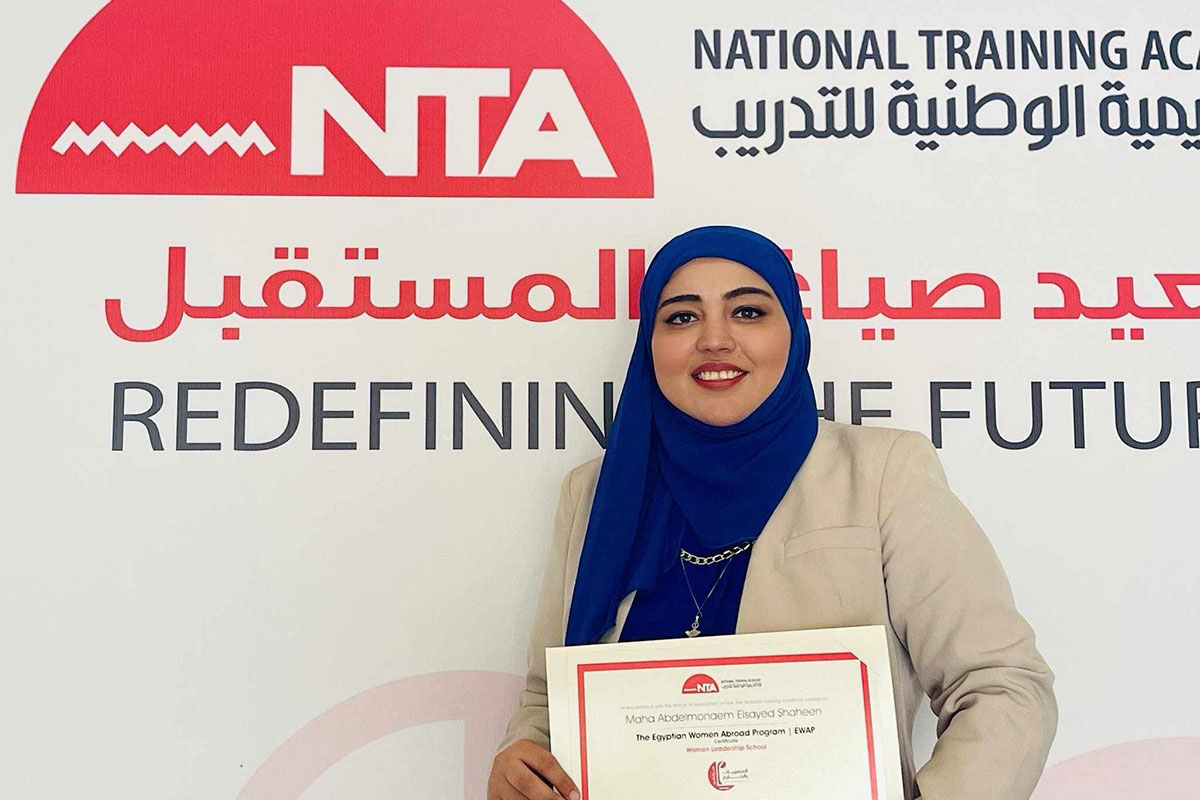
Maha Shaheen’s Journey: Empowering Women in Leadership with EWAP
Selected among talented Egyptian women living abroad, Maha underwent holistic training to enhance her skills and industry knowledge. Through the program’s online format, she effectively managed her commitments while immersing herself in a rich learning environment. Networking with like-minded Egyptian women abroad provided her with invaluable connections and mentorship opportunities.
The impact of the EWAP fellowship was substantial. Maha gained enhanced knowledge and a diverse skillset, increasing her employability and expanding her professional network. Beyond personal growth, the program contributes to advancing Egyptian women in various fields and identifies exceptional leaders for key positions within Egypt. The collaborative efforts of the National Training Academy, Ministry of Planning and Economic Development, and Ministry of State for Emigration and Egyptians Affairs Abroad ensure the successful implementation of the program.
Aligned with the MEPI strategic framework, EWAP promotes gender equality and women’s empowerment in the Middle East and North Africa region. By fostering diverse and inclusive STEM workforces, the program fuels innovation and drives economic growth. It also strengthens partnerships between government, academia, and civil society, nurturing human capital and creating lasting impacts.
Maha’s journey reached significant milestones. She successfully defended her graduation project, showcasing her academic excellence. Furthermore, she was selected for an exclusive live-streaming session organized by the National Training Academy, highlighting her achievements and inspiring others. Additionally, she had the privilege of participating in a summer field trip, exploring Egypt’s new capital and witnessing its remarkable landmarks and mega-economic projects.
Maha’s accomplishments serve as an inspiration for aspiring leaders, emphasizing the significance of equal opportunities for women in all fields. With her newfound knowledge, skills, and network, Maha is ready to create a positive impact in her chosen field and contribute to the advancement of women’s empowerment in Egypt and beyond.
Career Guidance and Academic Advising
Academic Advising: Your Personal Roadmap
Clarity about your next steps reduces stress: Our academic advisors empower you to develop a course plan consistent with your individual interests and abilities. Along with your faculty advisors, the academic advisors will provide you with all the academic support you may need. Through these services, you will:
- Get all the help to understand your degree evaluation, rules, and other academic matters to make the right academic and career decisions.
- Benefit from one-on-one advising sessions and learn about the available resources for you, such as CAPP, Portal, Banner, Starfish, etc.
- Know the steps and requirements for graduation.
- Overcome any academic difficulty by getting personalized advising meetings.
LAU students can schedule the academic advising appointments through Starfish on Portal. Through Starfish, you will:
- Connect with your faculty and the staff from various departments.
- Schedule appointments online with your academic advisor or faculty advisor.
- Receive a notification if you are academically at risk.
- Save meetings notes in your records for future reference.
The academic advisors also support students who need to overcome any academic challenges through the Academic Success Center.
Academic Success Center
Free of charge academic tutoring services are available if you need assistance or you are facing difficulties in certain courses. There is no limit to the sessions you can attend. Tutors are academically excelling students from various majors and they are appointed by their respective departments.
Objectives of the Tutoring Services
- Provide tutoring services for students who are academically challenged to effectively improve their performance.
- Assist students to better understand challenging topics or course material.
- Give student tutors the opportunity to reinforce their knowledge and improve their teaching and communication skills by sharing what they have learned.
If you are a current student, please check the sessions offered on Portal.
Work-Life Balance: Are You Doing It Right?
Faculty from the Psychology Program at the School of Arts and Sciences highlight the application of psychology in the professional world, its benefits and ways to address common workplace challenges.
Since childhood, before we even get the chance to think for ourselves, we are asked what we want to be when we grow up. These aspirations may subconsciously become inseparable from our identity. Instead of wanting to work as something, we grow up believing that we must be our profession.
In the work environment, as the lines between professional and personal life often blur, navigating the demands of career and personal wellbeing is necessary to achieving harmony between work and life. But how easy can that balance be found in today’s fast-paced world?
This was the catalyst for debate in a workshop titled The Art Of Living: Strategies For Work-Life Harmony held on September 1 at the Gilbert and Rose-Marie Chagoury Health Sciences Center, LAU Byblos campus.
Assistant Professor of Clinical Psychology Pia Tohme and Assistant Professor of Psychology Myriam El Khoury-Malhame took center stage to clarify several misconceptions related to the professional realm, mostly those associated with the myth of maintaining an unbending and constant work-life equilibrium.
What are the challenges of maintaining a work-life balance?
There is no concrete or straightforward answer to this question, as multiple factors come into play. Based on a poll conducted during the workshop, faculty, staff and medical doctors indicated that understaffing, poor time management and a heavy workload, to name a few, make it difficult for individuals to achieve equilibrium between their professional and personal lives.
“We’ve glamorized business to make it seem as if it’s what defines us,” said Dr. El-Khoury Malhame. Being busy, nonetheless, leads us to develop multiple identities varying from breadwinners to caregivers, with each having to prioritize a host of things at once.
This situation was exacerbated by our dependence on online mediums during the COVID-19 era, which effectively erased the demarcation between our personal and office lives. Consequently, work-related expectations became such that we were expected to be available at all times.
“This also affects our relationships,” said Dr. Tohme, given that it raises questions related to “how well we are managing ourselves as people, as partners, as parents and also as employees.”
These factors create a real hurdle where individuals feel pushed not just to aim for a balance between work and home life, but also to consider dealing with each part separately when managing personal relationships. Instead of trying to find one-size-fits-all solutions to merge work and home life, employees may need to figure out how to adjust their priorities for each area in order to recharge and effectively manage their commitments and time.
How does this impact us as individuals?
Most days, we bring the weight of our professional responsibilities into our personal lives and vice versa, which disrupts this delicate equilibrium. Excessive demands in the workplace tend to foster a heightened sense of tension and unease in our personal lives, impacting the quality of our relationships at home.
This, in turn, can cultivate a sense of guilt for reacting excessively, which further obstructs our ability to find solace and tranquility in our homes. The audience gave the example of having to work on weekends or check emails after hours.
Given these intricate dynamics, it is not surprising that we find ourselves caught “in a vicious cycle,” as Dr. Tohme called it, where the demands at work encroach upon our personal lives, and the demands in our personal lives affect our work. This cycle, if left unchecked, can ultimately lead to burnout.
It’s easy to overlook the fact that we are the same individuals navigating both spheres in this narrative. When we compartmentalize work as the medium of reason and life as the domain of emotion, we set ourselves on a course where the efficacy of our work diminishes. Consequently, we compromise our ability to process information cohesively and holistically.
“To improve this work-life balance is to reintegrate both mediums,” noted Dr. El Khoury-Malhame.
What can be done to achieve a work-life balance?
“There’s no magical solution,” stated the assistant professors. According to them, an employee often gets lost in trying to achieve this balance, but it’s not a one-person job. The effort has to come from both ends of the spectrum: the employer and the employee.
A few strategies for doing so, as suggested by Dr. Tohme and Dr. El Khoury-Malhame, revolve around perceiving the faculty and staff as individuals rather than commodities, promoting and setting boundaries and increasing self-reflection at work. According to the audience, this is done by fostering a supportive working environment in which conversations around mental health and consideration of basic needs are appraised, such as investing in healthcare, transportation, flexible/hybrid schedules, training, childcare areas, and showing appreciation, among others.
Assessing how one processes information is also essential among colleagues. Employers model their boundaries to their employees; thus, seeing how the latter is receiving certain types of tasks and instructions helps them implement such boundaries constructively.
“Our predictors of happiness mostly fall within the relationships we have with others,” said Dr. Tohme and Dr. El Khoury-Malhame. “Being aware of our boundaries and reflecting upon them allows us to control, influence and accept our dynamics with each other.”
At the end of the workshop, focus was placed on self-reflection, and taking the time to consider how one’s personal attitudes, actions and emotional reactions might help identify one’s difficulties and capacities as well as influence individuals’ experiences in their professional lives. By reflecting on and understanding their behaviors and reactions, both employees and employers can better navigate and manage the challenges and demands of their work.
“Always remember that behind every title, there’s a person, and behind every person, there’s also a journey,” said Dr. Tohme. “There’s everything that you have gone through in order to become who you are.”