SDG 7: Affordable and Clean Energy
The Lebanese American University (LAU) is committed to achieving affordable and clean energy goals as part of its institutional responsibility and contribution to the United Nations Sustainable Development Goals (SDGs), particularly SDG 7. Through its Sustainability Strategy, developed by the Office for Sustainability (OfS) the university has established a comprehensive framework that embeds sustainability into all aspects of its operations, teaching, and research. Many this strategy’s actions are already underway, reflecting LAU’s proactive approach toward energy conservation and resource efficiency.
LAU’s energy commitments are supported by Facilities Management which operationalizes sustainable energy practices across both campuses through energy audits, solar installations, high-performance renovations, and the application of green building standards such as LEED and EDGE certification. In parallel, the university’s data tracking systems, including carbon emissions and energy use density metrics provide a transparent foundation for monitoring progress toward carbon neutrality and long-term sustainability goals.
Through these integrated measures, LAU demonstrates its institutional leadership in the transition toward a low-carbon, energy-efficient university, while serving as a model for higher education institutions in Lebanon and the wider region. In this context, LAU reports its carbon emissions to the Lebanese Ministry of Environment in line with the GHG Protocol Corporate Standard or other commonly used reporting standards.
The following table presents key indicators used to monitor LAU’s campus-wide energy performance. It highlights core metrics for assessing efficiency and progress toward the university’s sustainability targets.
| Energy Consumption & Expenditure | Beirut Campus | Byblos Campus |
| Total Energy Consumption (kWh) | 8,696,724 | 10,521,460 |
| Solar PV Production (kWH) | 578,934 | 1,367,305 |
| Solar PV Production (% form total electric) | 7.0% | 15.4% |
| Energy Use Index - EUI (kWh/m2/y) | 91.8 | 100.9 |
| Net Energy Use Index - Net EUI (kWh/m2/y) | 85.7 | 87.8 |
| Total Energy cost ($) | 1,873,184 | 2,113,600 |
| Energy Cost Index - ECI ($/m2/y) | 19.8 | 20.3 |
Green House Gas Emission reporting
LAU submitted its 2024 GHG emissions to the Lebanese Ministry of Environment in accordance with the GHG Protocol Corporate Standard.
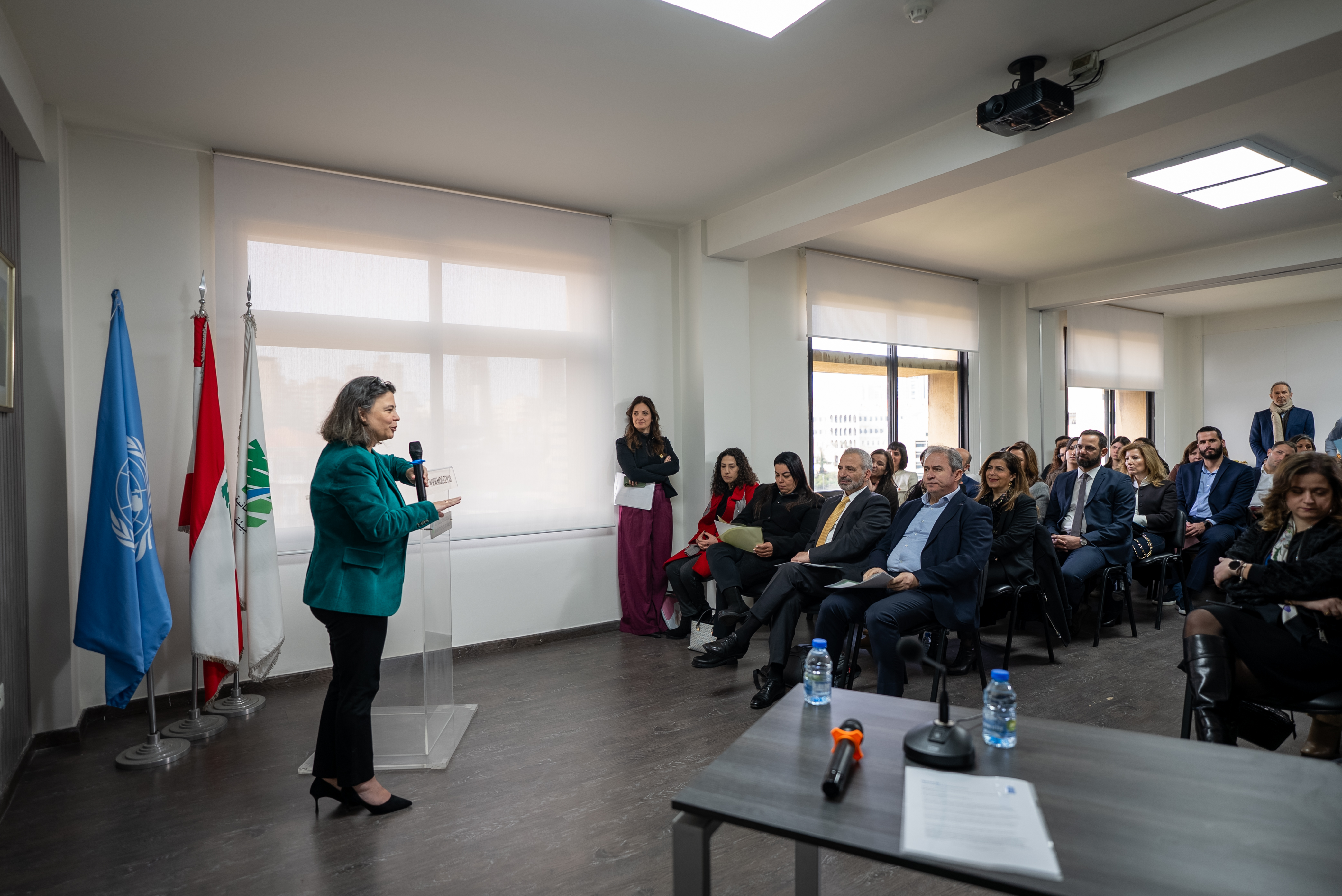
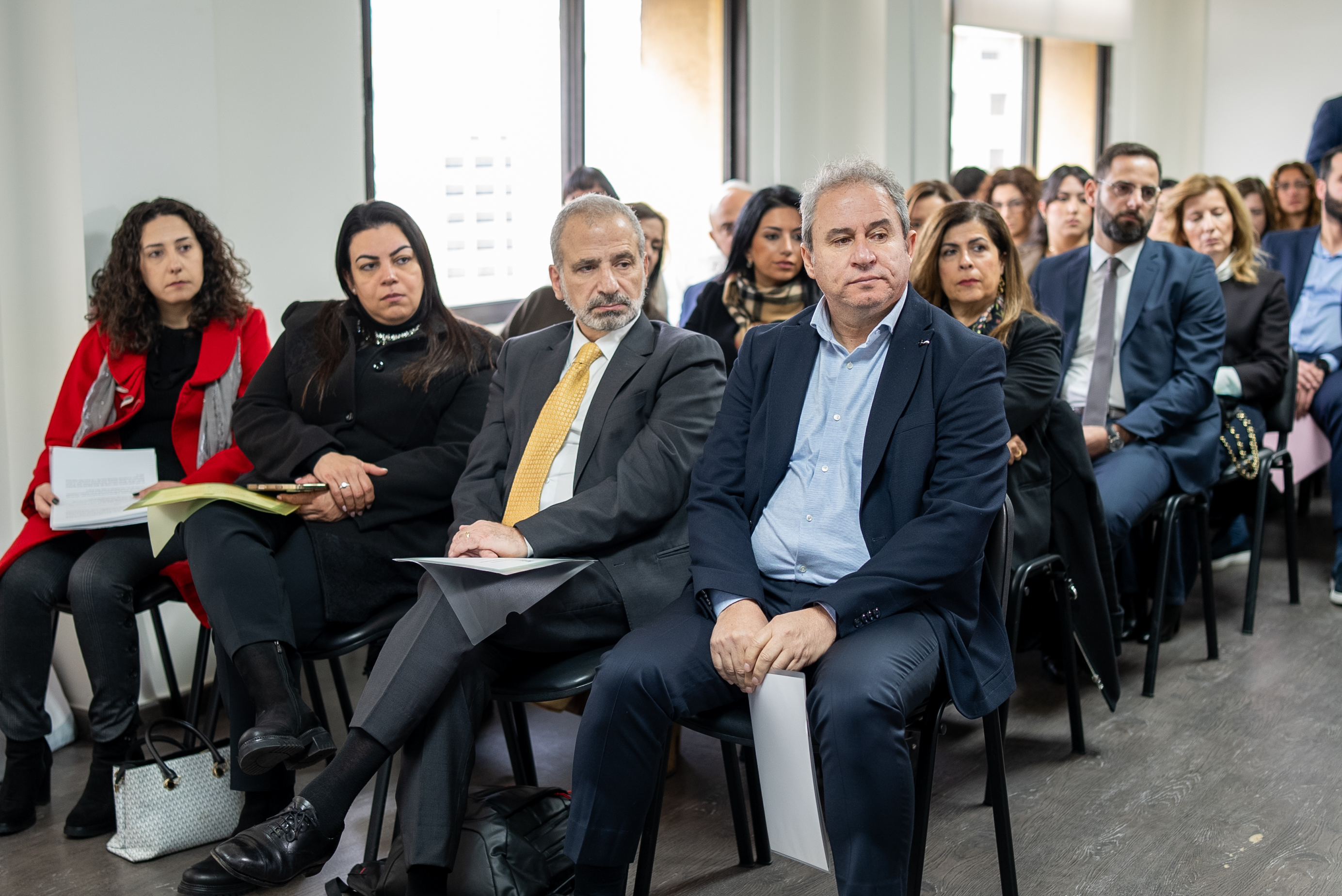
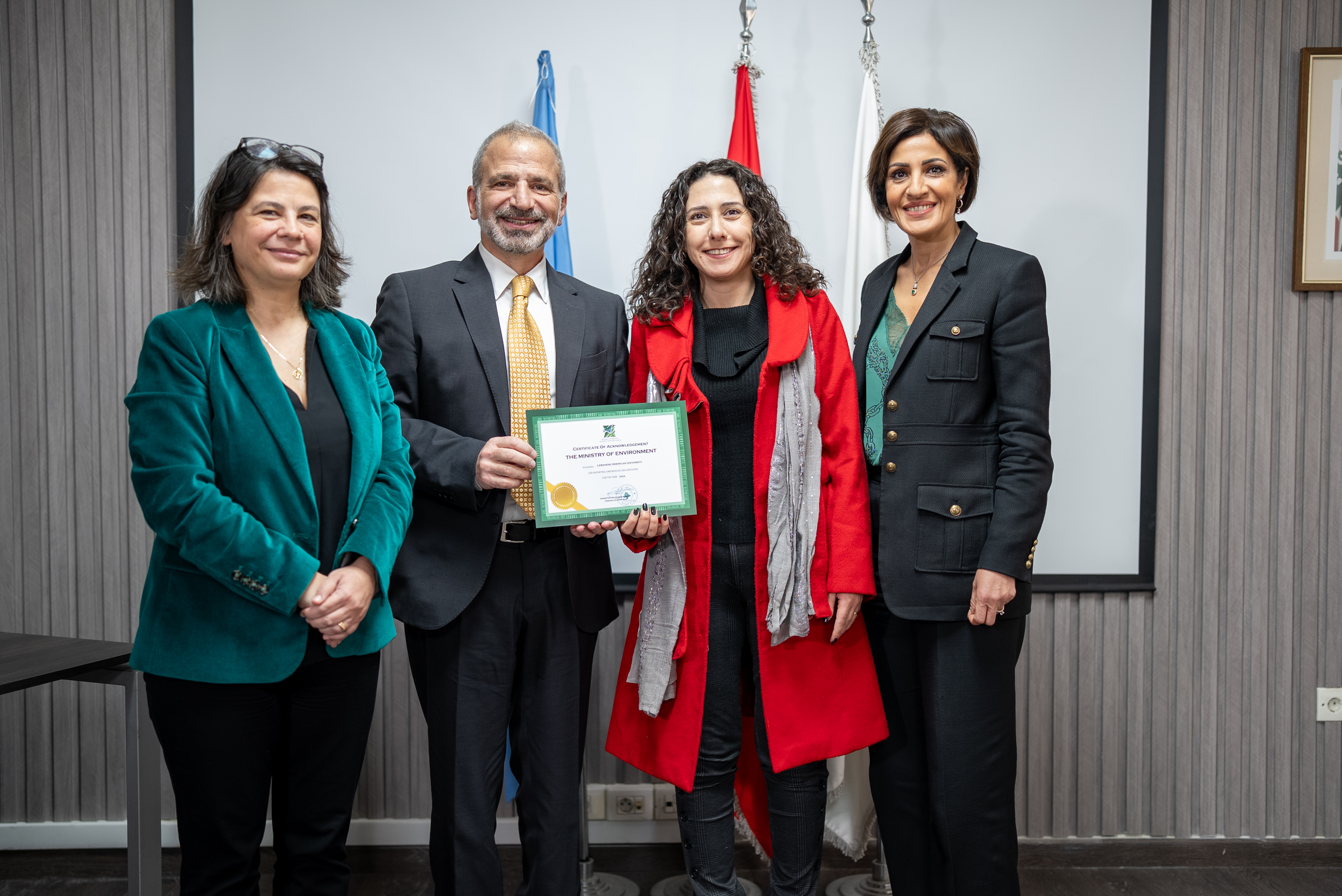
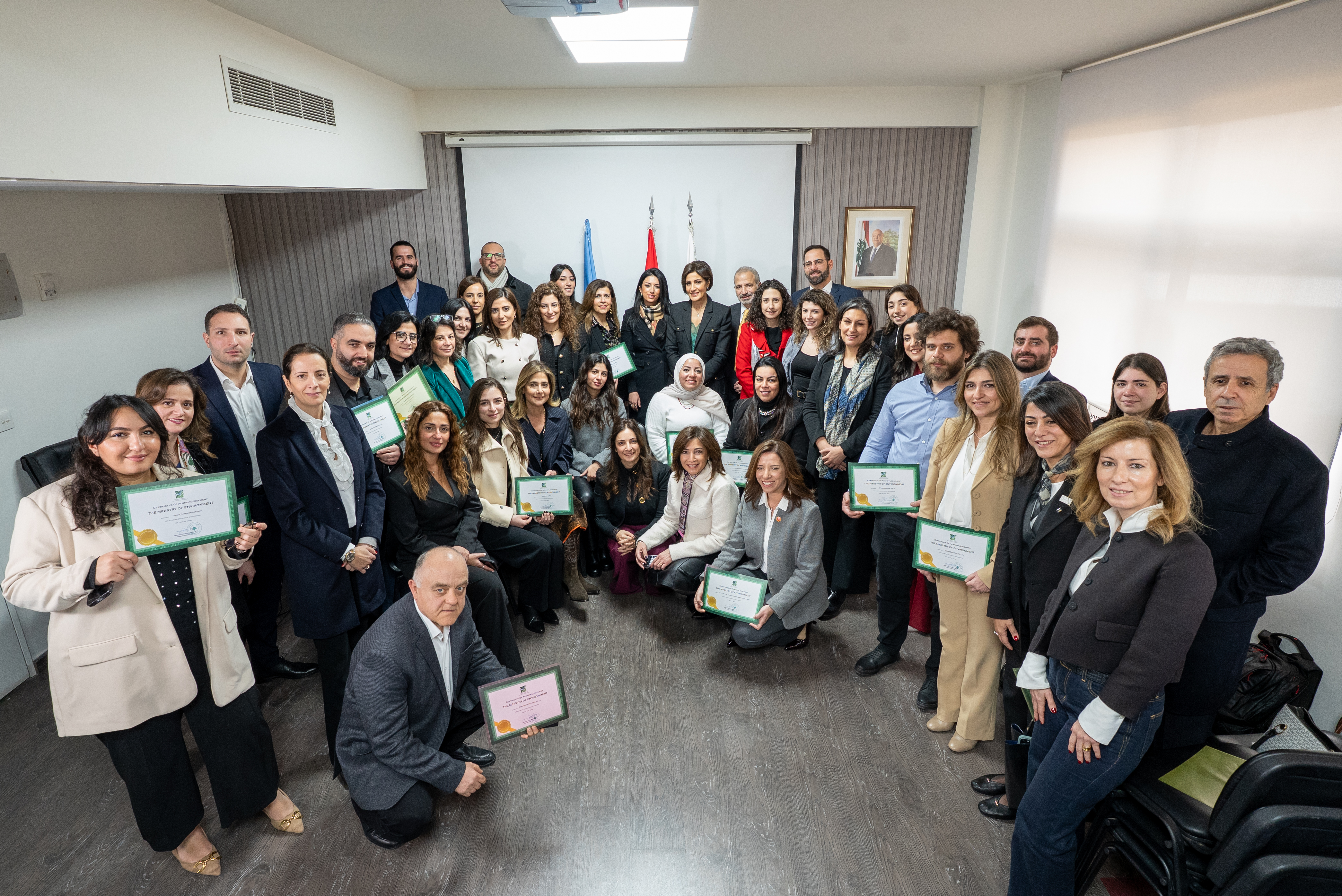
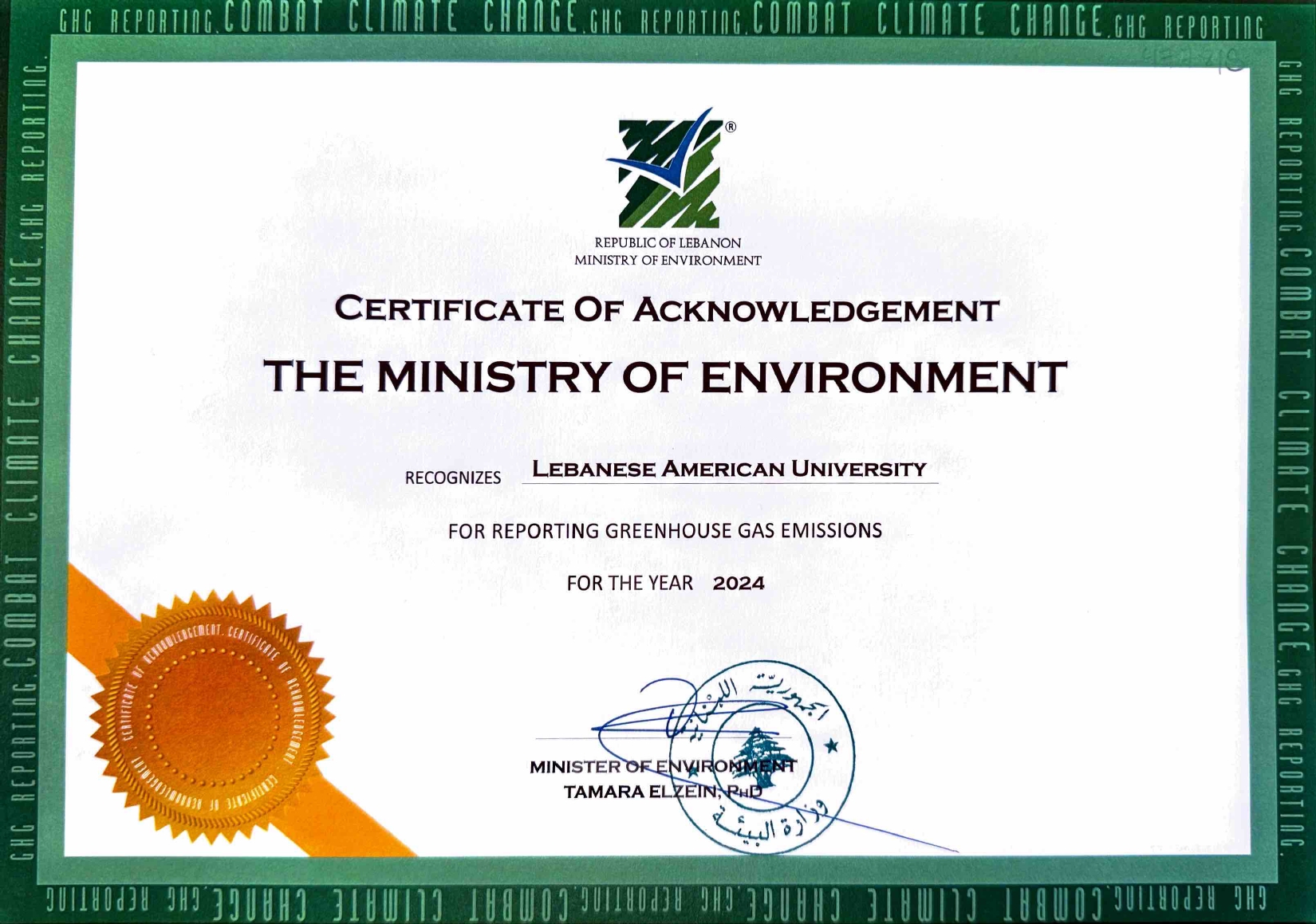
Pictures from the Carbon Footprint Reporting Certification Ceremony, Ministry of Environment, January 21, 2026.
LAU Sustainability Strategy, Action Plan and Commitments
The Sustainability Strategy was developed by the university’s Office for Sustainability (OfS) following extensive consultations with the entire LAU community, including schools, academic departments, administrative units, staff, and students.
LAU’s Sustainability Strategy explicitly mandates developing Sustainability Action Plans with short-, medium-, and long-term goals and assigned responsibilities, an institutional framework for climate and sustainability action that is designed to engage university units and external stakeholders.
It establishes specific targets for energy efficiency and management, as well as for water conservation and sustainable use.
The strategy has been submitted for official endorsement and, once approved, will be publicly released along with measurable KPIs, many of which are already being implemented in practice.
Sustainable Design and Construction
Green Building Certification
We are committed to developing sustainable buildings that reduce resource consumption while protecting the environment and providing a high indoor environmental quality. Increasingly, our building projects involve certifying our buildings by means of green building rating systems, thus obtaining recognition and creating further awareness.
On the Byblos campus, two buildings have recently followed this path:
The Library and Riyad Nassar Central Administration buildings were being constructed with USGBC’s LEED gold certification in mind.
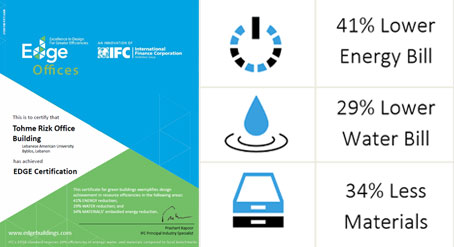
The Tohme-Rizk building in Byblos has obtained the International Finance Corporation’s EDGE certification, becoming the first EDGE certified office building in Lebanon (PDF - 0.7MB). This will will result in reductions of 41 percent in energy, 29 percent in water, and 34 percent in materials’ embodied energy compared to local benchmarks. It will reduce, at no additional capital cost, utility expenses for the building by around $600 each month, in addition to saving the environment 21 tCO2 per year.
High Performance Renovations
We aim at transforming LAU’s campuses into high performance facilities, one project at a time, without necessitating large budgets for the retrofitting or replacement of inefficient installations. For example:
- Byblos’ Architecture L1 renovation was designed and is being executed with energy conservation features.
- Beirut’s Wadad Sabbagh Khoury Student Center renovation was designed and executed with water and energy conservation features.
Green Design Guidelines
We are in the process of establishing guidelines for green criteria/systems to be adopted in all of our designs. These would consist of solutions that are most relevant to our culture and to our university’s context, most technically appropriate to each building type, and most financially feasible. We are currently identifying the appropriate systems and will launch this initiative in 2016.
Carbon Emissions
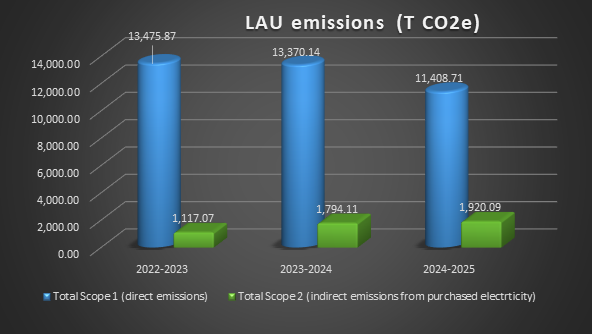
LAU is keen on tracking its carbon emissions in an effort to reduce them and ultimately become carbon neutral. The below table summarizes the Scope 1 and Scope 2 emissions for Beirut and Byblos campuses as of 2018.
The below table shows results of the Three passed years:
| Carbon Emissions | 2022 -2023 | 2023-2024 | 2024-2025 |
| Total Scope 1 (direct emissions) | 13,475.87 | 13,370.14 | 11,408.71 |
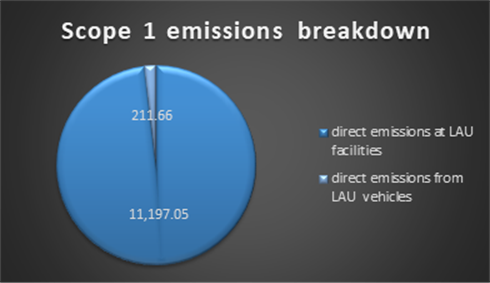
| direct emissions at LAU facilities | 13,263.96 | 13,138.97 | 11,197.05 |
| direct emissions from LAU vehicles | 211.91 | 231.17 | 211.66 |
| Total Scope 2 (indirect emissions from purchased electricity) | 1,117.07 | 1,794.11 | 1,920.09 |
| indirect emissions from purchased electricity | 1,117.07 | 1,794.11 | 1,920.09 |
Energy Saving
Energy Saving
Currently LAU consumes around 24 million kilowatt-hours (kWh) of electric energy and 5 million kWh of thermal energy per year, generating the equivalent of the CO2 emissions produced by around 7,000 cars.
Recognizing the importance both of environmental sustainability and of maximizing our community’s ability to work to its fullest capacity, we are constantly exploring ways to conserve energy, operate efficiently, and introduce renewable energy sources
Sustainable Living
Tips for Green Living
We provide members of our community with practical, everyday green tips, helping them to lead a sustainable life style and join us in turning LAU into a green facility
The Green Pledge
The Green Pledge is an agreement to make small, simple choices in your daily life to help make our campus more sustainable. These small changes will add up to a big impact if we all do it together.
The Green Calendar
Our green calendar identifies one anchor green day per semester and links it to activities that encourage the LAU community to go green.
Earth Hour
Raising the voice from home, each year LAU celebrates Earth Hour, spreading a message of sustainability and connection to our planet within our community.