SDG 14: Life Below Water
The Lebanese American University (LAU) demonstrates a strong and expanding commitment to the United Nations Sustainable Development Goal 14 (Life Below Water) through research, education, and community engagement focused on protecting Lebanon’s aquatic ecosystems. With projects addressing marine and freshwater pollution, sustainable water management, and ecological restoration, LAU integrates science, policy, and civic action to advance responsible stewardship of aquatic resources.
Anchored in its Sustainability Strategy and supported by its Office for Sustainability, the university mobilizes faculty, students, and partners to translate research into impact. Moreover, from pioneering wastewater-treatment technologies with the Litani River Authority to curriculum-embedded marine biology and water-security courses and through interdisciplinary collaborations, water-conservation initiatives and awareness programs on coastal and freshwater ecosystems, LAU contributes practical solutions to regional water challenges while nurturing a generation of environmentally conscious professionals dedicated to the long-term health of Lebanon’s rivers, coastal zones, and marine biodiversity.
Office for Sustainability (OfS)
The Office for Sustainability (OfS) plays a central role in advancing SDG 14 (Life Below Water) through research, policy development, and operational initiatives that protect Lebanon’s aquatic and coastal ecosystems. The Office leads the implementation of LAU’s Sustainability Strategy, which includes water conservation, wastewater management, and pollution reduction as institutional priorities. By coordinating with academic departments, student clubs, and external partners such as the Litani River Authority and UNDP, the OfS fosters applied research on water quality, sustainable wastewater treatment, and marine biodiversity. It also oversees awareness campaigns and educational programs on plastic reduction, marine pollution, and sustainable water use. Through these integrated actions, the OfS contributes to safeguarding marine and freshwater ecosystems while cultivating a campus-wide culture of environmental responsibility.
Supporting aquatic ecosystems through education:
Several courses related to aquatic and marine ecosystems are available for LAU students such as:
Within Biology courses:
https://soas.lau.edu.lb/academics/programs/sdgs-in-the-biology-courses.php
BIO201, BIO201B, BIO202, BIO202B, BIO345, BIO345B, BIO401, BIO401H, BIO410:
The biology courses within our program contribute significantly to SDG14 (Life Below Water) by delving into the study of aquatic ecosystems and marine biology. Our courses provide students with a profound understanding of the intricate relationships within marine environments. The curriculum explores the challenges facing marine life and ecosystems, emphasizing the importance of biodiversity and sustainable conservation practices. Through theoretical insights and practical experiences, students gain the knowledge and skills to contribute to the preservation of life below water. The Biology Program prepares graduates to actively engage in marine conservation efforts, aligning with the objectives of SDG14 and promoting the health and sustainability of aquatic ecosystems.
BIO311, BIO312, BIO420:
The biology courses in our program are pivotal in addressing SDG6 (Clean Water and Sanitation) by providing students with the essential knowledge to contribute to sustainable water management. Covering a range of topics such as virology and microbiology, these courses offer insights into the dynamic relationships between living organisms and water ecosystems. The curriculum explores biological processes influencing water quality and the conservation of aquatic environments. By delving into these aspects, the Biology Program prepares students to actively contribute to the development of strategies ensuring clean water access and promoting sanitation practices. Through theoretical understanding and practical applications, graduates emerge with the skills necessary to contribute effectively to the preservation of water resources, aligning with the objectives of SDG6.
The school of Engineering offers the VIP+ Projects:
https://soe.lau.edu.lb/degree-programs/vip/
The Vertically Integrated Projects Plus (VIP+) model is a transformative approach to enhancing higher education by engaging students in ambitious, long-term, industry-scale, multidisciplinary project teams. This model engages undergraduate and graduate students in multidisciplinary, real-world projects that are co-mentored by faculty and industry experts. Students will get the opportunity to participate in internships, workshops and presentations by distinguished leaders. The proposed program encapsulates an initiative to instill entrepreneurial confidence in students and empower them to launch successful startups.
VIP+ projects, designed to provide continuous and immersive learning experiences throughout the academic year. Students would stay engaged with innovative, multidisciplinary projects led by faculty and industry mentors each fall and spring semester. One of its Projects is:
Smart Irrigation System
https://soe.lau.edu.lb/degree-programs/vip/projects/smart-irrigation-system.php
Utilizing precise quantities of water and nutrients for plant irrigation not only conserves water in the face of its increasing scarcity but also ensures the production of high-quality agricultural goods. Our smart irrigation system incorporates sensors to oversee critical environmental factors such as temperature and soil composition, including humidity, NPK levels, and pH levels. These sensors autonomously regulate irrigation pumps, activating or deactivating them as necessary. Positioned throughout the field, these sensors continuously monitor these parameters, transmitting real-time data to a smartphone application. This app allows users to remotely manage the irrigation system, providing efficient and convenient control over agricultural operations.
Desired Disciplines: Biology, Computer Science, Engineering and Marketing/Advertising
Team Leader: Dr. Jimmy Issa
Industry Partners: BCMS international
The Liberal Arts & Sciences Courses
LAS201 Water Security [3–0, 3 cr.]
https://catalog.lau.edu.lb/2023-2024/courses/las.php
The course provides a comprehensive examination of water security issues confronting human society with particular focus on the attainment of United Nations Sustainable Goal 6 to ensure access to water and sanitation for all. It is one of the three Water-Energy-Food Nexus courses. Securing a sustainable supply of water, energy, and food is one of the greatest global challenges of our time. Recognizing the interdependencies and interlinkages between these three resources and finding new approaches to manage the nexus could significantly help in attaining the United Nations sustainable development goals (SDGs).
Supporting aquatic ecosystems through Outreach and Community Engagement:
Raising Awareness On Marine Life (March 14, 2024)
https://eventscal.lau.edu.lb/students/event.php?evt=20240311_raising-awareness-on-marine-life
Students partnered with Water People and the LAU Environmental Club to run a hands-on coastal-conservation awareness action on campus (live sea-urchins, protection messages, engagement booth). It sensitized students to marine ecology, species care, and coastal stewardship practices.
SWaTH (Erasmus+) Seminar on Pharmaceutical Waste (May 24 2023)
https://news.lau.edu.lb/2023/seminar-on-pharmaceutical-waste-spreads-life-saving-practices.php
LAU (School of Pharmacy + School of Engineering) hosted a national seminar within the EU-funded SWaTH project. Sessions covered proper pharmaceutical waste disposal, hospital practices, and industrial wastewater treatment; LAU leads the pharmaceutical component and helped survey 136 hospitals in Lebanon.
Research Day 2024 — Posters: “Pharmaceutical By-products Contamination in Surface Waters” (Apr 18 2024)
https://eventscal.lau.edu.lb/images/lau-research-day-2024-posters.pdf
Research Day included work on contamination of surface waters by pharmaceutical by-products, highlighting monitoring and mitigation themes relevant to watershed and marine-pollution pathways.
Students Acknowledged for Their Entrepreneurial Spirit (May 23 2024)
https://news.lau.edu.lb/2024/post.php
A university innovation competition thematically linked to SDG 6 (water) spotlighted water-management topics and faculty leadership in the area, encouraging applied solutions that also translate to aquatic stewardship and pollution prevention.
Supporting aquatic ecosystems through actions:
Reduce Plastic Waste
A Facilities Management recycling committee was formed involving the constituency of LAU’s two campuses and came up with a complete study that was reported to the University Recycling and Waste Management Committee (RWMC). The study identified paper, cardboard, glass, cans and plastics as the main recyclable materials, noting that other recyclables may be added later on. For optimization purposes, it was decided to divide these recyclables into two streams: paper and cardboard on one side and glass, cans and plastics on the other. This project was implemented as of 2015. Moreover, we have fitted some of our buildings with drinking water bottle filling stations to reduce the consumption of PET bottles.
Guidelines for Water Discharge
LAU respects national codes and international standards with respect to water discharges. Two main initiatives at LAU cover this issue: on-site wastewater treatment plants and a hazardous waste disposal program.
There are three central sewage treatment plants in the valley with a total capacity of 190 m3/day and one plant at Dorms B, collecting the sewage from the campus for treatment prior to reuse for irrigation and fire-fighting purposes.
Additionally, a Hazardous Waste Management Plan Committee (HWMC) has been established to work on a comprehensive hazardous waste management plan covering both LAU and LAU Medical Center-Rizk Hospital. The plan will tackle the minimization of hazardous waste generation, segregation and storage in appropriate areas, the packaging and labeling of containers, transportation from the generating area to the storage area, and transportation from LAU and LAU Medical Center-Rizk Hospital to a certified high incineration treatment facility.
LAU Implements First Phase of Sustainable Waste Management of the Litani Basin
The Litani River Basin, Lebanon’s primary source of irrigation and water supply, has long suffered from severe organic and industrial pollution, posing grave environmental and health threats. To address this crisis, the Lebanese American University (LAU), in partnership with the Litani River Authority (LRA), has launched a multi-phase project employing anaerobic digestion technology—a process that converts organic waste into biogas (methane), providing both effective wastewater treatment and a renewable energy source. Spearheaded by Dr. Mahmoud Wazne, Associate Professor at LAU’s School of Engineering and supported by a USAID PEER research grant, the first phase of the project involved collecting and analyzing wastewater samples from local food industries to test the effectiveness of mono- and co-digestion treatments. This collaboration marks a major step toward restoring clean water access for Beqaa Valley and Beirut communities while promoting sustainable industrial practices.
The project’s second phase will enhance treatment efficiency through an integrated bio-electrochemical reactor, developed in cooperation with Washington State University, and expand training for young researchers in sustainable wastewater management. LAU also hosted a USAID-sponsored workshop bringing together Lebanese and American experts, industry representatives, and government officials to discuss biogas production and the economic and environmental benefits of anaerobic digestion. The initiative has strengthened ties among academia, industry, and government to establish unified wastewater treatment standards and promote public awareness. Parallel research by Dr. Mustapha Harb, funded under the EU’s Horizon 2020 PRIMA program, explores innovative technologies for water reuse across Lebanon and the Mediterranean. Collectively, these efforts advance multiple UN Sustainable Development Goals—notably SDG 3 (Health), SDG 6 (Clean Water), SDG 7 (Clean Energy), SDG 11 (Sustainable Cities), and SDG 14 (Life Below Water)—demonstrating LAU’s regional leadership in applied environmental solutions.
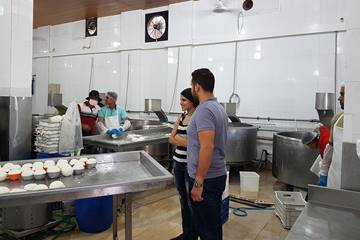 |
The team also collected wastewater samples from various food factories including a cheese plant. |
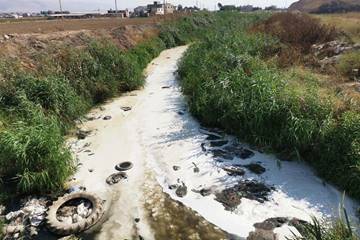 |
Organic industrial waste contaminating the Litani River Basin has led to severe health and environmental hazards. (Photo courtesy of the Litani River Authority) |
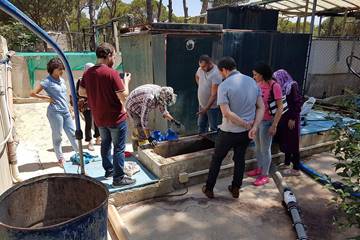 |
Dr. Wazne and his team of LAU graduate students and industrialists collect sludge samples at the wastewater treatment plant in Bkassine. |
A USAID-funded Research Project on Industrial Wastewater Management Yields Sustainable Solution
The Litani River Industrial Wastewater Treatment Project, led by LAU Associate Professor Dr. Mahmoud Wazne in collaboration with the Litani River Authority (LRA) and supported by a USAID grant, has produced an innovative, eco-friendly treatment technology that efficiently processes all types of organic waste. Using a bio-electrochemical reactor system co-developed with Washington State University, the project converts organic pollutants into methane gas, which can be used to generate renewable electricity. This approach simultaneously tackles Lebanon’s persistent problem of industrial water pollution and energy scarcity, providing a sustainable model for wastewater management that protects vulnerable communities in the Beqaa Valley from waterborne diseases and ensures cleaner water supplies as far as Beirut. The research team—comprising LAU faculty, postdoctoral and graduate researchers—published findings on anaerobic co-digestion of cheese whey and poultry wastewaters, highlighting how biological treatment can balance industrial productivity with environmental stewardship.
To promote adoption of this technology, LAU’s School of Engineering hosted a USAID-sponsored workshop on December 6 2023, showcasing successful pilot tests from industries in the upper Litani Basin. The event gathered experts from LRA, Dar Al-Handasah, CDM Smith, environmental NGOs, and the wine industry to discuss practical applications and national wastewater standards. Both Dr. Wazne and LRA Director General Dr. Sami Alawieh emphasized that the solution offers a low-cost, energy-independent treatment method capable of saving up to 1 kW/kg COD while generating 13.5 MJ of methane energy per kilogram extracted. This project exemplifies LAU’s commitment to applied, community-driven research aligned with the UN SDGs 3 (Good Health), 6 (Clean Water), 7 (Clean Energy), 11 (Sustainable Cities), and 14 (Life Below Water), reaffirming the university’s role as a national leader in advancing sustainable industrial practices and environmental innovation.
To browse more scholarly output by the LAU community, visit our open-access digital archive, the Lebanese American University Repository (LAUR).
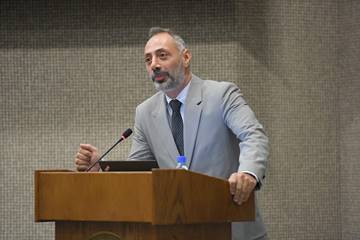 |
The Litani Industrial Wastewater Treatment Project, said Dr. Khoury, is in line with the university’s vision to help the community resolve one of the country’s chronic and grave problems. |
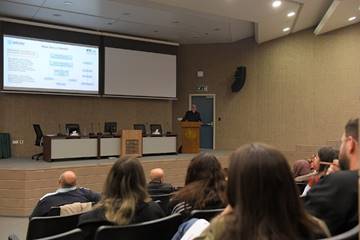 |
Dr. Wazne and his team presented the experimental results for the treatment of different waste streams from the upper Litani Basin to show the high efficacy of anaerobic digestion and galvanize industries to take action. |
Smart Irrigation System
Using the right amount of water to irrigate plants not only saves water (which is becoming scarce) but will also yield quality agricultural products. Sensors will monitor the temperature and soil humidity, and will turn on/off irrigation pumps when needed. LoRa sensors - long range wireless sensors requiring low power to operate - will be used. This system will be controlled from a mobile phone application.
Desired Disciplines
- Biology
- Computer Science
- Engineering
- Marketing/Advertising
Team Leader
Industry Partners
BCMS international
Energy Saving and Water Conservation
Energy Saving
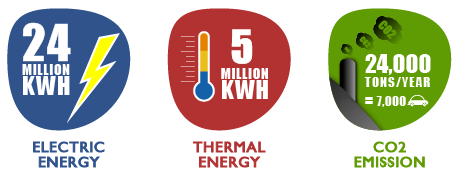
Currently LAU consumes around 24 million kilowatt-hours (kWh) of electric energy and 5 million kWh of thermal energy per year, generating the equivalent of the CO2 emissions produced by around 7,000 cars.
Recognizing the importance both of environmental sustainability and of maximizing our community’s ability to work to its fullest capacity, we are constantly exploring ways to conserve energy, operate efficiently, and introduce renewable energy sources
Water Conservation
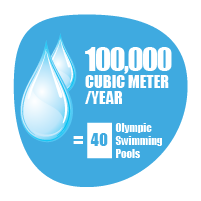 |
Our campuses use around 100,000 m3 of water annually, enough to fill nearly 40 Olympic swimming pools. We are tirelessly working to reduce our water consumption, harvest rain water and recycle gray water for irrigation. |
Here is what we are doing to achieve these goals:
Green Awareness
We are continuously sensitizing the LAU community about the importance of energy and water resources and their conservation and actively engaging them in this endeavor.
 |
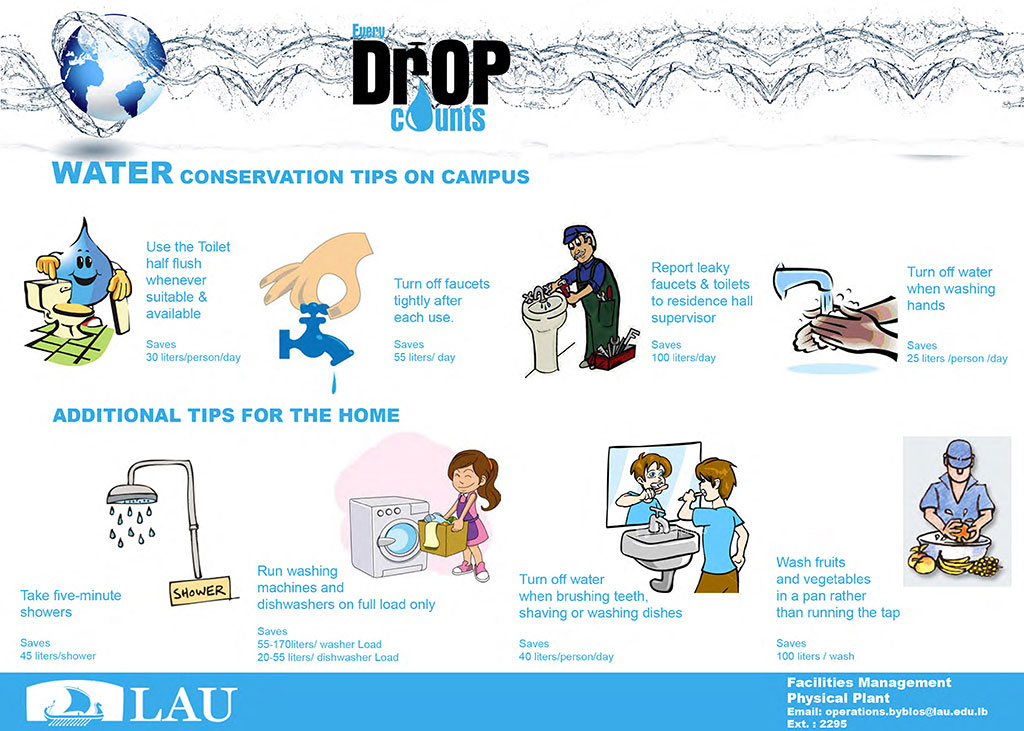
We have launched an awareness campaign with tips for saving water on campus, in dorms, or at home. Posters were placed in restrooms and on bulletin boards throughout LAU, coupled with a short video on campus TV screens, the LAU website, and social media channels. |
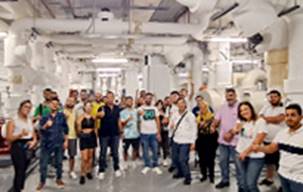 |
On August 26, 2022, the LAU Facilities Management Department in collaboration with the Association of Energy Engineers – Lebanon Chapter organized a site tour for LAU and non-LAU students. This initiative was part of the “internship in energy and sustainability” program by AEE Lebanon. Interns got the chance to tour the Byblos Campus, visit the High Performance Infrastructure Utilities as well as the LEED Gold Joseph Jabbra Library and Riyad Nassar Central Administration buildings. |
WATER CONSUMPTION & EXPENDITURE
| BEIRUT CAMPUS | BYBLOS CAMPUS | |
| Total Water Consumption (m3) | 34,000 | 65,000 |
| Water Use Index WUI (L/student/y) | 7.229 | 18.192 |
| Water Cost Index WCI ($/student/y) | 28.05 | 1.21 |
| Reclaimed Wastewater for Irrigation (m3) | N/A | 2,280 |
| Harvested Rainwater (m3) | 550 | 1,050 |