SDG 15: Life on Land
The Lebanese American University (LAU) upholds a strong institutional commitment to Sustainable Development Goal 15 (Life on Land) through integrated research, education, and operations that promote the conservation and sustainable use of terrestrial ecosystems.
Coordinated by the Office for Sustainability (OfS), LAU embeds environmental stewardship into its campus management, curricula, and community outreach, ensuring that biodiversity protection and resource efficiency remain central to its mission.
Through research on environmental health, land use, and ecosystem resilience, the university advances practical solutions to protect natural habitats and mitigate human-induced impacts. LAU’s laboratories and facilities follow strict environmental and safety standards to prevent contamination and manage hazardous waste responsibly, while its awareness campaigns and courses in ecology, environmental science, and land management cultivate a culture of sustainability among students and staff. From biodiversity seminars and tree-planting drives to waste-reduction initiatives and renewable-energy projects, LAU’s multidisciplinary approach reflects a long-term vision to safeguard Lebanon’s ecological heritage and contribute meaningfully to global efforts for a more sustainable planet.
Office for Sustainability (OfS)
The Office for Sustainability (OfS) leads LAU’s institution-wide efforts to integrate sustainable practices into education, operations, research, and community engagement—advancing environmental protection and responsible resource use in alignment with SDG 15 (Life on Land). Through its strategic initiatives, the Office promotes biodiversity conservation across LAU campuses by supporting green infrastructure planning, tree planting, solid waste reduction, and habitat protection. It also coordinates partnerships with local municipalities, NGOs, and academic units to foster awareness about ecosystem preservation and sustainable land management. By embedding sustainability principles into university operations and outreach, the OfS ensures that land ecosystems and natural resources are conserved for future generations while strengthening LAU’s role as a national leader in environmental stewardship.
Institute for Environmental Studies and Research:
https://sard.lau.edu.lb/about/institutes/iesr/
The mission of the Institute of Environmental Studies & Research is to investigate issues of environmental nature, and the impact of such issues on the long-term sustainability of the region and its resources. These issues include but are not limited to: the impact of urban growth, zoning and urban development on cities and suburbs, and the impact of building construction and energy use on the environment. The objectives of the Institute would be to develop studies and proposals aimed at:
- Promoting sustainable practices, including land use strategies and demographic projections, specific to urban and suburban zones.
- Developing studies on urban planning, transportation systems, land management, and preservation of natural areas.
- Providing impact assessment for large scale projects such as industrial projects, infrastructure, and social housing.
- Conducting surveys of historical areas and proposing master plans for areas in need of development and/or preservation.
- Developing studies on improving energy conservation in buildings and innovative sustainable practices in building construction.
Environmental Health and Safety
LAU is committed to anticipating environmental health and safety requirements and risks and to developing mitigation strategies to reduce negative effects on people and property.
Laboratories Safety Related Measures
To minimize potential accidents in laboratories, the NSD Laboratory Best Practices Committee (DLBPC) has been formed with the mandate of preparing relevant policies and procedures.
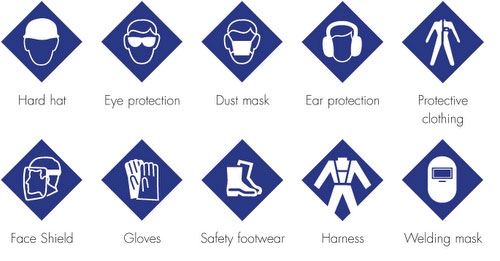
Standard Operating Procedures should be adopted when handling hazardous materials, proper Personal Protective Equipment (PPE) should be worn, and safety related measures should be constantly implemented.
Natural Sciences Laboratories Safety Related Measures
The following Basic Laboratory Safety Rules shall always be adopted:
- Walk — never run — inside the labs.
- Wear appropriate lab clothing (closed shoes, lab coat, back tied hair, goggles).
- Handle chemicals cautiously (wear gloves, never smell or taste chemicals for identification, make sure to inform your instructor in case of a spill).
- Do not leave lit bunsen burners unattended.
- Make sure no flammable solvents are in the surrounding area when lighting a flame.
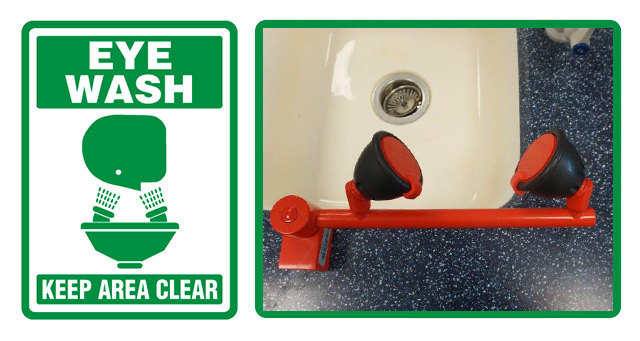
- If chemicals or particles get into your eyes, walk to the nearest eye wash and make sure to rinse your eyes for 15 continuous minutes. Try to keep your eyes open while rinsing them.
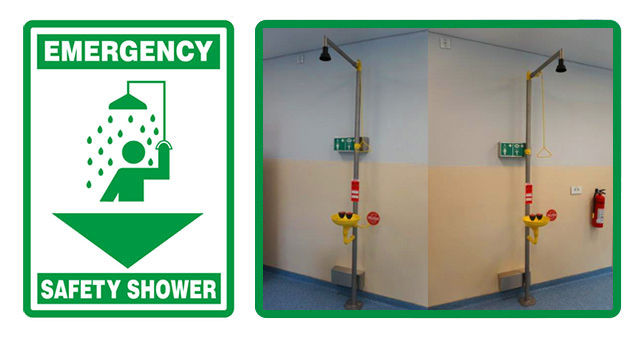
- If chemicals get onto your skin, walk to the nearest emergency shower, pull the handle and stand under the water for 15 continuous minutes
- Do not eat or drink inside the lab.
- Clean up your lab table once your lab session is over.
- Wash hands after removing gloves and before leaving the lab.
Hazardous Waste Management Plan
A Hazardous Waste Management Plan Committee (HWMC) has been established to work on a comprehensive hazardous waste management plan covering both LAU and LAU Medical Center-Rizk Hospital. The plan will tackle the minimization of hazardous waste generation, segregation and storage in appropriate areas, the packaging and labeling of containers, transportation from the generating area to the storage area, and transportation from LAU and LAU Medical Center-Rizk Hospital to a certified high incineration treatment facility.Residence Halls
Going to university is an exciting time for students and their parents. Living in a new “home away from home” gives young adults more freedom to make their own choices. But it also gives them an increased level of personal responsibility.
It’s important for students living in on-campus housing to be mindful of fire safety. General Safety Training at the beginning of each academic year is mandatory, as is abiding by the safety rules in compliance with local and international codes and standards.
Each time the general alarm is initiated, all occupants are required to leave the dorms and remain in the designated assembly area, even if the alarm is a drill or false alarm.
Dorm occupants should follow the following safety tips:
- Check the evacuation map when you check into your room for the first time. Locate yourself in the building and identify your exits.
- Never disable a smoke detector
- Never tamper with safety system components
- When you are cooking, turn on the hood to avoid false alarms and remain in the kitchen
- Do not cook when you are sleepy or drowsy
- Avoid flammable holiday decorations
- Do not smoke inside the building
- Practice all fire drills as if they were real emergencies
Recycling and Waste Management
While many institutions in developing countries are mandated by law to participate in recycling programs, LAU is taking the lead to initiate a program promoting the “reduce, reuse, and recycle” mentality, not because it is easy or less expensive than the alternatives, but because it is the right thing to do.
A Facilities Management recycling committee was formed involving the constituency of LAU’s two campuses and came up with a complete study that was reported to the University Recycling and Waste Management Committee (RWMC). The study identified paper, cardboard, glass, cans and plastics as the main recyclable materials, noting that other recyclables may be added later on. For optimization purposes, it was decided to divide these recyclables into two streams: paper and cardboard on one side and glass, cans and plastics on the other. This project was implemented as of 2015. Moreover, we have fitted some of our buildings with drinking water bottle filling stations to reduce the consumption of PET bottles.
The FM team researched potential recycling partners and presented the results to the RWMC, which opted for partnering with a nonprofit charity organization so as to maximize the positive impact of this initiative. The committee favoured “Association l’Écoute”, whose mission is to rehabilitate humans (mainly the deaf and blind and people with reduced mobility) through recycling materials. The profits from the recyclables is used to finance their needs for hearing kits and other medical services as well as providing them with full time employment opportunities. For further information, visit Association l’Écoute.
Supporting land ecosystems through community outreach:
Give Back to Lebanon — Hike, Adopt & Plant a Tree (Apr 20 2024)
Student-led field activity combining a guided biodiversity hike with tree adoption/planting, linking environmental education to tangible habitat restoration actions and local stewardship.
Insights into Global Threats to Plant Biodiversity (Apr 25 2024 talk)
Campus talk raising awareness on drivers of biodiversity loss, conservation strategies, and community roles in protecting flora—an accessible public-facing learning event for students and local attendees.
Seminar for Lebanon’s Wild Bees (Oct 25 2023)
A campus-open seminar explored the ecological role of Lebanon’s native wild bee species, their habitat threats and conservation strategies, engaging students and local community members in biodiversity awareness.
Raising awareness about the importance of biodiversity with a special focus on the medicinal and aromatic plants of Lebanon
Lebanese American University - Beirut
The Mediterranean Basin is a hotspot of biodiversity with high richness in both endemic as well as medicinal and aromatic plants. In particular, Lebanon hosts an important flora heritage that has witnessed a history of civilizations. The country is renowned for its richness in medicinal and aromatic plants which have long been used by local communities to heal diseases or ailments or to prepare traditional Lebanese recipes. However, those plants are subject to severe anthropogenic pressures, suffering mainly from illegal harvesting, and some of them are threatened or endangered.
The Department of Natural Sciences of the School of Arts and Sciences at the Lebanese American University and the Environment Club at the university will be participating in the International Fascination of Plants Day 2022, through organizing an event on Beirut campus on April 29, 2022. The event will focus on raising awareness on the importance of wild medicinal and aromatic plants of Lebanon, their ethnobotanical uses by local communities, as well as the threats they are facing from unsustainable harvesting, habitat fragmentation and climate change. Students will profit from a poster listing important wild medicinal and aromatic plants of Lebanon where they can pick a plant and see its traditional uses by local communities. Students will also profit from an exhibition of samples of some medicinal and aromatic plants, including the Syrian marjoram or oregano, Lebanon shrubby sage and carob as well as some products and traditional Lebanese recipes like Zaatar and Carob Molasses.
Neoliberalism, Globalization, and the Ecological Crisis
A Symposium organized by the Institute of Environmental Studies and Research
Lebanese American University In collaboration with the European Cultural Center.
September 29, 2021
The collapse of the Soviet Union at the beginning of the 1990’s ushered a new political and economic era, marked by the triumphant emergence of Neoliberalism and the globalized capitalist world order. Some thirty years after this major turning point, it is clear that this new world order has led to the breakdown of the foundational elements of the socio-political order in nation-states, with disastrous consequences as evidenced by the outbreak of Covid-19 pandemic. Many critics have associated the Neoliberal policies across the globe with the increasing challenges posed on the environment, and the prognostics of an ecological disaster on the horizon.
In this symposium we propose to examine the consequences of Neoliberalism and Globalization and its environmental impacts by addressing the following questions:
- What role does architecture, in general, and urban planning policies in particular, play in exacerbating or mitigating the environmental imbalances? What role do ‘new cities’ that have emerged on the global map represent in this context, with their ‘alternative’ realities?
- What kind of impact will the environmental destruction have on the constitution and the identity of the city with the projected population displacements and forced migrations that are expected?
- Will the information revolution hold the key to face the environmental challenge, or would any attempt to redress the situation fail under the current economic and political orders? What role does information technology play in this respect, and should we uncritically espouse its ‘progressive’ achievements and innovations?
- In what way should we revisit the relation between nature and human in conjunction with the relation of human to human that would enable us to rethink the idea of ‘human nature’, city and its architecture in the context of a sustainable environment?
This symposium will seek to address and debate these issues through a panel of invited critics and scholars in an interdisciplinary setting.
This symposium will be held as a virtual open event. It is a joint collaboration between the School of Architecture & Design at the Lebanese American University, and the European Cultural Center, and will be broadcast live during the activities of the ECC in Venice in September 2021.
Supporting land ecosystems through education:
Environmental Science courses
BIO203 Introduction to Ecology [3-0, 3 cr.] This course introduces the organization of individual organisms into populations, communities, and ecosystems. It focuses on the interactions between living organisms and their physical environment. Concepts such as diversity, competition, natural selection, adaptation, climate changes, migration, extinction and deforestation are covered. Additionally, the course tackles concepts of environmental microbiology in relation to pollution, remediation and recycling of liquid and solid wastes.
CHM340 Environmental Chemistry [3-0, 3 cr.] This course is a study of natural and non-natural chemical substances in the environment and their chemical transformations. It involves chemistry of energy resources, atmosphere, hydrosphere, biosphere, and, lithosphere (natural and in polluted environment). Principles of chemical reactions, chemical equilibrium and reaction kinetics are applied in this course. Other covered topic is waste treatment and chemical processes. Parallel with these is learning the methods of environmental chemical analysis.
ENV200 Introduction to Environmental Science [3-0, 3 cr.] This is an introduction to the environmental problems and challenges facing mankind. Global problems will be directly related to issues facing the regional, and local environment. The course covers environmental problems and their causes, ecosystems and how they work, deforestation, loss of biodiversity, species extinction, air pollution, global warming, ozone depletion, solid waste disposal, renewable energy technologies, and applications to alleviate environmental problems. Case studies will be presented, and potential solutions will be attempted. The course includes field trips.
ENV423 Environmental Microbiology [2-3, 3 cr.] This ecologically based course discusses the relationship of microorganisms with one another and with their environment. It stresses the three major domains of life – Eucaryota, Archaea and Bacteria and studies their diversity, interactions and physiology in their natural environments. Biodegradation of organic matter, bio-geo-cycling of minerals and waste bio-treatment are emphasized. The course also deals with metagenomic, metaproteomic techniques and applications as well as the use of microarrays in Microbial Ecology.
ENV427 Environmental Physics [3-0, 3 cr.] The course comprises aspects of atmospheric physics, soil physics and many aspects of applied physics. It introduces the essentials in environmental physics, and describes the basics in environmental spectroscopy e.g. black body radiation and the solar UV and Life. It also addresses the global climate, energy balance, energy available for human use, transport of pollutants, and noise pollution. The course also discusses risk estimations, energy saving and nature and future thinking in the context of the global society.
Biology Courses:
BIO203 Introduction to Ecology [3–0, 3 cr.] This course introduces the organization of individual organisms into populations, communities, and ecosystems. It focuses on the interactions between living organisms and their physical environment. Concepts such as diversity, competition, natural selection, adaptation, climate changes, migration, extinction and deforestation are covered. Additionally the course tackles concepts of environmental microbiology in relation to pollution, remediation and recycling of liquid and solid wastes.
BIO331 Ecology [3–3, 4 cr.] This course delves deeper into the study of the relationships between living organisms and their environment. It covers concepts related to the structure, function, organization, and regulation of ecosystems, populations, communities, and biomes. It provides students with both theoretical knowledge and hands-on experience through laboratory work and field trips.
BIO834 Environmental Health and Toxicology [3–0, 3 cr.] This course introduces students to the methodology of controlling environmental factors that impact human health, disease, and disorders. It addresses physical environmental stresses, biological factors, vectors, and principles of toxicology. Students gain insights into environmental contamination, pollution, routes, and pathways. These educational programs not only serve our students but also extend our commitment to local and national communities.
Other Courses:
CHM340 Environmental Chemistry [3–0, 3 cr.] This course is a study of natural and non-natural chemical substances in the environment and their chemical transformations. It involves chemistry of energy resources, atmosphere, hydrosphere, biosphere, and, lithosphere (natural and in polluted environment). Principles of chemical reactions, chemical equilibrium and reaction kinetics are applied in this course. Other covered topics are waste treatment and chemical processes. Parallel with these is learning the methods of environmental chemical analysis.
MS in Civil & Environmental Engineering
This comprehensive master’s degree program, offered by the Civil Engineering Department at LAU, imparts a sound professional and academic training in civil engineering. Students opt for one of five emphases:
- Construction Engineering and Management
- Environmental and Water Resources Engineering
- Geotechnical Engineering
- Structural Engineering
- Transportation Engineering
Wider career prospects
A research-oriented master’s degree program opens up the possibilities of a doctoral degree and an academic career. It also equips graduates with a deep understanding of the role of research in their industry. Through acquired research skills and a higher level of critical thinking, MS graduates are able to make more substantial contributions to the future of the profession.
Breadth and depth of knowledge
Through this program, students gain access to a variety of topics in their preferred area of study. They also get in-depth experience in one or more fields of civil engineering and are exposed to cross-disciplinary issues and topics related to the engineering and management of systems.
The research edge
Research is a major component of the curriculum. In addition to conducting research along with their studies, each student completes the program with a thesis based on a topic selected from their preferred emphasis area.
A dynamic faculty
Our civil engineering faculty brings excellent qualifications from renowned programs in the U.S. and Europe. Continuously engaged in cutting-edge research, our faculty has published over 250 refereed journal and conference articles, and received research grants from local and international funding agencies.
Best-in-class labs
Students have at their disposal some of the best-equipped labs in the country. Designed to support research as well as learning, the labs allow for measurement, testing, and experimentation under internationally accepted standards and procedures.
Minor in Climate Change and Sustainability Policy
The development of this minor is a result of a funded project through a CONSORTIUM AGREEMENT ON THE IMPLEMENTATION OF TEMPUS PROJECT “Development of an Interdisciplinary Minor Program on Climate Change and Sustainability Policy-CLIMASP” (Reference No. 543879-TEMPUS-1-2013-1-GRTEMPUS-JPCR) (Grant Agreement No. 2013-5043/001-001).
CLIMASP minor curriculum is designed to provide undergraduate students from different majors the flexibility to select courses to enhance their interests in climate change and to enrich their major field of study with professional skills in climate change adaptation policies and planning.
CLIMASP offers students a unique inter/multidisciplinary understanding of climate change. It provides a shift from a strict disciplinary orientation focused on natural sciences to other issues related to science, engineering, education, economics, sociology, architecture, etc. In fact, choosing a minor combined with a major enables student to pursue an area of interest with considerable employment possibilities by acquiring the necessary knowledge and skills.
Energy Saving and Water Conservation
Energy Saving
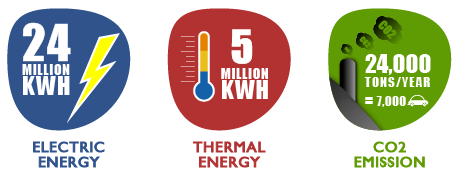
Currently LAU consumes around 24 million kilowatt-hours (kWh) of electric energy and 5 million kWh of thermal energy per year, generating the equivalent of the CO2 emissions produced by around 7,000 cars.
Recognizing the importance both of environmental sustainability and of maximizing our community’s ability to work to its fullest capacity, we are constantly exploring ways to conserve energy, operate efficiently, and introduce renewable energy sources
Water Conservation
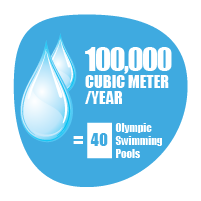 |
Our campuses use around 100,000 m3 of water annually, enough to fill nearly 40 Olympic swimming pools.
We are tirelessly working to reduce our water consumption, harvest rain water and recycle gray water for irrigation. |
Here is what we are doing to achieve these goals:
Green Awareness
We are continuously sensitizing the LAU community about the importance of energy and water resources and their conservation and actively engaging them in this endeavor.
 |
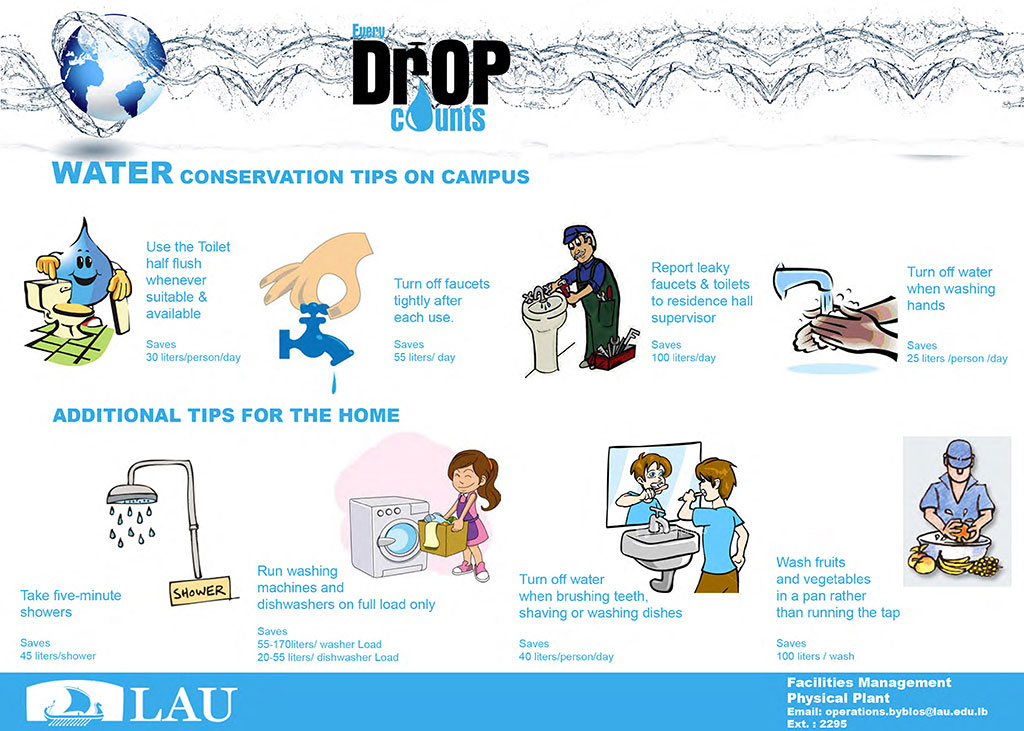
We have launched an awareness campaign with tips for saving water on campus, in dorms, or at home. Posters were placed in restrooms and on bulletin boards throughout LAU, coupled with a short video on campus TV screens, the LAU website, and social media channels. |
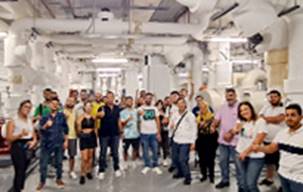 |
On August 26, 2022, the LAU Facilities Management Department in collaboration with the Association of Energy Engineers – Lebanon Chapter organized a site tour for LAU and non-LAU students. This initiative was part of the “internship in energy and sustainability” program by AEE Lebanon. Interns got the chance to tour the Byblos Campus, visit the High Performance Infrastructure Utilities as well as the LEED Gold Joseph Jabbra Library and Riyad Nassar Central Administration buildings. |
Measure It to Manage It
A metering plan is underway for the whole university to establish benchmarks and Key Performance Indicators (KPIs) for continuous resource monitoring and management.
Pilot projects are underway at the Gilbert and Rose-Marie Chagoury Health Sciences Center and the Tohme-Rizk Building in Byblos, as well as the Adnan Kassar School of Business and Wadad Sabbagh Khoury Student Center in Beirut.
Energy Efficiency and Renewables
We are implementing projects to reduce energy consumption and generate energy from renewables.
- The Byblos Library and Riyad Nassar Central Administration project features power and hot water generation from the sun.
- The same building will feature a solar tracking system.
- Beirut’s Wadad Sabbagh Khoury Student Center has been outfitted with a solar water heating system.
- Preliminary studies are underway for the introduction of solar water heating at Beirut’s indoor pool and the Byblos dorms.
- Several new and renovated classrooms and offices feature occupancy sensors that automatically regulate air-conditioning and lighting.
- CO sensors control the operation of the ventilators at the Byblos Underground Parking proportionally to the pollution level.
- We are currently retrofitting low consumption lighting fixtures throughout the university.
Water Efficiency and Re-use
We are implementing projects to reduce water consumption, harvest rain water and recycle water for irrigation.
- We have tested water saving devices in offices and dorms and implemented the same at the Tohme-Rizk building in Byblos as a pilot project, achieving savings of around 29 percent.
- Our Byblos campus features wastewater treatment plants. Treated water is being reused for irrigation, which will be further increased with the upcoming Byblos infrastructure project.
- The Byblos Library and Riyad Nassar Central Administration project features rain water harvesting and reuse.
- The Byblos Library and Riyad Nassar Central Administration project has been designed with low flow sanitary fixtures, achieving 35 percent water use reduction.
- We have surveyed all the water fixture types on the Byblos campus and are currently drafting a master plan to determine and implement possible further water saving measures.
Certify Your Space (initiative in progress)
We invite all departments, offices and units to implement sustainable practices into your day-to-day operations. This will motivate and engage participating staff to lower waste and consumption habits, improving their overall environmental performance while saving energy and water and reducing costs.
The Physical Plant will recognize your work by certification, installing a plaque at your office in recognition of your achievement. We will also list your office online on LAU’s list of certified green offices.
Water Consumption & Expenditure
| BEIRUT CAMPUS | BYBLOS CAMPUS | |
| Total Water Consumption (m3) | 34,000 | 65,000 |
| Water Use Index WUI (L/student/y) | 7.229 | 18.192 |
| Water Cost Index WCI ($/student/y) | 28.05 | 1.21 |
| Reclaimed Wastewater for Irrigation (m3) | N/A | 2,280 |
| Harvested Rainwater (m3) | 550 | 1,050 |