Informing and Supporting Government on Climate-Related Early Warning and Monitoring
LAU supports wildfire preparedness through applied engineering that connects university research with public emergency-response needs. Its School of Engineering has developed a satellite-based fire-detection platform, delivered in beta form to the Lebanese Civil Defense, with alert functions designed to inform municipalities and first responders.
This work contributes to local disaster-risk monitoring by providing information on emerging fires, their locations and intensity. It combines technical development with public-service engagement to support earlier detection and more informed emergency response.
Supporting Civil Defense and Local Authorities
A Student-Built Fire Detection System Combines Learning and Community Service
October 7, 2025
LAU engineering students developed an automated fire-detection platform to help public responders identify wildfires and assess emerging incidents. The beta version was delivered to the Lebanese Civil Defense, establishing a practical connection between LAU’s technical expertise and public emergency-response operations.
Developed during summer 2025, the project brought together electrical engineering student Joya Maria Saade, mechatronics students Christopher Zein and Georges Barhouche, and computer engineering student Joey Angelil. Associate Professors Zahi Nakad and Gilbert Accary supervised the team.
Monitoring and Early-Warning Functions
The platform combines data from EUMETSAT and NASA FIRMS satellite systems to identify fires and display incident information through an interactive dashboard.
Its functions include:
- Mapping detected fires and their locations.
- Providing fire-intensity information to support assessment.
- Sending instant messages to municipalities and first responders containing the location, an intensity indicator and a dashboard link.
- Presenting information that helps responders assess the severity and certainty of detected incidents.
These functions are designed to reduce the time between fire detection and response, including for early-stage incidents that might otherwise go unnoticed. They provide a practical example of university-developed monitoring technology supporting public authorities and local emergency responders.
Delivery and Further Development
Delivery of the beta platform to the Lebanese Civil Defense provides the principal evidence of LAU’s support to a public emergency-response institution.
The project also identifies further development priorities, including improved image processing, daytime smoke detection, better use of satellite resolution, reduced false positives and additional municipality-facing dashboard functions. These are development objectives rather than claims of completed deployment.
LAU News: A Student-Built Fire Detection System Combines Learning and Community Service
Supporting Research in Wildfire Detection
Forest Fire Detection Network Using Wireless Video and Sensor Identification
Academic Year 2024–2025
A separate School of Engineering capstone project investigated complementary methods of forest-fire detection using cameras, environmental sensors and automated image recognition.
Developed by Dany Chaddad, Fares Wehbe, Hasan Dhainy and Razan Houdaifa under the supervision of Dr. Maria Abi Saad, the project combines temperature and humidity measurements, gas sensing and camera-based detection.
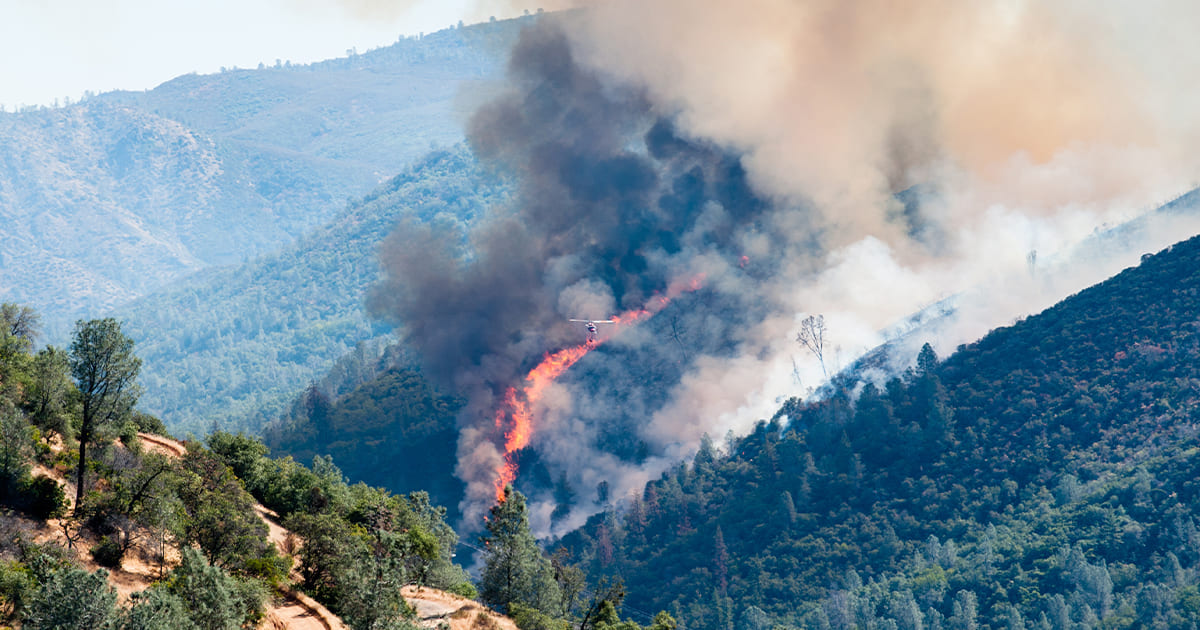 A web application displays sensor readings and dynamically updated danger levels. This approach explores how multiple sources of information can be combined to identify fire danger and communicate monitoring results.
The capstone contributes supporting technical research to LAU’s wider wildfire-preparedness work. It is distinct from the satellite-based platform delivered to Civil Defense and provides a foundation for further testing and potential application.
School of Engineering: Forest Fire Detection Network
Institutional Expertise Supporting Climate-Risk Information
LAU’s Office for Sustainability coordinates institutional sustainability efforts and engagement on climate-related challenges. Its expertise in climate adaptation, water resources and stakeholder engagement complements the university’s applied engineering capabilities.
The Institute for Environmental Studies and Research provides additional expertise in environmental assessment, urban planning and land management. These institutional capacities support the development of evidence and technical approaches relevant to environmental risk.
Within this broader framework, the fire-detection platform provides a concrete example of LAU translating technical knowledge into monitoring and alert tools for public responders and local authorities.