Local Education Programs on Climate
LAU provides climate education through academic programmes, public events, community engagement, operational awareness campaigns and applied disaster-preparedness activities. These initiatives address climate risks and impacts, mitigation and adaptation, energy and water conservation, sustainable design, environmental research and emergency preparedness, reaching LAU students as well as participants from the wider Lebanese community.
Climate Education and Academic Programs
Climate literacy is integrated into LAU’s academic offerings through the Liberal Arts and Sciences Curriculum and specialized programmes such as the Minor in Climate Change and Sustainability Policy. These offerings introduce students to the Sustainable Development Goals and provide interdisciplinary training in climate adaptation, sustainability policy and planning.
Liberal Arts and Sciences Curriculum (LASC) – Change MakersLAU integrates climate literacy and the UN Sustainable Development Goals into the core undergraduate educational experience through its Liberal Arts and Sciences Curriculum.
The LASC Change Makers series introduces students across disciplines to sustainability challenges, including climate risks and impacts, rather than limiting climate education to specialized environmental programs. By embedding the SDGs within the university’s general education framework, LAU gives students from different majors a shared foundation for understanding climate action, sustainability and their relevance to society.
Minor in Climate Change and Sustainability Policy (CLIMASP)
The School of Engineering offers an interdisciplinary Minor in Climate Change and Sustainability Policy to students from any major.
The CLIMASP minor develops knowledge and skills in climate-change adaptation, sustainability policy and planning. Its interdisciplinary structure allows students outside environmental disciplines to engage with climate policy and resilience, strengthening LAU’s capacity to prepare graduates who can apply climate knowledge in professional, community and policy settings.
Climate Education through Curriculum Z
Academic Year 2024–2025
LAU makes climate-related and sustainability education available to undergraduate students across majors through Curriculum Z, its Liberal Arts and Sciences Curriculum. This university-wide framework enables students to study environmental challenges alongside their principal disciplines, extending access beyond specialized environmental or engineering programmes.
Students following Curriculum Z complete a minimum of six credits from the Change Makers category, which includes courses addressing energy, water, food systems and sustainability. Students can select climate-relevant courses to fulfil these requirements, subject to course prerequisites and programme-specific rules. Additional environmental learning opportunities are available through approved Liberal Arts and Sciences electives. The framework therefore provides access across undergraduate disciplines, while allowing students to choose among the Change Makers themes.
Relevant courses listed in the 2024–2025 Academic Catalog include:
- LAS203 Sustainable Energy — 3 credits: Examines conventional and renewable energy from environmental, technical, economic, social and policy perspectives. Students assess energy technologies, including fossil fuels, wind, solar, hydropower and geothermal energy, and their potential to support sustainable energy systems locally, regionally and globally.
- LAS304 Energy & Environmental Policy — 3 credits: Explores how scientific, economic and political factors shape energy and environmental policies. The course develops policy-analysis skills relevant to energy production, consumption and environmental protection.
- LAS201 Water Security — 3 credits: Examines water security and the interconnections between water, energy and food. It provides a foundation for understanding sustainable resource management and the challenges of securing essential resources.
- LAS202 Sustainable Food Systems — 3 credits: Uses an interdisciplinary approach to examine environmental sustainability and the challenges of providing healthy, safe and affordable food locally and globally.
- LAS301 Debating Sustainability — 3 credits: Develops evidence-based debate, decision-making and civic-engagement skills through topics emphasizing sustainable development.
- ENV200 Introduction to Environmental Science — 3 credits: Available within the Liberal Arts and Sciences elective framework, this course explicitly addresses global warming, air pollution, deforestation, renewable energy technologies and potential solutions to environmental problems. Its approach connects global challenges with regional and local issues and includes case studies and field trips.
Together, these offerings provide students across majors with opportunities to develop environmental knowledge, evaluate mitigation-related technologies and policies, and engage with sustainable resource management.
Curriculum Z requirements, 2024–2025
LAS203 Sustainable Energy
LAS304 Energy & Environmental Policy
LAS201 Water Security
LAS202 Sustainable Food Systems
LAS301 Debating Sustainability
ENV200 Introduction to Environmental Science
Awareness and Applied Learning
Facilities Management supports climate mitigation education through water- and energy-conservation awareness campaigns, campus messaging and practical demonstrations of high-performance infrastructure. The Institute for Environmental Studies and Research complements this work through environmental impact assessment, planning and research on regional sustainability challenges.
Energy Saving and Water Conservation
Energy and Water Conservation Awareness Campaign
Facilities Management promotes practical climate-mitigation behavior through university-wide energy- and water-conservation awareness activities.
The campaign combines posters in campus spaces, messaging on campus screens and social media, and public information on energy and water use. These activities translate climate mitigation into everyday actions by encouraging students, faculty and staff to reduce resource consumption while connecting operational sustainability measures with education and awareness.
Sustainable Living: Green Pledge and Green Calendar
Facilities Management reinforces climate-conscious behavior through Sustainable Living initiatives that encourage the LAU community to take part in everyday environmental action.
The Green Pledge invites students, faculty and staff to commit to more sustainable habits, while the Green Calendar links international environmental days with LAU activities that engage the community in sustainability. Together, these initiatives extend climate education beyond formal coursework by connecting awareness with personal action and recurring campus engagement.
Institute for Environmental Studies and Research (IESR)
The Institute for Environmental Studies and Research supports climate education through applied environmental research, impact assessment and planning.
IESR conducts environmental impact assessments for large-scale infrastructure and industrial projects and studies the effects of urban growth and construction on environmental risk. This work links academic research with real planning challenges and provides an applied basis for understanding environmental impacts, climate-related risk exposure and measures that can reduce those impacts.
Campus Environmental Safeguards and Live Teaching Examples
LAU uses operational sustainability systems on its campuses as practical examples of environmental monitoring, efficient resource use and hazard reduction.
At the Byblos campus, real-time carbon-monoxide sensors regulate underground parking ventilation according to pollution levels, while occupancy-based controls manage air-conditioning and lighting in selected spaces. These systems reduce unnecessary energy use and provide tangible examples of how monitoring and automated controls can support healthier, more efficient and climate-conscious buildings.
Climate Education Events
The following dated climate-education and disaster-preparedness activities are presented from newest to oldest.
Water Security in Lebanon: From Crisis to Opportunity
November 27, 2025
LAU convened government representatives, policymakers, engineers, faculty and students to examine climate change, water scarcity and contamination and to identify resilient solutions for Lebanon’s water sector.
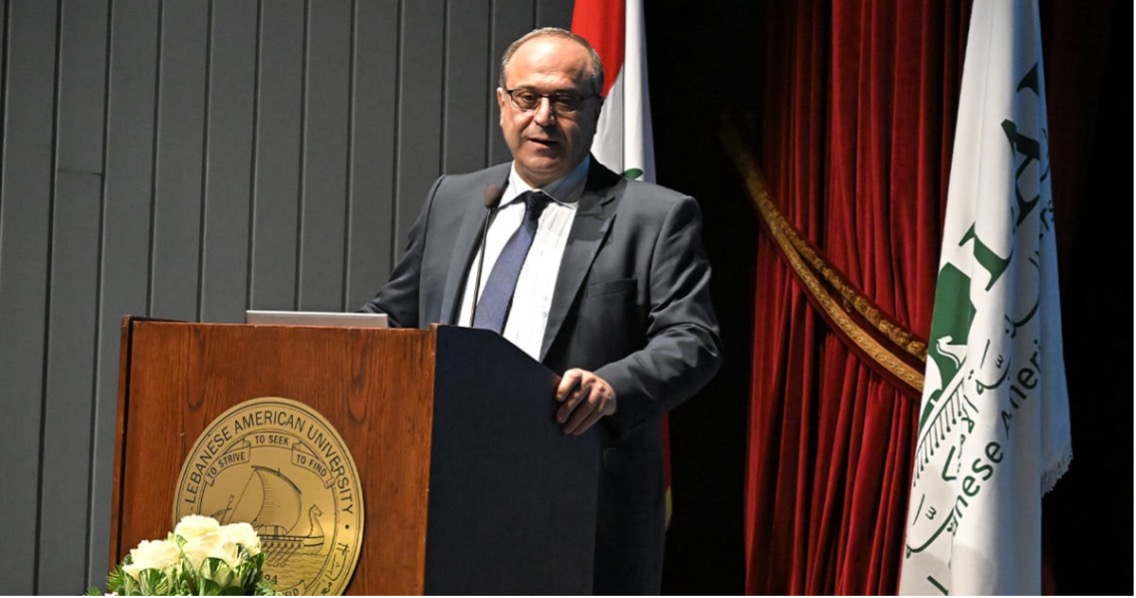
Held under the patronage of Minister of Energy and Water Joe Saddi, the event brought academic and public-sector expertise together around water security as a climate and national-resilience challenge. Speakers examined storage, non-revenue water, wastewater management, water-safety planning, infrastructure and governance. The ministry also expressed its intention to involve academic institutions such as LAU in updating the national water strategy, reinforcing the role of university research and education in evidence-based climate adaptation and resource planning.
Alumnus Mohamad Mortada on Green Buildings in Lebanon
November 26, 2025
Students, faculty and industry professionals explored how sustainability principles are applied in the built environment through real green-building projects in Lebanon.
Architect and LAU alumnus Mohamad Mortada presented Green Buildings in Practice: How Sustainability is Implemented in the Built Environment at the Institute for Environmental Studies and Research. Using certified residences, schools and offices as case studies, he highlighted technical features, sustainability criteria and differences among major green-building certification systems. The session connected classroom learning with professional practice and strengthened awareness of climate-responsive design, resource efficiency and lower-impact construction.
Green Skills for a Green Economy
November 15, 2025
LAU brought students, faculty and community members together for practical training on environmental sustainability and the skills needed for the transition to a low-carbon economy.
Hosted by the Adnan Kassar School of Business at the Byblos campus, the half-day training was designed by Deloitte Middle East and the Institute of Sustainability and Environmental Professionals. Through expert insights and practical discussions, participants explored environmental sustainability, the skills needed to respond to the climate emergency, and emerging opportunities in the green economy. The initiative extended climate-related education beyond enrolled students to members of the wider community.
Blue Ambassador Day at the LAU Byblos Campus
November 13, 2025
LAU welcomed 119 students from Collège des Sœurs du Rosaire–Jbeil for an outreach initiative connecting climate change, water security and sustainable water management.
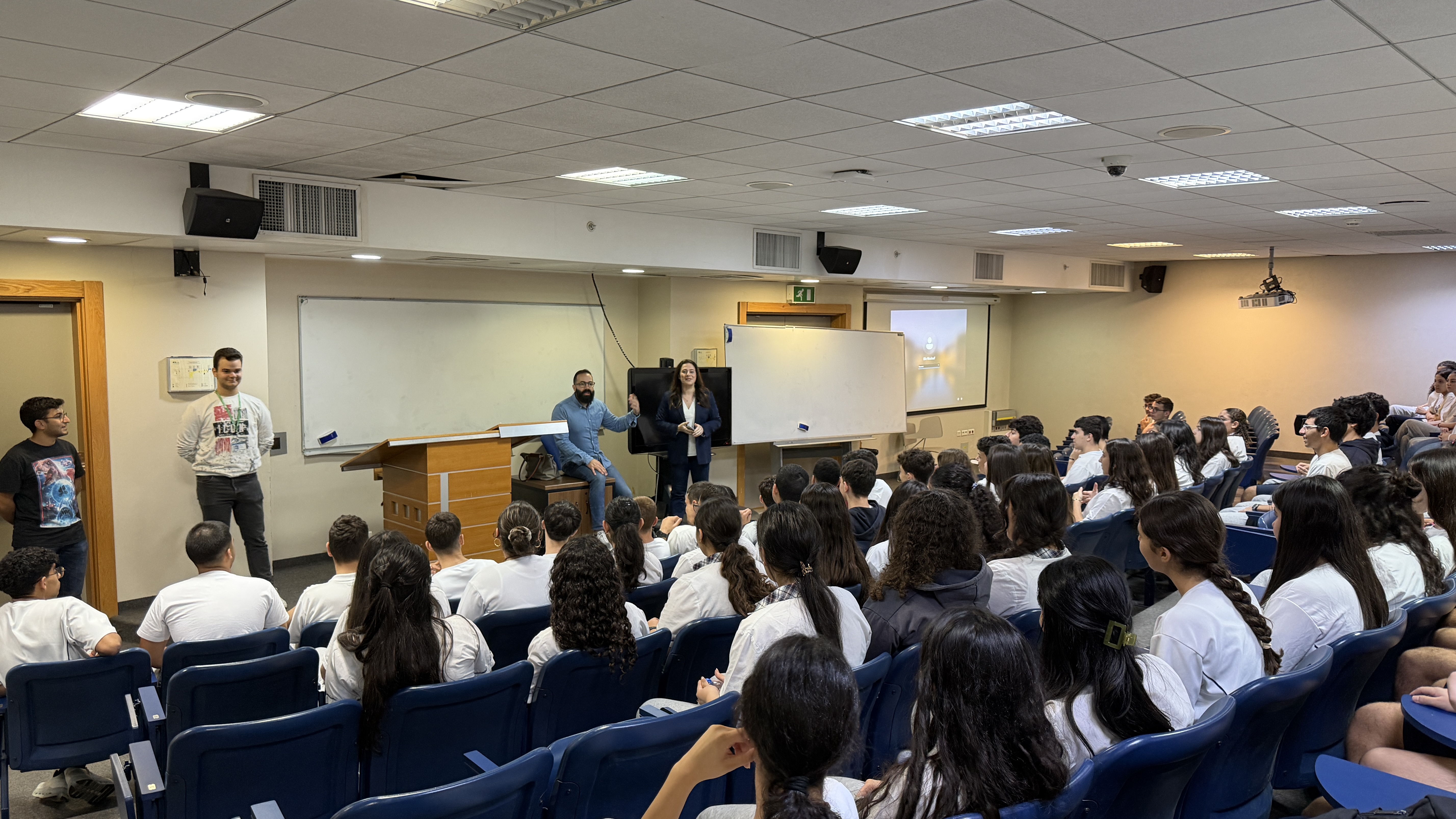
Organized by the Office for Sustainability in collaboration with the Department of Liberal Studies at the School of Arts and Sciences, Blue Ambassador Day engaged visiting school students through interactive stations led by the LAU Chemistry Club and American Chemical Society Student Chapter. Topics included climate change and water security, the human right to water, water footprints and artificial intelligence. Guided tours of LAU’s rainwater harvesting system and wastewater treatment plant connected environmental awareness with practical solutions, encouraging students to promote sustainable water practices within their communities.
Behavioral Science for Climate Action
October 8, 2025
LAU hosted an educational seminar examining how behavioral science can strengthen public engagement and support practical responses to climate change.
Delivered by Dr. Mohamed El-Komi of the American University in Cairo, the session formed part of the Beirut Economics Research Seminar Series, jointly organized by LAU and AUB and open to all. Drawing on work in Greater Cairo, the talk examined behavioral interventions addressing air quality, household waste segregation and electric-bus adoption. It illustrated how awareness campaigns and evidence-based approaches can encourage protective behavior, sustainable transport and more effective climate action, connecting academic research with practical approaches relevant to regional environmental challenges.
https://eventscal.lau.edu.lb/event.php?evt=20250825_beirut-economics-research-semina-1
Designing With Nature, Not Against It
September 12, 2025
Creative Dialogues 2025 engaged students, faculty, alumni and design professionals in discussions and workshops on ecological challenges and more sustainable ways of designing, building and living.
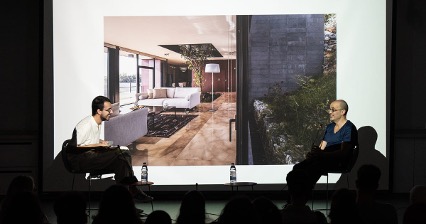
Hosted in part by LAU’s School of Architecture and Design, the festival used panels, workshops and exhibitions to examine how creative fields can respond to environmental pressures and the planet’s ecological limits. Speakers explored responsible material use, architecture’s relationship with place and community, and the need to design in dialogue with natural systems. Hands-on workshops then invited participants to draw on nature’s shapes, textures, sounds and rhythms as sources for environmentally responsible creative practice.
LAU’s Think Tank Addresses Energy Transition
February 27, 2025
LAU brought academics, policymakers and sustainability leaders together to examine the energy transition, carbon reduction, renewable energy and the policy choices shaping climate resilience across the MENA region.
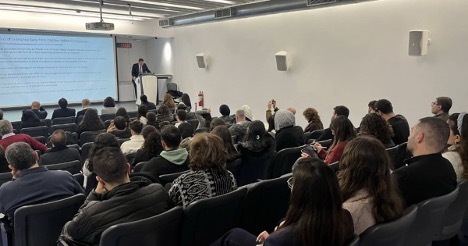
Hosted by LAU’s Center for Policy Action in collaboration with the Office for Sustainability and Saint Joseph University, the discussion featured Dr. Bassam Fattouh of the Oxford Institute for Energy Studies. The session examined the region’s climate vulnerability, economic diversification, renewable-energy investment, carbon capture and the regulatory conditions needed for a lower-carbon transition. Former Lebanese ministers joined the discussion, reinforcing the event’s role in connecting research, public policy and climate-action education.
Climate Change and Adaptation Programs
February 11, 2025
LAU organized a lecture exploring climate change risks, impacts and adaptation strategies in Lebanon and the wider MENA region, highlighting the importance of resilience and proactive policy measures.
Hosted by the School of Arts and Sciences in collaboration with the School of Engineering at the Byblos campus, the lecture featured Dr. Atif Kubursi, Professor Emeritus of Economics at McMaster University. The announced program examined adaptation costs versus the costs of inaction, economic instruments supporting adaptation, and the connections between water, energy and food security. Topics also included rational water use, renewable energy and projected sea-level rise, supporting locally relevant education on climate impacts and adaptation. eventscal.lau.edu.lb
Advancing Disaster Management with Robotics
April 27, 2024
Students from six Lebanese universities developed and demonstrated robotic systems for disaster response at LAU’s first Universities Robotics Competition.
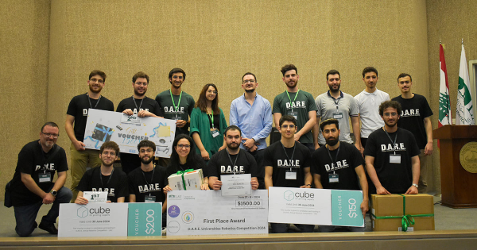
Organized by LAU’s IEEE Robotics Club with the School of Engineering, the competition brought together 14 student teams under the Disaster Assistance and Response Engineering (DARE) theme. Teams designed robots for search and rescue, obstacle avoidance, environmental perception and communication in disaster-stricken areas. LAU’s GRID team earned second place with a drone-and-rover system designed to locate survivors efficiently. The event combined engineering education with practical disaster-response challenges and encouraged collaboration among universities across Lebanon.
Dr. El Helou Leads Nationwide Mass Casualty Training
February 15, 2024
LAU medical expertise supported a nationwide Mass Casualty Management workshop delivered with the World Health Organization and Lebanon’s Ministry of Public Health.
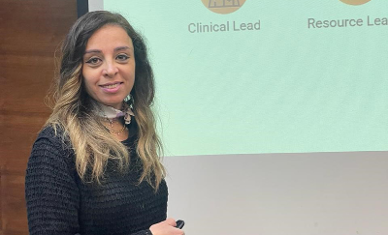
Dr. Mariana El Helou, Head of Emergency Medicine at LAU’s Gilbert and Rose-Marie Chagoury School of Medicine, led a three-day training workshop attended by hospital leaders from across Lebanon. The programme strengthened emergency preparedness and mass-casualty response capacity by transferring practical disaster-medicine knowledge to healthcare leaders. Delivered in partnership with the WHO and the Ministry of Public Health, the training extended LAU’s educational role beyond campus and into the national health and emergency-response community.
Gender and the Environment
February 13, 2023
The Arab Institute for Women examined the links between environmental degradation, climate concerns and gender inequality through its Food4Thought webinar series.
The webinar, organized with the MEPI Tomorrow’s Leaders Gender Scholars Program, brought together speakers working on grassroots environmental and waste-management initiatives. Discussions explored how environmental pressures can deepen social and gender inequalities and highlighted community-based responses. The event connected climate and environmental education with social inclusion and gender perspectives, broadening the range of audiences and disciplines engaged in LAU’s sustainability dialogue.
Site Tour for Energy & Sustainability Interns of the AEE Lebanon
August 26, 2022
LAU opened its Byblos campus to LAU and non-LAU students for applied training in energy efficiency and sustainable infrastructure.
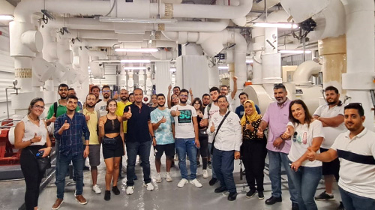
Facilities Management and the Association of Energy Engineers – Lebanon Chapter organized the visit as part of an internship in energy and sustainability. Participants toured the campus’s high-performance utilities and visited the LEED Gold Joseph Jabbra Library and Riyad Nassar Central Administration building. The tour gave students direct exposure to resource-efficient building systems, renewable-energy practices and sustainable campus operations, extending practical climate-mitigation education beyond LAU’s own student body.