SDG 13: Climate Action
The Lebanese American University (LAU) recognizes climate change as one of the defining challenges of our time and has integrated climate action into its institutional strategy and daily operations. Guided by the Sustainability Strategy developed by the Office for Sustainability (OfS) the university is aligning education, research, governance, and campus operations with the principles of resilience, mitigation, and adaptation to climate impacts.
This commitment is expressed through concrete actions aimed at reducing LAU’s carbon footprint, promoting low-carbon energy use, and embedding climate awareness in curricula and community engagement. LAU systematically tracks its Scope 1 and Scope 2 carbon emissions, monitors energy and water efficiency, and implements measures to advance toward carbon neutrality.
Across campuses, Facilities Management’s sustainability framework reinforces these goals through renewable-energy adoption, green construction standards, and climate-resilient infrastructure. In parallel, academic and research units, including the Institute for Environmental Studies and Research and the School of Engineering, drive innovation through programs such as the Minor in Climate Change and Sustainability Policy and the MS in Civil and Environmental Engineering, equipping students with the skills to address climate and environmental challenges.
Beyond campus boundaries, LAU’s collaboration with NGOs, government bodies, and UN agencies demonstrates its active role in regional climate dialogue and disaster-preparedness planning. From awareness campaigns and public lectures to robotics-based disaster-management initiatives and nationwide preparedness training, LAU continues to foster a culture of climate responsibility that extends across disciplines and into the community.
As part of this commitment, LAU continues to transition toward cleaner energy sources and improved efficiency across its campuses. The table below highlights the university’s overall energy consumption alongside the portion generated from low-carbon sources, illustrating measurable progress toward achieving a more sustainable and climate-resilient energy profile.
Low Carbon Energy Use
| Total Energy Used (GJ) | 76,550 |
| Total Energy Used from Low-Carbon Sources (GJ) | 7,365 |
Carbon Emissions
LAU is keen on tracking its carbon emissions in an effort to reduce them and ultimately become carbon neutral. The below table summarizes the Scope 1 and Scope 2 emissions for Beirut and Byblos campuses as of 2018. The below table shows results of the two passed years (https://dira.lau.edu.lb/fact-book/):
| 2022-2023 | 2023-2024 | |
| Total Scope 1 (direct emissions) | 7,381.39 | 13,327.29 |
| Direct emissions at LAU facilities | 7,152.25 | 13,098.15 |
| Direct emissions from LAU vehicles | 229.14 | 229.14 |
| Total Scope 2 (indirect emissions from purchased electricity) | 911.24 | 1,794.11 |
| Indirect emissions from purchased electricity | 911.24 | 1,794.11 |
LAU Sustainability Strategy, Action Plan and Commitments:
The Sustainability Strategy was developed by the university’s Office for Sustainability (OfS) following extensive consultations with the entire LAU community, including schools, academic departments, administrative units, staff, and students.
LAU’s Sustainability Strategy explicitly mandates developing Sustainability Action Plans with short-, medium-, and long-term goals and assigned responsibilities, an institutional framework for climate and sustainability action that is designed to engage university units and external stakeholders.
It establishes specific targets for energy efficiency and management, as well as for water conservation and sustainable use.
The strategy has been submitted for official endorsement and, once approved, will be publicly released along with measurable KPIs, many of which are already being implemented in practice.
Institute for Environmental Studies and Research
The mission of the Institute of Environmental Studies & Research is to investigate issues of environmental nature, and the impact of such issues on the long-term sustainability of the region and its resources. These issues include but are not limited to: the impact of urban growth, zoning and urban development on cities and suburbs, and the impact of building construction and energy use on the environment. The objectives of the Institute would be to develop studies and proposals aimed at:
- Promoting sustainable practices, including land use strategies and demographic projections, specific to urban and suburban zones.
- Developing studies on urban planning, transportation systems, land management, and preservation of natural areas.
- Providing impact assessment for large scale projects such as industrial projects, infrastructure, and social housing.
- Conducting surveys of historical areas and proposing master plans for areas in need of development and/or preservation.
- Developing studies on improving energy conservation in buildings and innovative sustainable practices in building construction.
Nationwide Mass-Casualty Preparedness Training (Health Disasters)
LAU emergency-medicine leadership trained nationwide stakeholders on mass-casualty response, an example of co-operative disaster preparedness (health emergencies increasingly climate-linked) alongside national actors.
Advancing Disaster Management with Robotics (DARR Initiative)
Through a robotics competition under the Disaster Assistance and Response umbrella, LAU convened partners and students to prototype tools for disaster scenarios—supporting preparedness and response capacity building.
Climate change webinar
On February 13, 2023, as part of the Food 4 Thought speaking series, The AiW and the Middle East Partnership Initiative - Tomorrow’s Leaders Gender Scholars Program (MEPI - TLS) hosted a webinar titled “Gender and the Environment” to discuss the mutually reinforcing relationship between a sustainable environment and gender equality on one hand, and the impact of environmental degradation on the deepening of gender inequalities on the other.
In an opening word, Director of The AiW, Ms. Myriam Sfeir, highlighted the importance of exploring the relationship between gender and the environment, welcomed the attendees and introduced the panelists: Ms. Nisreen El Saim (Climate Change Activist), Ms. Hiba Farhat and Ms. Rouba Farhat (Members of Nidaa’ El Ard Association), and Ms. Joslin Faith Kehdy (Founder of the NGO Recycle Lebanon).
Speakers from Recycle Lebanon and Nidaa’ El Ard NGO shared grassroots waste-management and zero-waste initiatives, linking gender inclusion with community-based climate solutions.
The webinar concluded with a short Q&A session.
Anthony Brower: A Different Kind of Climate Change
The Institute for Environmental Studies & Research [IESR] hosted a lecture with Anthony Brower.
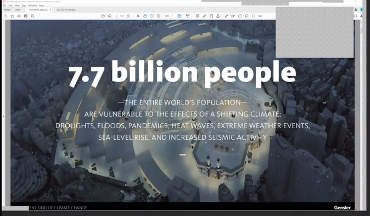
Anthony constantly redefines sustainable design by uncovering transformational patterns in the built environment that generate new design approaches that are responsive and responsible. An award winning architect, writer, public speaker and member of the USGBC college of Fellows whose passions around high performance building design and its potential impact on the built environment drive him to continually research and uncover how design needs to evolve to respond to the overwhelming and often paralyzing impacts of a rapidly changing climate. His work spans wide array of market expertise, and includes a primary focus on office buildings, education, civic and culture, mixed-use, sports, and media projects. As a co-author of Gensler’s Impact by Design publication, Anthony has the unique ability to navigate the impact of opportunities at a very broad scale while simultaneously working through the details that individual projects need as they contribute to the greater mission.
Minor in Climate Change and Sustainability Policy
The development of this minor is a result of a funded project through a CONSORTIUM AGREEMENT ON THE IMPLEMENTATION OF TEMPUS PROJECT “Development of an Interdisciplinary Minor Program on Climate Change and Sustainability Policy-CLIMASP” (Reference No. 543879-TEMPUS-1-2013-1-GRTEMPUS-JPCR) (Grant Agreement No. 2013-5043/001-001).
CLIMASP minor curriculum is designed to provide undergraduate students from different majors the flexibility to select courses to enhance their interests in climate change and to enrich their major field of study with professional skills in climate change adaptation policies and planning.
CLIMASP offers students a unique inter/multidisciplinary understanding of climate change. It provides a shift from a strict disciplinary orientation focused on natural sciences to other issues related to science, engineering, education, economics, sociology, architecture, etc. In fact, choosing a minor combined with a major enables student to pursue an area of interest with considerable employment possibilities by acquiring the necessary knowledge and skills.
Minor in Environmental Science
Minor in Environmental Science- Administered jointly by the Department of Civil Engineering and the Department of Natural Sciences
Overview
The Minor in Environmental Science is an interdisciplinary program administered jointly by the Department of Civil Engineering and the Department of Natural Sciences. The purpose of the program is to provide students with a broad conceptual framework for understanding environmental issues, from a global perspective.
Mission
The Minor in Environmental Science aims at providing a quality education to students interested in enriching their knowledge of existing global environmental issues and problems. It exposes them to important issues related to environmental problems and their causes. Concepts in environmental ethics, management and policies concerning the preservation of the environment are also provided. Additionally, the program covers topics related to the study of natural and non-natural chemical and microbiological substances in the environment and their transformations, and discusses methods of remediation to most environmental pollution issues.
Educational Objectives
The Minor in Environmental Science aims at providing students with:
- an understanding of the social, economic, political and legal framework of environmental issues,
- sufficient background to be able to collect, analyze and formulate possible solutions to environmental problems,
- an understanding of the intertwining effects and impacts of human activities on the world’s vital natural resources, and
- better job market opportunities.
Student Outcomes
- Understand the underlying concepts and principles associated with environmental science.
- Identify sources of water, soil and air pollutants.
- Demonstrate familiarity with the practical/field dimensions of a range of environmental problems and issues.
- Understand the interrelationships between society, economy and environment.
- Ability to critically review environmental impact assessment reports.
- Discuss remediation strategies of a variety of environmental contaminants.
- Recognize potential harmful role of human being in shaping the environment.
MS in Civil & Environmental Engineering
This comprehensive master’s degree program, offered by the Civil Engineering Department at LAU, imparts a sound professional and academic training in civil engineering. Students opt for one of five emphases:
- Construction Engineering and Management
- Environmental and Water Resources Engineering
- Geotechnical Engineering
- Structural Engineering
- Transportation Engineering
Wider career prospects
A research-oriented master’s degree program opens up the possibilities of a doctoral degree and an academic career. It also equips graduates with a deep understanding of the role of research in their industry. Through acquired research skills and a higher level of critical thinking, MS graduates are able to make more substantial contributions to the future of the profession.
Breadth and depth of knowledge
Through this program, students gain access to a variety of topics in their preferred area of study. They also get in-depth experience in one or more fields of civil engineering and are exposed to cross-disciplinary issues and topics related to the engineering and management of systems.
The research edge
Research is a major component of the curriculum. In addition to conducting research along with their studies, each student completes the program with a thesis based on a topic selected from their preferred emphasis area.
A dynamic faculty
Our civil engineering faculty brings excellent qualifications from renowned programs in the U.S. and Europe. Continuously engaged in cutting-edge research, our faculty has published over 250 refereed journal and conference articles, and received research grants from local and international funding agencies.
Best-in-class labs
Students have at their disposal some of the best-equipped labs in the country. Designed to support research as well as learning, the labs allow for measurement, testing, and experimentation under internationally accepted standards and procedures.
Mission
The mission of the graduate program in Civil and Environmental Engineering at LAU is to provide students with a well-rounded set of career skills that empowers them to address a wide range of problems through exposure to an advanced body of knowledge and scholarly endeavors.
Program Educational Objectives
The purpose of the Graduate Program in Civil and Environmental Engineering is to:
- Train students to develop the methodology and necessary skills to explore emerging issues in engineering and science.
- Provide students with an advanced background and a focused body of knowledge required for the present day professional practice in their chosen field of study, and to prepare them to adapt to a changing profession.
- Train the students in an active research environment, to equip them with the latest tools of research, and to prepare them for further study toward a Doctoral Degree.
Student Outcomes
Graduates of the MS - CEE programs will be able to:
- Reinforce skills developed in the undergraduate program.
- Use advanced analytical, computational, and/or experimental aspects of civil engineering.
- Make critical judgments based on a sound knowledge base.
- Conduct research and appreciate its importance in the evolution of civil engineering.
Environmental Lab
This lab has a full range of standard equipment for performing routine environmental analyses of unit processes and operations in water and wastewater treatment, water quality parameters, investigations in fresh and marine water quality, solid waste characterization and properties, evaluation of treatment processes, digestion and co-digestion, reactor performance, solid waste management, environmental impact monitoring, and environmental site investigations.
It is equipped with sampling devices and quality analysis of water/wastewater, jar tests, stream gauging, top of the line point and depth sediment samplers, bed load samplers, fluorometers, UV-visible spectrophotometers, colorimeters, peristaltic pumps, gas meters, centrifuges, incubators, and furnaces, in addition to mobile environmental monitoring stations for air pollution field measurements.
Energy Saving and Water Conservation
Energy Saving
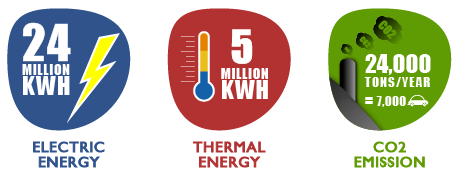
Currently LAU consumes around 24 million kilowatt-hours (kWh) of electric energy and 5 million kWh of thermal energy per year, generating the equivalent of the CO2 emissions produced by around 7,000 cars.
Recognizing the importance both of environmental sustainability and of maximizing our community’s ability to work to its fullest capacity, we are constantly exploring ways to conserve energy, operate efficiently, and introduce renewable energy sources
Water Conservation
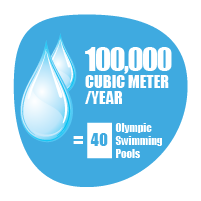 |
Our campuses use around 100,000 m3 of water annually, enough to fill nearly 40 Olympic swimming pools.
We are tirelessly working to reduce our water consumption, harvest rain water and recycle gray water for irrigation. |
Here is what we are doing to achieve these goals:
Green Awareness
We are continuously sensitizing the LAU community about the importance of energy and water resources and their conservation and actively engaging them in this endeavor.
 |
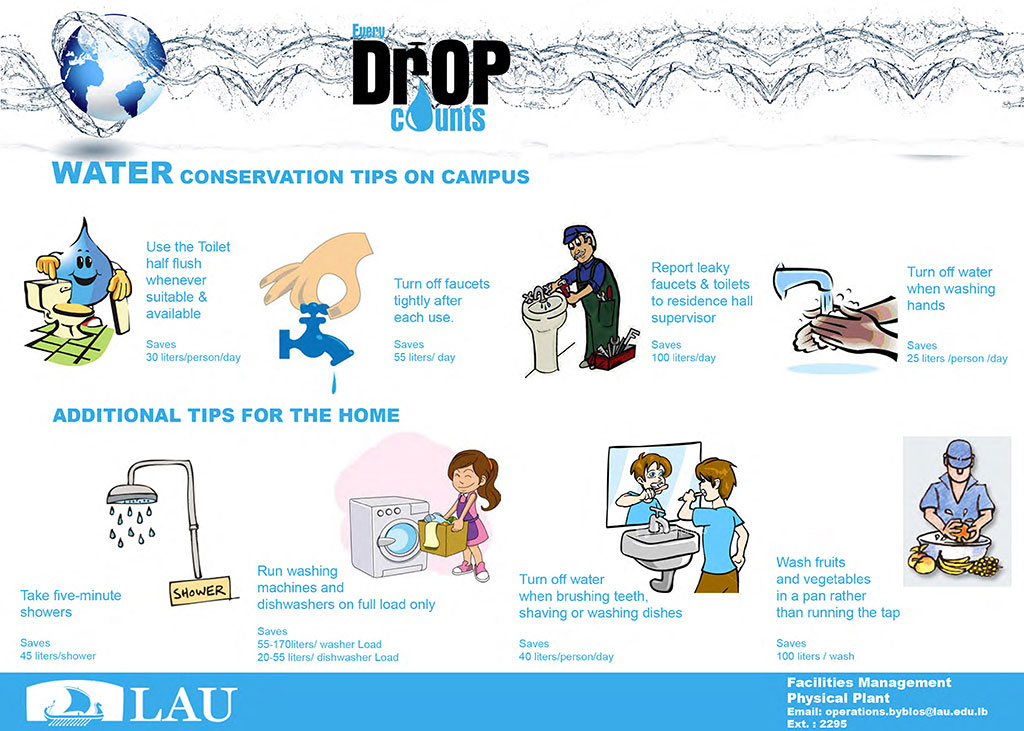
We have launched an awareness campaign with tips for saving water on campus, in dorms, or at home. Posters were placed in restrooms and on bulletin boards throughout LAU, coupled with a short video on campus TV screens, the LAU website, and social media channels. |
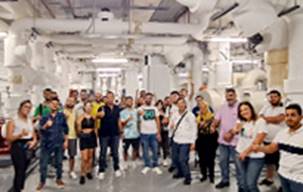 |
On August 26, 2022, the LAU Facilities Management Department in collaboration with the Association of Energy Engineers – Lebanon Chapter organized a site tour for LAU and non-LAU students. This initiative was part of the “internship in energy and sustainability” program by AEE Lebanon. Interns got the chance to tour the Byblos Campus, visit the High Performance Infrastructure Utilities as well as the LEED Gold Joseph Jabbra Library and Riyad Nassar Central Administration buildings. |
Energy Efficiency and Renewables
We are implementing projects to reduce energy consumption and generate energy from renewables.
- The Byblos Library and Riyad Nassar Central Administration project features power and hot water generation from the sun.
- The same building will feature a solar tracking system.
- Beirut’s Wadad Sabbagh Khoury Student Center has been outfitted with a solar water heating system.
- Preliminary studies are underway for the introduction of solar water heating at Beirut’s indoor pool and the Byblos dorms.
- Several new and renovated classrooms and offices feature occupancy sensors that automatically regulate air-conditioning and lighting.
- CO sensors control the operation of the ventilators at the Byblos Underground Parking proportionally to the pollution level.
- We are currently retrofitting low consumption lighting fixtures throughout the university.
Water Efficiency and Re-use
We are implementing projects to reduce water consumption, harvest rain water and recycle water for irrigation.
- We have tested water saving devices in offices and dorms and implemented the same at the Tohme-Rizk building in Byblos as a pilot project, achieving savings of around 29 percent.
- Our Byblos campus features wastewater treatment plants. Treated water is being reused for irrigation, which will be further increased with the upcoming Byblos infrastructure project.
- The Byblos Library and Riyad Nassar Central Administration project features rain water harvesting and reuse.
- The Byblos Library and Riyad Nassar Central Administration project has been designed with low flow sanitary fixtures, achieving 35 percent water use reduction.
- We have surveyed all the water fixture types on the Byblos campus and are currently drafting a master plan to determine and implement possible further water saving measures.
WATER CONSUMPTION & EXPENDITURE
| BEIRUT CAMPUS | BYBLOS CAMPUS | |
| Total Water Consumption (m3) | 34,000 | 65,000 |
| Water Use Index WUI (L/student/y) | 7.229 | 18.192 |
| Water Cost Index WCI ($/student/y) | 28.05 | 1.21 |
| Reclaimed Wastewater for Irrigation (m3) | N/A | 2,280 |
| Harvested Rainwater (m3) | 550 | 1,050 |
Sustainable Living
Tips for Green Living
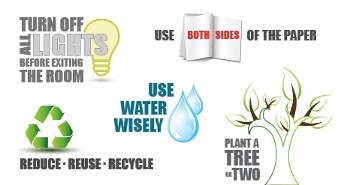
We provide members of our community with practical, everyday green tips, helping them to lead a sustainable life style and join us in turning LAU into a green facility
The Green Pledge
The Green Pledge is an agreement to make small, simple choices in your daily life to help make our campus more sustainable. These small changes will add up to a big impact if we all do it together.
Join other students, faculty and staff who have already committed to sustainable behavior.
The Green Calendar
Our green calendar identifies one anchor green day per semester and links it to activities that encourage the LAU community to go green.
Earth Hour
Raising the voice from home, each year LAU celebrates Earth Hour, spreading a message of sustainability and connection to our planet within our community.